A November 2026 Gardner Museum feature examines the skill, trade and collecting of historic Venetian and Belgian lace and its relevance to contemporary patrons.
A November 2026 feature from Boston's Isabella Stewart Gardner Museum gives historic lace the kind of close attention that is more often directed towards important paintings or rare jewellery. Published on 10 November, the museum's account explores the textiles acquired by its founder and the artistry of the people who made them. Among the objects discussed is a Venetian needle lace flounce acquired in 1894, a substantial purchase even for a collector with Gardner's resources. The museum estimates the equivalent value of that transaction today at approximately $114,500. The figure describes a historical expenditure expressed in modern money, not a present auction estimate.
For clients interested in exceptional craftsmanship, the feature offers an opportunity to approach a type of luxury object whose value cannot be understood through the cost of its raw materials alone. Fine lace represents a long investment in learned technique, the organisation of specialist labour and a considerable sensitivity to the behaviour of thread and space. It is a particularly interesting reference for collectors commissioning textiles for private homes, formal clothing or distinctive yacht interiors. The relevant lesson is not that historic lace should be installed on board, but that material culture deserves more careful consideration than a collection of fashionable textures and prestigious labels.
A collector who understood specialised workmanship
Gardner acquired fine historic textiles alongside paintings, sculpture and decorative objects. The museum's recent research draws on surviving pieces and documentation from her travels and dealings with specialists. The substantial 1894 acquisition was bought from the Venetian business of Michelangelo Jesurum, and the museum is able to relate the textile to a surviving receipt.
A client trying to build a collection of materials or crafted objects can learn from the existence of this documentary connection. The significance of a piece may be considerably enriched by knowing the circumstances of its acquisition. Where an object is bought through a dealer, the client should retain the invoice, relevant photographs and a clear record of the description supplied at the time. This is equally useful for new commissions, in which the name of the specialist who made the work, the agreed design and the techniques used may otherwise disappear from the family's knowledge within a generation. Such information supports informed care and may help distinguish objects from superficially similar work available in the future.
Two very different routes to intricate surfaces
The museum's feature distinguishes needle lace from bobbin lace, techniques through which makers have created extraordinarily elaborate patterns. It identifies Venice as an important centre in their development and describes the subsequent achievements of Belgian producers. A specialist may be interested in a particular stitch or the method through which a motif has been connected to the wider structure. These details can be difficult for an inexperienced viewer to appreciate from across a room.
A well-designed viewing appointment can change the experience of an object. Rather than asking a dealer simply to identify the country's origin and age of a textile, a collector might ask how an attribution was reached, which processes were used and what distinguishes the work from a later imitation. Adequate illumination and magnification may be useful, but handling should follow the guidance of the person responsible for the textile. This kind of discussion helps the collector develop an understanding of technique rather than simply memorising names and dates. It can also create a more precise vocabulary for conversations with contemporary textile designers.
The economics of time and skill
Historic needlework brings the relationship between labour and value into unusually sharp focus. Fine examples can embody remarkable amounts of repetitive, highly skilled handwork. Even where the thread itself is not made from an inherently expensive substance, the formation of a particular design may demand an investment of time that could never be inferred merely from the dimensions of the finished piece.
For contemporary patrons, the principle is directly relevant to bespoke production. An unusually demanding commission may require months of work from skilled makers and certain stages may only be possible in a limited sequence. Accelerating the delivery date can be difficult without compromising the result or changing the technical design. Clients commissioning textiles, embroidery or hand-finished surfaces should therefore establish realistic timescales and an agreed review process at the beginning. The price of the finished work should also be assessed in relation to the complexity of the commission rather than simply compared with a readily available manufactured alternative. This helps sustain the skills upon which future bespoke projects will depend.
Venetian trade and the culture of acquisition
The museum connects Gardner's collecting with her interest in Venice and the relationship she developed with the lace specialist Jesurum. The city's importance to the story is not confined to the appearance of individual fabrics. It represents a meeting place for artistic traditions, skilled production and trade through which objects could travel into collections elsewhere in Europe and North America.
For yacht owners whose Mediterranean itineraries include the northern Adriatic, this is a different way of approaching Venice. Instead of treating a visit simply as an opportunity to shop for luxury goods, one can use the city's cultural history to understand the movement of craftsmanship and ideas between the wealthy households of different periods. An appropriately arranged visit to a textile collection or a contemporary workshop may reveal more about a particular process than an afternoon devoted entirely to finished products. Staff availability, conservation restrictions and the character of a working studio should be respected. Private access is not something that any collector can presume merely because of the value of a prospective commission.
Emphasising the makers behind the objects
The museum's research invites attention to the many people who contributed to the textile traditions represented by Gardner's acquisitions. For numerous historic objects, the names of individual makers are difficult or impossible to establish. Yet a clear understanding of the manufacturing process allows their achievements to be appreciated as more than anonymous decoration.
An owner working with contemporary artisans has the opportunity to preserve a better record. If the makers are comfortable with documentation, their names and specific contributions can be retained alongside the acquisition or commission record. Documentation of the process does not have to be public and can respect both the owner's privacy and the commercial interests of the workshop. It may be especially valuable where a technique is practiced by relatively few people. Families sometimes devote considerable attention to the story of a famous designer while knowing little about the individuals responsible for the physical work. The history of historic textiles demonstrates why those practical contributions deserve a place in the way exceptional objects are understood.
Conservation is different from ordinary maintenance
Historic lace does not behave like most of the hard decorative objects familiar to collectors. Its appearance is closely connected to the structure of fine threads; pressure, abrasion, unsuitable storage and exposure can compromise delicate elements. Even a piece of apparently modest financial value may deserve careful examination because of its significance to a family or a wider collection. An object that appears sturdy enough to display should not automatically be regarded as suitable for regular contact or use.
The owners of working yachts face a particular set of questions when choosing fabrics for their accommodations. Materials must satisfy the operational requirements of the vessel and the people responsible for its care. Occupied guest rooms, where objects are handled and exposed to changes in light and environment, may be inappropriate settings for irreplaceable historic textiles. A marine designer can instead commission contemporary pieces informed by the historic techniques, while the original collection is kept under conditions recommended by a textile conservator. This approach preserves the interest of the historic object without assuming it was manufactured for the requirements of contemporary life.
Translating an interest into a contemporary commission
A patron wishing to develop a personal textile collection need not begin by acquiring the rarest surviving examples of a particular type. Visiting museum collections, examining contemporary interpretations and meeting reputable specialists can help establish an understanding of what makes the work compelling. One person may be interested in the mathematical order of the patterns; another may prefer the sculptural qualities of densely worked surfaces or the contrast between translucent and opaque areas.
Those preferences can inform a genuinely individual commission. A family might explore an abstract pattern related to its architecture or an interpretation of an important place, without asking a workshop to reproduce a historically significant object exactly. The brief should also define the finished object's purpose and the environmental conditions in which it will be used. A textile intended for a display case poses different requirements from one used every day. Clear agreement about its role can improve the dialogue between the owner, designer and maker, as well as reducing unnecessary changes once production has begun.
Reading the Gardner collection with fresh attention
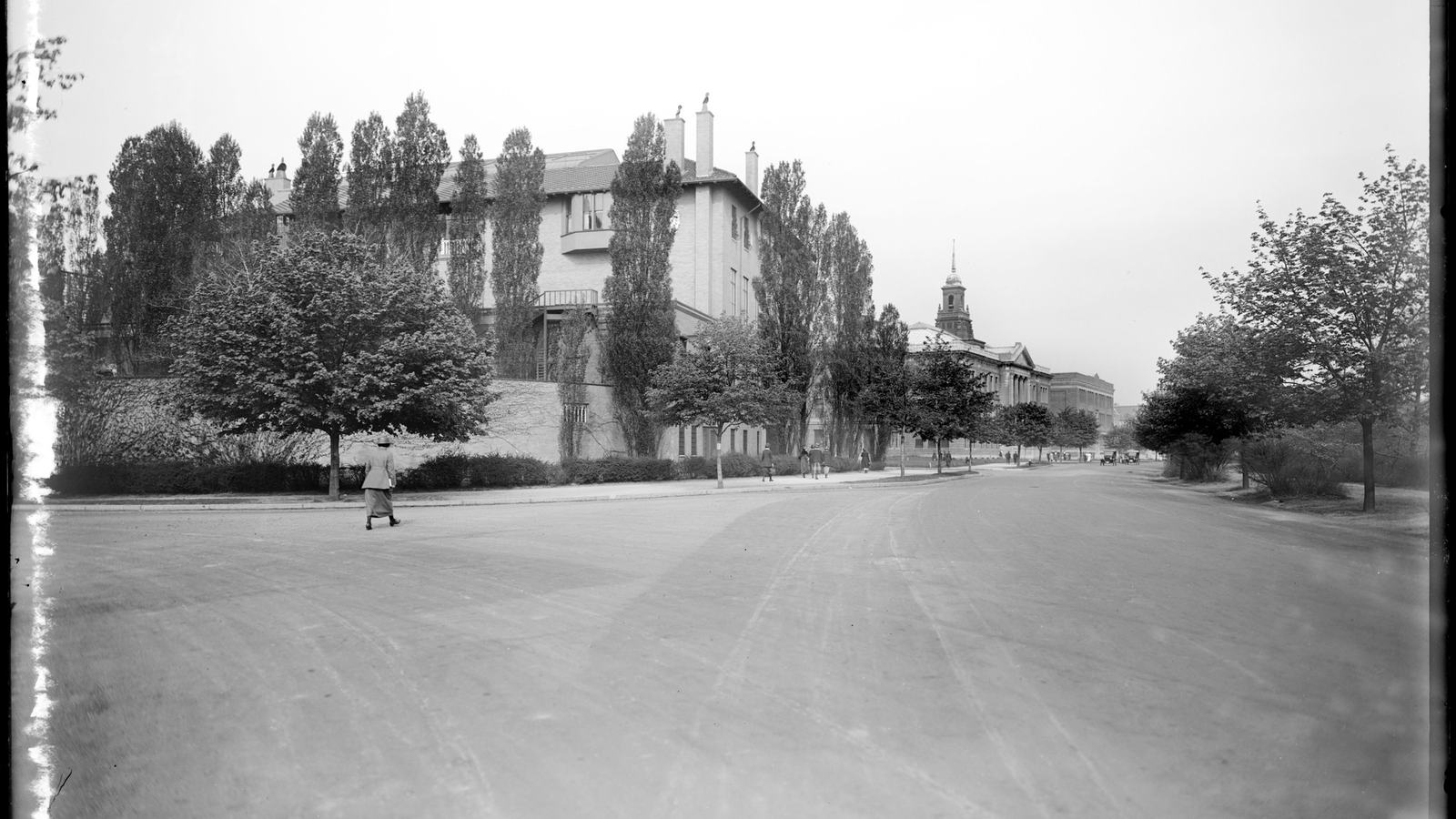
The museum makes its 10 November research feature available through its own website and provides extensive information about objects held in the collection. Anyone considering a visit should first establish whether the textiles they wish to examine are on display, since museum collections include works that may not be accessible in the ordinary galleries. Research access and image reproduction have separate procedures. The museum expressly restricts commercial reuse of its website images; the historic museum exterior accompanying this feature has therefore been sourced independently and is not an image of the featured lace.
The broader value of Gardner's example lies in recognising that strong collecting interests are often developed through sustained curiosity. A collector who can describe why an object is interesting, who understands something of its creation and who takes responsibility for its preservation has established a relationship with it beyond the moment of purchase. For the modern superyacht owner, that is a useful counterpoint to the continual appearance of new luxury products. Exceptional private spaces can provide places to enjoy craftsmanship, but their greatest contribution may be to encourage a deeper understanding of the objects, people and traditions that make such spaces distinctive.
Primary source: Isabella Stewart Gardner Museum — 10 November 2026.
Gardner Museum exterior, May 1920, photographed by Leon Abdalian; source: Wikimedia Commons, Public domain. Image resized and JPEG encoded. Photograph and attribution · Licence.
