An original Los Angeles shore guide covering the Getty Center's collections, architecture, gardens and practical timed-entry planning for visiting yacht guests.
A gallery day that begins at the waterfront
Los Angeles presents an unusual choice for visiting superyacht guests: beaches and restaurants are obvious, but one of the most rewarding days ashore can take place high above the city. The Getty Center brings art, architecture and landscaped gardens into a single hilltop setting, making it a useful counterpoint to time spent on the coast. The experience suits travellers who value exceptional collections yet prefer a flexible day over a hurried itinerary of famous addresses. It is best approached as a destination in its own right, with enough time reserved for looking, walking and conversation.
A yacht itinerary around Southern California needs practical planning before cultural ambition. The vessel's berth, anchorage, permitted passenger transfer and ground arrangements must be confirmed by its captain and local agents; an inland museum visit cannot be calculated from a nautical chart alone. Marina del Rey may be a relevant coastal starting point for some itineraries, but it should never be assumed to be the arrival point for every superyacht. Traffic across Los Angeles can vary considerably, which makes a prearranged vehicle, a realistic return window and one principal destination the better ingredients of a relaxed shore day.
The Getty Center itself stands at 1200 Getty Center Drive, rather than on the beachfront. Visitors enter through its designated approach and reach the elevated museum campus by its own arrival sequence, a deliberate separation from the streets below. That ascent changes the tempo: instead of treating the museum as another stop between engagements, guests find themselves in a complex planned for sustained attention. The art is important, but so are the pauses between galleries, the views of the city and the way the buildings frame natural light.
The collection beyond a single masterpiece
The Getty's public collections range across European paintings, drawings, sculpture, decorative arts, illuminated manuscripts and photography. This variety is particularly well suited to a mixed party. One guest may prefer a quiet comparison of painted surfaces while another takes interest in furniture, craftsmanship or the history of a photograph. A useful approach is to agree on one or two rooms as shared priorities, then leave space for individual discovery. A private or guided visit, if available through the museum's current visitor programme, should be arranged through the institution rather than presumed.
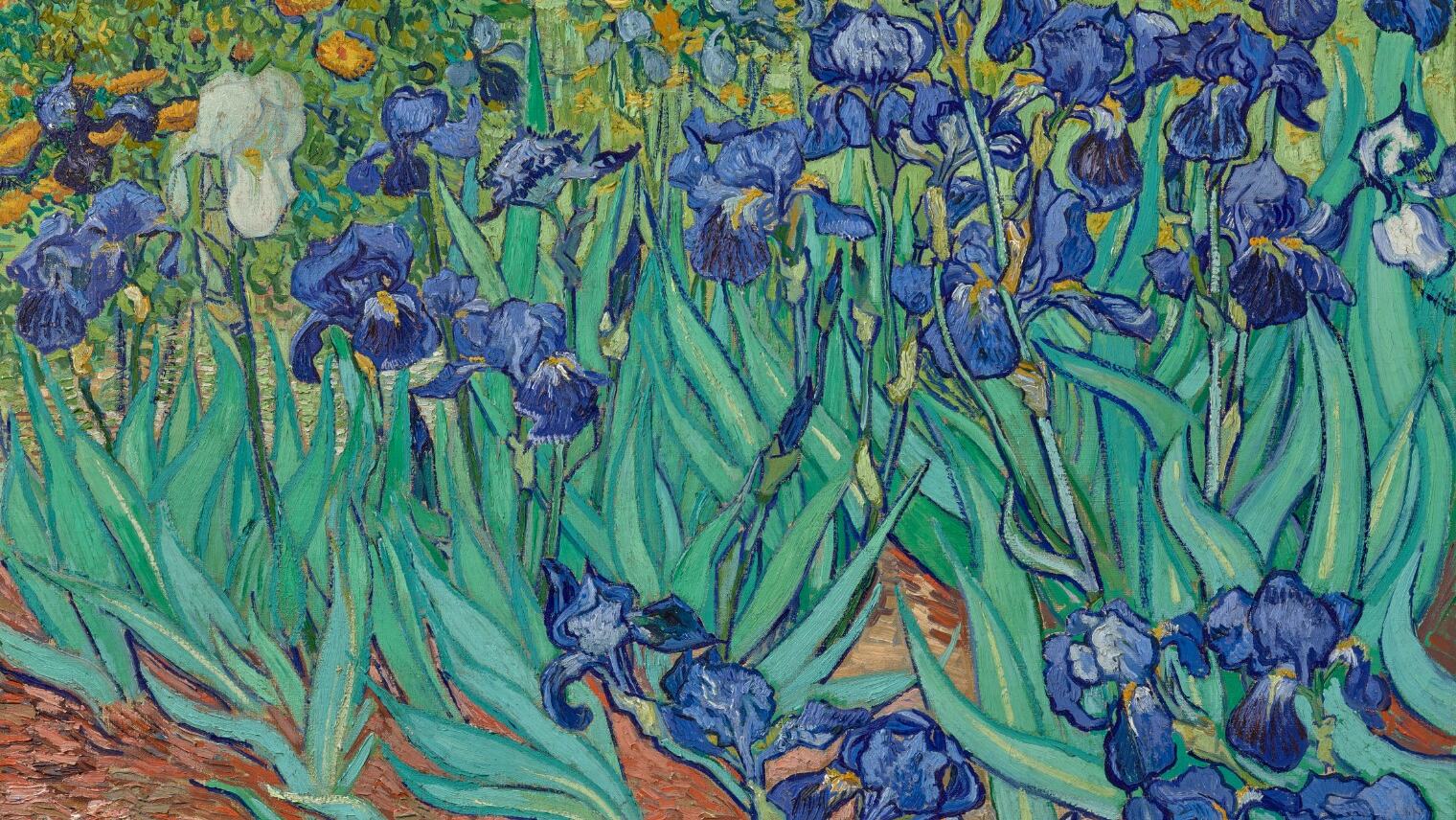
Vincent van Gogh's 1889 painting Irises is among the museum's recognised collection works. Its botanical subject and carefully differentiated flower forms give a memorable example of how close observation can be transformed into expressive art. The accompanying image comes from Getty's own Open Content programme and is an image of this collection work, not a photograph of the museum building. Importantly, Getty's collection record currently says Irises is not on view; visitors should not book a trip on the expectation of seeing the original. Its use here illustrates the calibre of the collection and the value of checking specific works before arrival.
For a guest accustomed to highly commissioned yacht interiors, the galleries offer another vocabulary of materials and finish. The same questions of proportion, texture, light and conservation that interest designers afloat become visible across painted panels, ceramics, furniture and sculpture. This does not mean drawing easy equivalences between centuries-old art and modern luxury. It means using the museum to sharpen attention: why does a modest object command a room, how does lighting change an image, and what survives when fashion moves on?
The Getty publishes collection records and an exhibition calendar that should guide those decisions. Displays and access to individual rooms change, and a famous work can be travelling, under conservation or temporarily unavailable. Guests with a specialist interest should ask the museum about current display status rather than relying on travel articles or old photographs. That small piece of preparation matters more than drafting an overly ambitious list of artworks. A visit built around available galleries can still be exceptional, particularly when the party accepts that discovery is part of the point.
Architecture, gardens and the art of slowing down
The Getty Center's architecture is not merely a container for the collection. The sequence of pavilions, open spaces and terraces establishes sightlines that change as visitors move. Richard Meier's design is distinguished by its pale surfaces, geometry and interplay with the California light. For travellers familiar with the crisp lines of contemporary superyacht architecture, it offers an absorbing study in the relationship between building, landscape and circulation. The comparison is most useful when experienced slowly, with time to see how an apparently simple transition between indoor and outdoor spaces can alter a view.
A day ashore need not mean standing continuously in galleries. The landscaped grounds offer a chance to reset the senses and discuss what has just been seen. Comfortable shoes and a modest walking plan are more useful than formal dress, because the site is intended to be explored. Guests who prefer less walking can build a shorter itinerary around accessible routes and the exhibitions most important to them. Accessibility requests or special needs should be checked with Getty visitor services in advance; the broad promise of a museum campus does not replace arrangements tailored to an individual party.
Photography is another reason to resist a rigid schedule. The views from the museum, changes in cloud and late-day light can make architectural observation as rewarding as an artwork. The aim should be personal images that record the visit, always subject to the institution's current photography restrictions. Collections may include works or temporary displays with special rules. A thoughtful guest asks before using flash, tripods or professional equipment, and a crew member should not assume that commercial-style photography is covered by ordinary visitor access.
A workable shore-day plan for a yacht party
The first decision belongs on board: confirm where the vessel can legally receive and disembark guests, and whether a tender or car transfer is appropriate. The second belongs to the museum: Getty says admission to the Getty Center is free but requires a timed-entry reservation. That reservation should be secured before finalising the day's land transport. The institution charges separately for parking, so a chauffeured drop-off may be simpler for some parties. Arrangements for larger groups or specialist visits should be checked directly rather than extrapolated from standard visitor information.
The published general hours matter just as much as the booking. The Getty Center normally opens Tuesday through Sunday and is closed on Mondays; Tuesday to Friday and Sunday closing is earlier than Saturday's. Because exhibitions, maintenance work and holiday hours can affect access, the official visit page should be checked shortly before departure. A guest who expects a private morning or an unusually late evening should treat that as a separate request, not a feature of normal admission. The best shore itinerary has deliberate margins on both the arrival and departure sides. Getty has announced that the Center will temporarily close to the public beginning 15 March 2027 for major upgrades, with reopening planned for spring 2028; anyone considering a later visit should check this timetable before making arrangements.
A sensible visit begins with a short orientation and one selected collection area. After a break, a second group of galleries can accommodate a different interest, followed by the gardens and a final look across the city. This is an editorial suggestion rather than an official route: current gallery closures or a temporary exhibition may make another sequence preferable. Dining can be considered around the actual reservation and available museum services, but the captain should receive a reliable vehicle collection time well before the group leaves the vessel.
For families, the appeal is the ability to divide attention without dividing the entire day. Younger guests may connect with colour, scale or the outdoor spaces before a more formal discussion of history. Art-focused visitors may want considerably longer inside. Agreeing on a meeting point and keeping the group small enough to navigate the galleries comfortably preserves the atmosphere. Where the yacht's guests include mobility needs, children or a substantial security party, raise those circumstances during advance planning so the museum's normal visitor arrangements can be assessed.
Why Getty belongs in a Southern California itinerary
A superyacht holiday can become dominated by hospitality, provisioning and the next invitation. The Getty Center offers something different: an environment in which money and access are not the main story. Admission is free, the collection invites close attention, and the quality of the experience depends largely on curiosity and time. The luxury lies in having both. There is no need to race through every pavilion or to photograph every celebrated object; allowing a conversation to unfold over one work can be more memorable than ticking off a roomful of names.
There is also a useful distinction between the Getty Center and the Getty Villa, which is a separate museum site on Pacific Coast Highway. They have different locations, collections and opening patterns, even though they share an institutional identity. Combining both in one day is possible only with careful reservations and traffic planning, and it would change the character of a leisurely gallery visit. For most yacht parties with limited time ashore, choosing one site on its merits is a more thoughtful starting point than treating both as compulsory stops.
Before confirming the day, consult Getty's official collection pages for particular works, its events calendar for what is actually on view, and its visitor guidance for timed entry, opening hours and transport details. The Irises image reproduced with this article is an authentic Getty collection image released through the Open Content programme under CC0, with no suggestion that the painting is currently displayed. That distinction between a genuine collection highlight and a promised encounter captures the standard a premium itinerary deserves: precise, considered and shaped around what guests can truly experience.