A historically informed superyacht shore guide to Governors Island, New York Harbor: Fort Jay, Castle Williams, the island's Coast Guard years, free monument access and official public ferry arrangements.
An island that once guarded America's busiest harbor
Governors Island sits just off Lower Manhattan, where the Hudson and East Rivers meet the busy approaches to New York Harbor. From a superyacht it can appear as a low, green counterpoint to towers, ferries and commercial traffic, but the island's historic importance is far greater than its size suggests. The fortifications at Fort Jay and Castle Williams were part of an early American effort to make the harbor defensible against hostile warships.
For yacht guests spending time in New York, this is an absorbing shore excursion precisely because it reconnects the modern waterfront with the reasons the city grew. Harbors concentrate opportunity, movement and risk; the defenses explain how the young United States tried to protect a major center of commerce. The island's military history continued long after its coastal guns became obsolete, making a visit a study of both naval strategy and changing ways of using valuable waterfront land.
Fort Jay and the first line of coastal defense
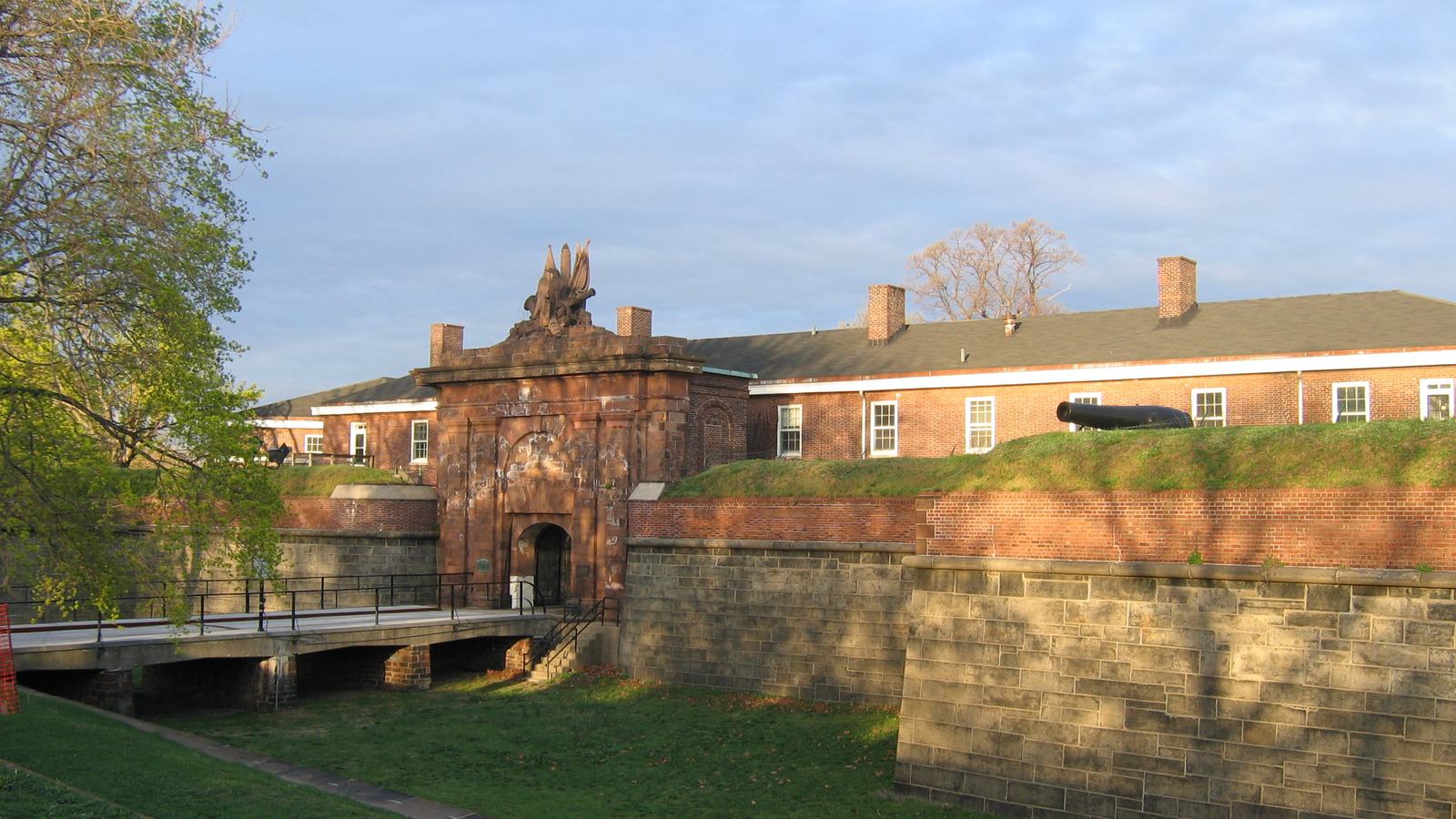
Fort Jay stands on higher ground inside a moat and formal gatehouse, giving visitors a sense of how engineers used the island's position and elevation. The National Park Service traces military earthworks here to the Revolutionary period and records a new fort constructed in 1794, with rebuilding and refurbishment in the early nineteenth century. These works formed part of a wider network of harbor defenses rather than a lone fortress intended to protect New York by itself.
Early American fortifications were shaped by a fear that warships could threaten ports and the trade passing through them. Their arrangement is easiest to appreciate by looking outward from the island and imagining the harbor before bridge spans, high-rise buildings and modern vessels dominated the scene. The forts also show how engineering, politics and money intersected in the first decades after independence, when national leaders were still deciding how much of a permanent military establishment the country required.
Castle Williams: a powerful circular landmark
Castle Williams is particularly distinctive because of its curved masonry form. Designed by Colonel Jonathan Williams and built before the War of 1812, it was planned to cover approaches to New York Harbor as part of a system of mutually supporting positions. Its shape and substantial walls speak to an era when fortification design had to accommodate cannon fire, defensive arcs and the practical demands of garrison life.
The National Park Service reopened the castle to public visitation after a major rehabilitation completed in 2011. Today its ground-floor interpretation is available on a self-guided basis when the monument is operating, but the park explicitly says upper floors are not open to visitors. That distinction matters in planning photographs and expectations. Guests should enjoy the interior spaces actually designated for public use rather than assuming a rooftop visit will be possible.
The War of 1812 and a changing military role
The harbor forts were built against the possibility of naval attack, and their deterrent value was important even when no great naval battle took place beneath their walls. NPS historical interpretation notes that British forces blockaded New York during the War of 1812 rather than directly entering the defended harbor. This is a reminder that successful defensive architecture may influence an enemy's decision without ever becoming the setting for the dramatic battle imagined by later visitors.
Within a generation, changes in weaponry and strategy reduced the original usefulness of these particular fortifications. Governors Island did not thereby lose its military purpose. Castle Williams was used as a prison during the Civil War, initially holding Confederate prisoners of war and later operating as a military stockade. That transformation from coastal battery to detention facility gives its rooms and walls another layer of history that should not be ignored.
Army headquarters and then Coast Guard home
Governors Island subsequently developed into a major United States Army post and headquarters. Military families, administrative offices, training functions and support buildings occupied the island for decades, creating a community in sight of Manhattan that was in many ways separate from the city beside it. The National Park Service records Army use through 1966, followed by thirty years as a major United States Coast Guard installation.
This Coast Guard period is especially relevant to maritime visitors. The island became headquarters for the service's Atlantic Area and was described by the NPS as its largest base at the time. Its role therefore reached well beyond the water immediately surrounding New York. When the Coast Guard departed in 1996, Governors Island's long military chapter ended. The surviving historic landscape now invites the public to explore the institutions that helped shape American maritime life.
A national monument within a larger public island
Governors Island is not solely a federal historic site. The NPS manages about twenty-two acres containing Fort Jay, Castle Williams and associated land, while the Trust for Governors Island manages the much larger balance of the island. Understanding that division helps guests plan correctly: cultural activities, public paths, food options and facilities elsewhere on the island may operate under different arrangements from those of the national monument.
The NPS describes the whole island as about 172 acres and identifies public ferry service as the principal way to reach it. This is a rare chance to move between preserved military architecture and contemporary public parkland within the same outing. It is also a place to be respectful of site boundaries, conservation work and differing opening hours. A leisurely circuit with stops for interpretation can be more rewarding than trying to cover every acre in a hurried afternoon.
A superyacht's arrival is not a monument landing
Because the monument is surrounded by water, it can be tempting to design a private tender drop-off directly beside the forts. That is not the visitor access arrangement published by the National Park Service: the park states that Governors Island is reached by ferry and that it does not charge admission to the monument itself. Yacht owners should therefore plan the excursion from an authorised yacht berth or anchorage elsewhere, using the public ferry network as appropriate.
New York Harbor is intensely trafficked, and the captain's choices about yacht positioning, pilotage, navigation rules and passenger transfers must be based on current local requirements rather than on how close the island looks from the deck. Once guests have reached the ferry terminal by an approved land transfer, the crossing gives an excellent sense of the surrounding waterways. The voyage becomes part of the lesson, with the harbor's modern vessels constantly illustrating its continuing importance.
The practical opening pattern in late October
The National Park Service currently lists Fort Jay and Castle Williams as open from 10 a.m. to 4 p.m., Wednesday through Sunday, with its shop operating a slightly shorter period. The rest of Governors Island can have a separate seven-day public schedule, and the NPS states that its full monument visitor services generally run through the end of October. Seasonal or staffing changes may alter these arrangements, particularly in colder months.
For a Monday or Tuesday visit, do not promise a look inside the forts without first obtaining a current confirmation from the park. Equally, a ferry ticket is not a reservation for access to a closed monument building. Ferry service, departure points, fares and return schedules should be checked with the operator before guests leave their yacht. The NPS notes that entering its national monument is free, while transport may carry a separate fee.
Look carefully at the harbor from the island
A distinctive pleasure of Governors Island is the way it changes one's perspective on a familiar skyline. From the waterfront and public approaches, Manhattan becomes a backdrop to the channels and ferries that sustain it. The two historic forts were designed with the geography of those channels in mind. Their story is clearer when visitors consider why particular approaches needed watching, how cannon positions related to water and how traffic must have looked when sailing vessels carried much of the city's commerce.
The island also provides a humane scale for contemplating national events. The War of 1812, Civil War and the Coast Guard's twentieth-century work can sound remote in a history book; here they share a defined physical setting. Readers interested in naval architecture or maritime engineering may find the contrast particularly engaging. The masonry forts and today's sophisticated navigation systems belong to radically different technological ages, yet each responds to the enduring importance of safe passage through the harbor.
A thoughtful itinerary beyond the forts
A good shore day begins by selecting a ferry that allows time for the National Park Service sites within their actual opening hours. Explore Fort Jay's approach and landscape, then visit Castle Williams' accessible ground-floor exhibits, taking time to read why the fort changed uses. Afterward, enjoy the broader island's public spaces according to the Trust's current information, allowing unhurried views back across the water.
Guests who prefer an architectural focus can pay particular attention to the differences between Fort Jay's more traditional earthwork-derived layout and the circular form of Castle Williams. Others may choose to explore the Coast Guard period, which connects the island directly to the working maritime world. Whatever the interest, leave a comfortable margin for ferry queues and onward travel. This destination rewards patience more than elaborate logistics or a packed schedule.
Why it belongs on a New York superyacht programme
New York offers celebrated restaurants, museums and shopping, but Governors Island supplies something less conventional: the chance to stand at a location that was chosen because the city depended on its harbor. It helps visitors understand why maritime commerce required defensive planning and how an island military post evolved into a public cultural landscape. The combination of a substantial historic site and close views of the city's waterfront makes a convincing addition to a longer stay.
The strongest excursion uses official information at every stage. Confirm the monument's opening days with the National Park Service, consult the Trust for the broader island's current services, use the published ferry connections and leave navigation planning to the yacht's captain and local authorities. Governors Island then becomes a genuinely informative superyacht shore day, revealing a city whose apparent land-based grandeur has always depended on the sea.