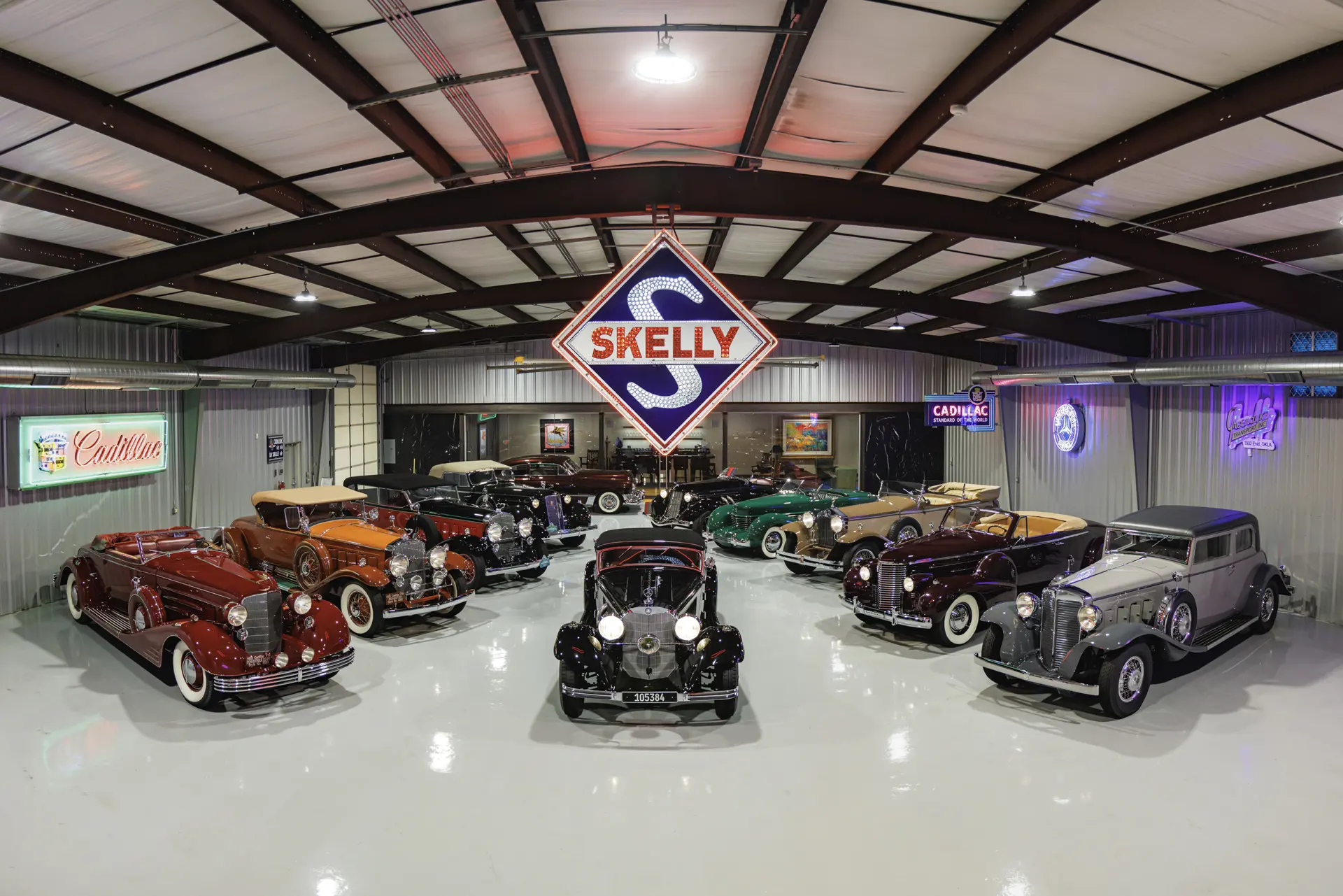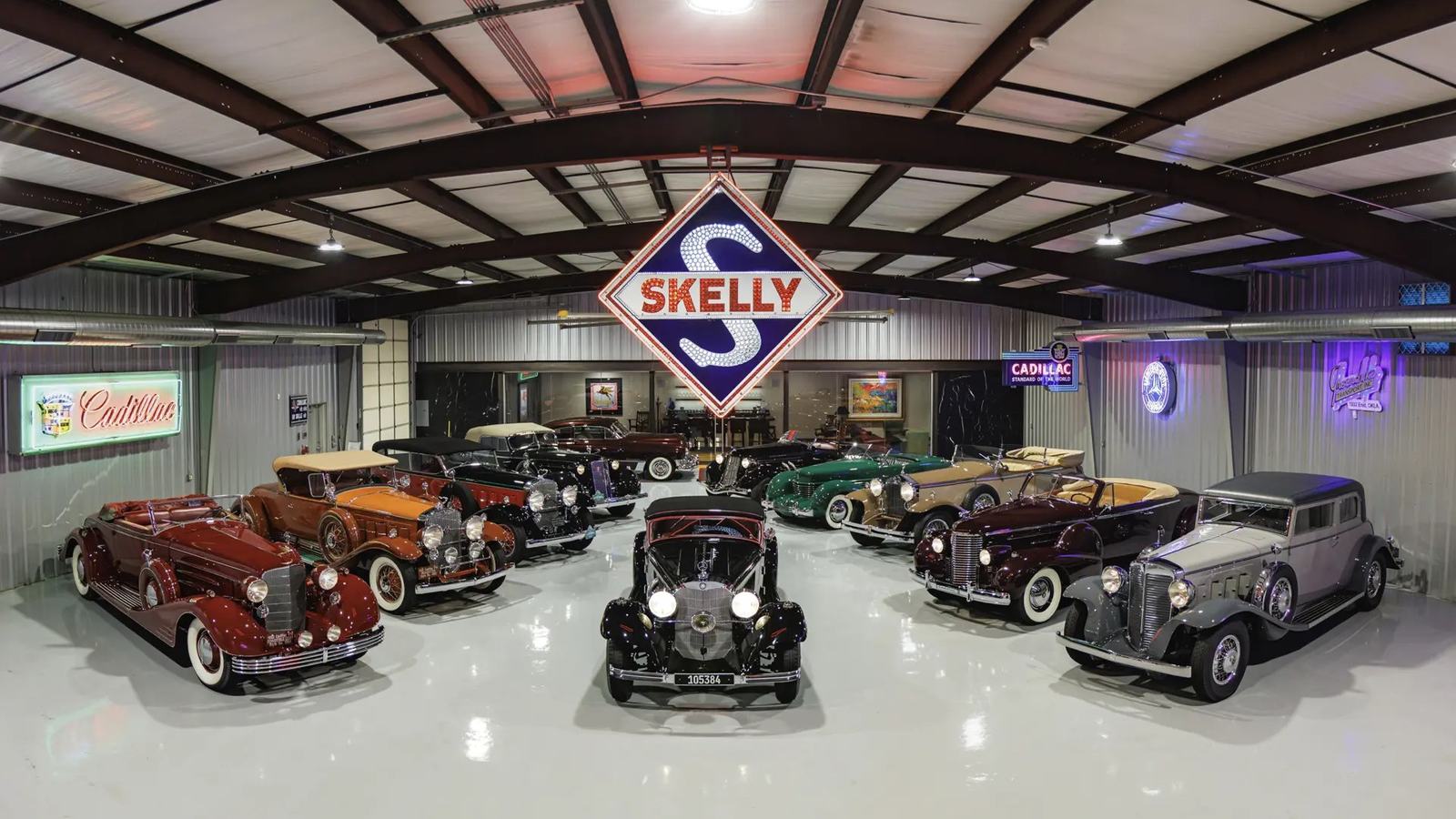
RM Sotheby's plans to offer 13 Groendyke Collection cars in Arizona in January 2027, including a 1935 Mercedes-Benz and rare Cadillac V-16 models.
Thirteen cars from a lifetime of collecting RM Sotheby's has announced that thirteen automobiles from the Groendyke Collection will be offered at its Arizona auction in January 2027. The group includes a 1935 Mercedes-Benz 500/540 K Cabriolet A and a selection of rare Cadillac V-16 models, several associated with high-level concours recognition. The announcement, released on 10 November 2026, frames the sale as a tribute to the late John D. Groendyke, a collector with a particular interest in pre-war American luxury automobiles and carefully restored coachwork. The significance is not simply the number of cars. A collection assembled around a coherent historical interest can reveal connections among models, designers and restoration practices that might be missed when the same vehicles appear separately.
John Groendyke's approach to acquisition RM Sotheby's describes Groendyke as a long-standing client and friend whose collecting relationship with the house extended over about three decades. According to the release, he sought outstanding examples of the cars that interested him and was prepared to commit substantial attention to restoration where necessary. He owned hundreds of automobiles over his lifetime, though the size of the collection at any one point was typically much smaller. That distinction matters: a collecting career may involve constant refinement rather than indefinitely expanding storage. An owner can trade, sell and reacquire cars as priorities evolve, making the story of a collection more dynamic than a fixed inventory.
A Mercedes-Benz from an extraordinary era The announcement identifies a 1935 Mercedes-Benz 500/540 K Cabriolet A as a headline lot. Mercedes-Benz's supercharged luxury automobiles of the 1930s occupy an important place in design history, combining substantial mechanical engineering with some of the period's most recognisable coachwork. The exact identity, historical ownership and condition of the particular example must be established through the auction catalogue; a model designation alone is not enough. Collectors should distinguish factory configurations, later changes and any restoration work. A desirable coachbuilt car can have an impressive appearance without necessarily retaining every original component, and properly documented restorations can be significant in their own right.
Cadillac's sixteen-cylinder ambitions Cadillac's V-16 programme is a striking example of an American manufacturer pursuing engineering prestige during a difficult economic period. A sixteen-cylinder engine was not simply a larger version of an ordinary powerplant; it represented a costly commitment to refinement and exclusivity. Groendyke had a special enthusiasm for the type, at one stage assembling more than twenty-five V-16 examples across body styles, according to the auction house. The cars being offered in Arizona should not be assumed to constitute that entire earlier group. The release identifies a curated selection, with individual histories and results to be assessed separately. This is precisely the kind of distinction collectors need when reading abbreviated promotional announcements.
Coachwork makes one chassis different from another Pre-war luxury automobiles are often distinguished as much by body style and coachbuilding as by engine and chassis. A formal town car, open touring car and sporting cabriolet can share much of their engineering while expressing entirely different design priorities. These differences influence the way they are displayed, driven and restored today. The Groendyke offering highlights exceptional coachwork rather than presenting all Cadillacs or Mercedes-Benzes of a particular year as equivalent. Evaluating an individual automobile involves understanding its original specification, subsequent modifications and the documentation supporting its history. No brief announcement can substitute for that process, however striking the photographs or prestigious the auction setting.
Concours awards provide context, not immunity from scrutiny RM Sotheby's associates the collection with success at events including Pebble Beach, Amelia Island and the Concours of America. Such recognition can indicate that a vehicle has been prepared to a demanding standard, particularly where authenticity and presentation are evaluated together. But an award received at one date is not a permanent certification of condition. Components may deteriorate, storage conditions may change and later work may alter the state of a vehicle. Prospective buyers should seek the precise award history for each lot, alongside current photographs and inspection reports. A collection's overall reputation is useful background, but it cannot replace examination of the individual car a bidder intends to purchase.
Why the Arizona auction is a natural setting RM Sotheby's Arizona sales have long attracted collectors interested in both American and European automobiles, including pre-war machinery. The January timing also aligns with the broader winter gathering of enthusiasts and auction participants in the American Southwest. The event is a marketplace, however, not a guarantee of any particular sale price or bidder turnout. A highly decorated vehicle can attract enthusiasm while still failing to meet a reserve. Conversely, a less famous example may perform strongly if buyers consider its condition and history unusually compelling. The initial announcement identifies the collection and its broad highlights, but does not provide final results because the auction has not yet occurred.
A collection within a collection The release says Groendyke enjoyed assembling related groups of automobiles, including Chrysler letter-series cars and Cadillacs of the 1950s as well as his extensive V-16 interest. This suggests a method of collecting built around exploring a design or engineering theme in depth. A themed collection can reveal small changes across production years that are invisible when studying only one car. It may also demand more specialist storage, research and maintenance than a few unrelated acquisitions. Not every owner wants that level of commitment. Some prefer a smaller group with broad variety. Neither approach is inherently superior; the meaningful distinction lies in how deliberately the acquisitions serve the collector's interests.
The challenge of conserving substantial classics Large pre-war cars can present complex maintenance needs even when they are rarely driven. Fuel systems, electrical components, tyres, seals and mechanical controls all age. Many parts are no longer available as ordinary retail replacements, making specialist restoration knowledge valuable. A car prepared for concours may be kept in a carefully controlled environment, but that does not eliminate the need for inspection or documentation. Buyers should identify service requirements before committing to an acquisition. A vehicle's purchase price can be only the beginning of the financial relationship, especially if the owner expects the car to be roadworthy, shown frequently or transported internationally to prestigious events.
Provenance is a chain of evidence A well-known collector's name can make a vehicle more appealing, but provenance is strongest when supported by a continuous record. Purchase documents, restoration photographs, correspondence with specialists and evidence of display at particular events all help explain a car's history. Buyers should look for original records and understand what remains uncertain. The Groendyke Collection carries a coherent story, yet each offered lot will have a different chain of ownership and work. It would be inaccurate to infer that every car won the same awards or received identical attention. A careful catalogue may distinguish these histories and should be studied alongside independent inspection.
The emotional dimension behind a private collection RM Sotheby's announcement describes a collector who took pleasure in acquiring and improving cars, not merely in storing them. That human dimension matters because a carefully assembled collection is often built over decades, shaped by friendships with specialists and changing personal tastes. The decision to disperse part of a collection after an owner's death can therefore be both a market event and a transition in stewardship. Future owners inherit objects with histories that precede them. Responsible collecting means preserving the information that makes those histories accessible, even when the original collector is no longer available to explain each acquisition.
What the announcement does not establish No final hammer prices, total sale proceeds or complete catalogue are available from the November release. It would be premature to assert record-setting results or guaranteed appreciation for individual Cadillacs. The distinction between an announced January sale and a completed auction is essential. Estimates, reserve policies and conditions may be detailed later in the formal catalogue, and buyers should read the terms of sale before participating. The promotional description offers a starting point for research, not an independent valuation. Likewise, there is no basis here to say every car in the collection is for sale; the announced Arizona offering comprises thirteen automobiles.
Relevance to sophisticated collectors For owners accustomed to superyachts, rare watches or fine art, the Groendyke announcement illustrates the rewards and responsibilities of collecting objects that require specialist technical care. Unlike a painting, a vehicle is a machine whose components can be run, maintained and sometimes replaced. The decision to use or preserve it influences its future condition and value. The collection also shows why personal narratives can be important without taking the place of evidence. A Mercedes-Benz Cabriolet A and a Cadillac V-16 may share a period and an aura of prestige, but each must be understood on its own engineering and historical terms.
The next chapter will be determined in January The Arizona sale will bring a selection of Groendyke's cars before a new audience, offering collectors a chance to continue preserving and enjoying them. The significance of the sale is already clear in its grouping of significant pre-war American automobiles and selected European machinery under one collector's history. The actual market outcome remains unknown. For now the most defensible account is that RM Sotheby's plans to offer thirteen cars, led by the Mercedes-Benz and rare Cadillac models, with individual details and results to follow. The occasion is as much about transferring stewardship of remarkable machines as about producing auction headlines.
**Primary source:** RM Sotheby's 10 November 2026 announcement, distributed by PistonsPR. Official photograph from RM Sotheby's Groendyke Collection preview; this is pre-sale coverage, not a report of completed sales.
Primary source: RM Sotheby's company announcement, distributed by PistonsPR.
Photo: RM Sotheby's official Groendyke Collection media, 2026; prospective January 2027 auction. Official press photograph.