An operationally focused guide to British Columbia's Gulf Islands National Park Reserve, including buoy size restrictions that exclude superyachts and the October 2026 Sidney Island access closure.
The Salish Sea rewards a different kind of superyacht cruising
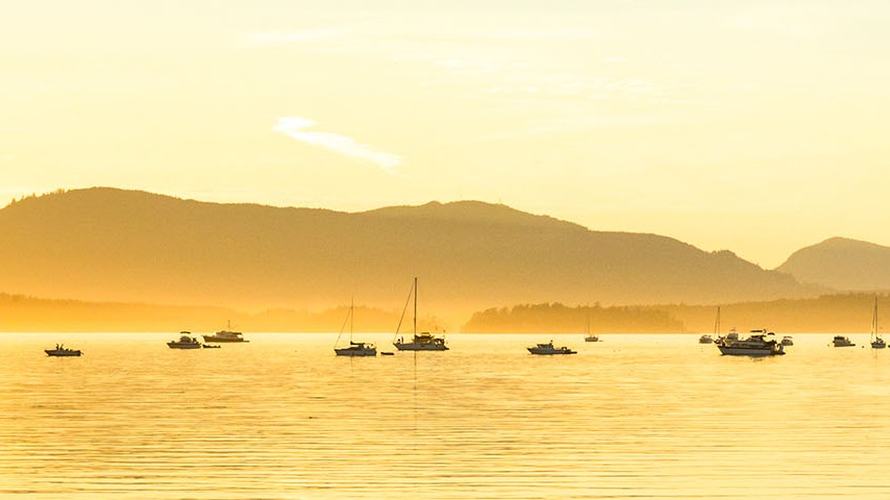
British Columbia's Southern Gulf Islands are a cruising ground of wooded islets, sheltered channels, village harbours and abundant wildlife between Vancouver Island and mainland Canada. For a large yacht, the attraction is the contrast between polished onboard life and quiet coastal places that feel accessible only to a small boat. Gulf Islands National Park Reserve protects many of those shores, but its visitor infrastructure was designed around much smaller craft than a typical superyacht.
Parks Canada's current boating information is unusually specific about mooring-buoy length limits, seasonal dock availability, park closures and wildlife protection. It should be read before a captain plans to spend the night on one of the reserve's moorings or sends a tender ashore. The most rewarding large-yacht itinerary may combine a properly arranged berth elsewhere with carefully selected daytime trips into the protected islands.
National park moorings are for boats of 15 metres or less
Parks Canada's standard mooring-buoy guidance permits vessels up to 15 metres, roughly 50 feet, when winds are below 30 knots. In winds of 30 to 37 knots, the guideline falls to 12 metres, about 40 feet. These size recommendations exclude a superyacht longer than 24 metres, irrespective of how attractive a park mooring looks from the wheelhouse.
The reserve also limits each buoy to one vessel and prohibits rafting boats together. An owner should not assume that a park buoy is a valid offshore home for the mothership merely because a smaller yacht has used it successfully. For a large yacht, crew should arrange a suitable marina berth or anchorage outside restricted reserve facilities, then assess a compliant tender visit to shore or a licensed local excursion.
Three mooring areas, none a reservation
The park lists mooring buoys at Sidney Spit off Sidney Island, Beaumont on Pender Island and Reef Harbour off Cabbage Island. Buoys are available on a first-come, first-served basis rather than through a guaranteed reservation system, so a small-craft visit must allow for the possibility that no appropriate space is available. Parks Canada asks users to approach slowly and minimise wake in the moorage areas.
Daily mooring fees apply after 3 p.m., with red payment vaults ashore where payments are made. These details are relevant to properly sized support craft, but a payment does not authorise a larger vessel to use the infrastructure beyond the published size restrictions. Bridge teams should confirm park notices and the condition of each buoy immediately before use, even when its position appears on an official map.
Sidney Island is closed in the current autumn period
There is an important current operational warning. The Parks Canada boating page displays an area closure for Sidney Island from 15 October 2026 to 14 February 2027. Anyone reading an older itinerary that recommends a casual landing at Sidney Spit in late October should therefore stop and verify the effect of the closure with the park authority before approaching.
Seasonal rules add another layer. Parks Canada notes that the docks at Sidney Spit and Princess Bay on Portland Island are normally removed for winter between 1 October and 14 May. A tender master should never assume a landing structure exists merely because a summer visitor photograph shows it. Closure notices and actual dock availability take priority over a cruise schedule built months earlier.
Beaumont and Cabbage Island illustrate the need to read each notice
Beaumont's campground on Pender Island remains closed for overnight stays, although Parks Canada's boating page indicates its mooring buoys continue to operate. Cabbage Island's day-use areas and campground have also been closed since April 2025 until further notice, while its toilets and mooring buoys are separately listed as available. These are examples of different facilities at one location having different access status.
Guests and crew need clear distinctions between being allowed to secure a compliant small craft at a mooring and being authorised to walk ashore, camp or use a trail. Tender departures should be planned around the exact current notice for the island concerned. Where access is unclear, a direct enquiry to Parks Canada is preferable to interpreting the presence of other boats as permission.
Wildlife protection is a navigation requirement
The Salish Sea supports harbour seals, seabirds, porpoises and orcas, including the endangered Southern Resident killer whale population. Gulf Islands National Park Reserve lies within critical habitat for those whales, and Parks Canada directs operators to the latest federal management measures and the Be Whale Wise guidance. Rules can change by season and area, so historic wildlife-tour procedures may no longer be adequate.
Park guidance also instructs boaters to respect preservation-area closures and stay at least 100 metres from islets and other marine wildlife. The vessel's navigation and tender plans should prioritise species protection, reduced noise and predictable manoeuvres. Photography from an appropriate distance can be a far more meaningful guest activity than pursuing an animal to fill the camera frame.
The islands offer varied experiences beyond moorings
Parks Canada distinguishes islands with services, such as Pender, Saturna and Mayne, from boat-access-only places including Tumbo, Russell and D'Arcy. This variety suits a superyacht itinerary built around a succession of carefully chosen short excursions. A guest might enjoy a village lunch one day and a more remote coastal landscape the next, provided current park access notices permit the visit.
Not every island offers toilets, water, refuse collection or a landing structure, and protected areas should not be approached as improvised private beaches. The deck team should identify the correct authorised landing before departure and brief guests about waste, wildlife and the risk of slips on wet rock. A suitable tender, not the size of the mothership, determines much of the day's practical access.
Service marinas belong in the larger-yacht plan
The Parks Canada boating page points to pump-out facilities at marinas around Sidney and in Ganges Harbour, while advising operators to avoid releasing sewage or pollutants into park waters. For superyachts this reinforces the distinction between a park excursion and a vessel-service destination. Engineering, fuel and waste arrangements are best handled at facilities designed to accept the actual size of the ship.
A professionally managed itinerary should account for berth availability, seasonal opening hours, tides and local traffic before scheduling long guest excursions. Even with generous onboard systems, a large yacht needs a realistic plan for black-water retention, shore disposal and all other environmental obligations. The park's sensitive ecology should be the starting point for hospitality logistics, not a secondary consideration.
Quiet hours and shore conduct remain important
Parks Canada's published quiet hours run from 10 p.m. to 8 a.m., reflecting the need to protect the atmosphere and wildlife in a compact archipelago. Its guidance also addresses public-area alcohol restrictions, dogs on leads and the importance of removing waste. These rules can surprise guests accustomed to privately operated marina complexes where staff manage most of the surroundings.
Briefing visitors clearly before a tender landing avoids awkward decisions ashore. Crews should bring back all rubbish, minimise noise and respect local closures even when other boats appear to be nearby. The best superyacht service in a protected landscape is often invisible: a seamless shore visit because someone has already checked the access, rules and facilities.
Building a high-value Gulf Islands expedition
A realistic programme could place the yacht at a properly sized berth outside the reserve, then use a suitable tender for scenic visits to open islands and guided natural-history interpretation. Wildlife outings should follow current federal killer-whale protections, while shore visits must take the autumn Sidney Island closure and winter dock removals into account. Time spent with the right local guide can enrich the trip without increasing environmental pressure.
The Southern Gulf Islands reward patience and restraint. Narrow passages, tidal waters, changing wind and sensitive wildlife all require attention, but they also give the cruise its character. A thoughtfully chosen route offers remarkable scenery and genuine connection to the Salish Sea without treating a 15-metre national park buoy as an invitation to bring in a much larger yacht.