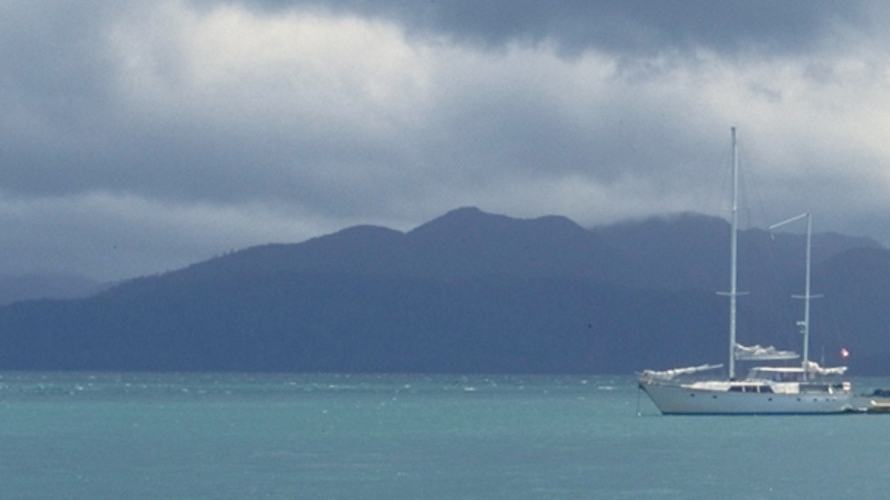
A carefully researched guide to Gwaii Haanas for large-yacht owners and captains, covering mandatory visitor orientation, Haida heritage, anchoring and protected marine wildlife.
A destination that changes the meaning of superyacht cruising
Gwaii Haanas is not an itinerary of fashionable marinas or beach-club reservations. It is a protected mosaic of temperate rainforest, steep islands and coastal waters at the southern end of Haida Gwaii, off British Columbia. Reaching it by a 24-metre-plus yacht is an expedition decision rather than a casual detour. Parks Canada says the reserve has no road access; boats and seaplanes provide the connection, and the remoteness is integral to the experience. A visiting captain must approach the trip as entry to a culturally important, carefully managed landscape.
The most memorable feature may be the relationship between land and sea. Old-growth cedar and Sitka spruce frame shores whose human story extends across millennia, while channels lead towards Haida village sites and wildlife-rich water. A superyacht can offer comfortable accommodation and sophisticated expedition equipment, yet those advantages do not cancel the rules, the weather or the need for cultural respect. A successful visit depends on restraint, prepared crew and a willingness to change plans when conditions dictate.
Protection is shared with the Haida Nation
Gwaii Haanas is a National Park Reserve, National Marine Conservation Area Reserve and Haida Heritage Site. Its management is unusual and important: the Government of Canada and the Council of the Haida Nation work together through the Archipelago Management Board. Parks Canada explains that the board has equal representation from both governments and makes decisions by consensus. An owner or charter guest should understand that the experience is not simply access to wilderness scenery; it is an invitation to travel thoughtfully through a living cultural landscape.
The cooperative arrangement grew from landmark agreements in 1993 and 2010, shaping protection of land, marine ecosystems and heritage as connected responsibilities. The Land-Sea-People management plan uses principles including respect, responsibility and balance. For yacht operators, those ideas become practical conduct: obtain required access approval, respect closures and protected places, listen to Haida site guidance, reduce environmental disturbance and avoid portraying cultural sites as empty sets for luxury photographs.
The reservation is part of the voyage plan
Parks Canada's 2026 guidance makes reservations and orientation essential for independent visitors. Visitors travelling on their own vessel must reserve their dates, pay the applicable visitor use fee and complete a self-guided online orientation before entering Gwaii Haanas. The reserve says the reservation should be requested at least five business days before departure, subject to office hours and availability. The skipper should build that lead time into the cruise programme rather than treat it as an administrative detail left until the vessel is approaching the boundary.
Parks Canada requires older group members to complete the orientation and achieve the stated quiz score; trip leaders must also convey the guidance to younger guests. Check the current age threshold when making the booking. Keep the booking receipt and completion evidence on board, either in print or securely downloaded for offline access. Mobile service is not available throughout the reserve, so an email waiting on a phone's cloud account is not reliable proof. For a commercial charter or organised tour, confirm the appropriate operator's licensing and responsibility for reservations with Parks Canada, instead of assuming private-vessel arrangements are identical.
A superyacht is not a small craft mooring buoy
The protected area's facilities are intentionally minimal. Parks Canada reports no shops or fuel stations in Gwaii Haanas and only limited navigational aids and mooring equipment. It identifies visitor mooring buoys at several cultural sites, but specifically describes them as intended for small craft, with use at the vessel's own risk. Those buoys must not be interpreted as suitable berths for a large superyacht, its displacement or its windage. In most cases the expedition plan needs professionally assessed, lawful anchorage and a carefully controlled tender operation.
Parks Canada allows anchoring where it is safe, while the visitor package and orientation provide detail about protected sites and local restrictions. A captain should obtain current charts and notices, confirm holding ground and habitat protection, examine swing circles in changing wind and tide, and assess whether a shore transfer can be made without damaging intertidal life. The yacht's draught, length, anchoring equipment and available crew are more important than what another vessel managed last year. If a landing cannot be made respectfully, it should be postponed or omitted.
Weather and distance call for spare days
The reserve's independent-traveller advice warns about strong currents, significant tidal variation, wind and rapidly changing weather. It specifically recommends flexible daily plans, extra fuel and provisions, and the ability to remain safely in place when travel is delayed. A captain cannot responsibly substitute an ambitious shore programme for a weather window. This is the sort of destination where a reserve day is part of the itinerary from the beginning, not evidence that something went wrong.
Parks Canada describes Carmichael Passage and Dana Passage as common inside-water routes for smaller vessels from Moresby Camp, but also warns about the constraints of Louise Narrows and exposed points. That is contextual route information, not a recommendation for large yachts to follow those passages. Deep-draught operators need vessel-specific pilotage research and must exclude any unsuitable restricted water. Decisions about offshore approach, tides, holding and tender routes belong with qualified professionals using current official charts and weather data.
Haida village sites deserve time and permission
The Haida Gwaii Watchmen programme is a remarkable part of visiting Gwaii Haanas. At designated ancient village sites, Watchmen introduce visitors to cultural history, care for the sites and help people understand what they are seeing. Parks Canada says the programme normally operates from May to September. An October yacht call should not assume that cultural sites will have seasonal staff on hand or that entering an unattended site is appropriate without checking the current visitor instructions.
SGang Gwaay, a UNESCO World Heritage Site, is among the powerful expressions of Haida heritage in the protected area, with standing carved poles and the traces of traditional buildings. A responsible visit is a learning experience, not a stage for intrusive photography or private entertainment. Arrange access as directed during orientation and follow Watchmen guidance on where to walk, what to photograph and how long to remain. A yacht's guest list should be prepared to listen and accept restrictions, even when those restrictions change a carefully planned day.
Wildlife encounters are governed by distance
The marine environment supports a remarkable range of animals. Parks Canada reports a rich range of whale and dolphin species in Gwaii Haanas, with grey and humpback whales migrating past Haida Gwaii and orcas, minkes, porpoises and seals also present. The possibility of a distant whale encounter is a compelling reason to keep watch, not a promise that wildlife will appear on command. The finest view is one obtained without driving the yacht or a fast tender towards an animal.
The protected area's whale-watching advice calls for speed below seven knots within 400 metres of a whale and for keeping at least 300 metres away, with extra caution where whales alter course. Its guidance also includes limits on viewing duration and prohibitions on feeding or swimming with marine mammals. Captains must check the current binding Canadian marine mammal rules for the specific species and waters, because applicable legal separation distances can vary. Tender drivers need the same briefing as bridge officers; a smaller boat can disturb wildlife even when the mothership holds off.
Tender operations require unusually careful judgement
A large yacht may remain in a suitable anchorage while guests take a tender towards shore, but that division of labour creates operational demands. Wind can build in the interval between landing and collection, a beach may be unsafe in swell, and a narrow channel can carry surprisingly strong current. The captain should define the operating limits for each tender, the guest-to-crew ratio, communications procedures and a clear decision point for abandoning the transfer. Equipment such as life jackets, radios and first aid belongs in the plan from the outset.
Not every picturesque shoreline is an appropriate landing place, and protected cultural or ecological sites may require special access. Using an expedition tender should never be an excuse to bypass a landing closure or approach a sensitive animal group. Crew should be trained to keep engines and propellers away from kelp and wildlife, secure the vessel without damaging vegetation, and take all refuse back to the mothership. A short, well-managed landing can be much richer than several rushed ones.
A yacht carries its own infrastructure
The absence of fuel stations, shops and a normal marina network shifts the burden of preparedness entirely onto the vessel. Long-range provisions, potable water, waste containment, spares, medical supplies and reliable navigation and communications must be considered for the full programme plus delays. A self-sufficient superyacht can make this a comfortable experience for guests, but only if the ship's operational systems and crew capacity genuinely support the remoteness. It is poor planning to rely on emergency services as a substitute for routine logistics.
Environmental discipline is equally important. Waste and greywater handling should respect the protected area's requirements and the standards applying to the vessel, while generators, lighting and noise must be managed sensitively. The fleet manager and captain should also clarify the rules for drones, fishing and other activities before departure; permissions in ordinary coastal waters do not necessarily transfer into a national marine conservation area. Every guest excursion should be framed by what is permitted and appropriate, not merely what equipment the yacht carries.
The calendar matters as much as the chart
Summer is associated with the Watchmen season and more predictable access to programme information, but even then the Pacific coast does not guarantee smooth seas or an uninterrupted schedule. Early-season and autumn visits require even more caution about operating services and weather. For October 2026, the responsible editorial advice is to contact Parks Canada for current site access, orientation, seasonal limitations and any temporary closures rather than assume that a published summer itinerary remains operational.
A realistic multi-day programme may begin with a provisioning and briefing stop outside the reserve, continue into Gwaii Haanas only when the forecast is acceptable, and leave open days for anchorages, heritage visits and wildlife observation. The pace should adapt to official site guidance and tide tables. There is no competitive value in logging more island names; the return on this sort of luxury is private time in a place of exceptional ecological and cultural value, coupled with genuine respect for that place.
Source-first planning for the captain and guests
The core source material for this guide is published by Parks Canada: the Gwaii Haanas independent travel instructions, 2026 reservations and orientation pages, facility and mooring advice, wildlife guidelines and cooperative-management information. Before visiting, owners should request the latest visitor package and consult the appropriate Canadian Hydrographic Service charts, marine notices and official forecasts. Charter managers must confirm any additional commercial requirements. Several details, particularly access to individual sites and conditions at anchor, cannot responsibly be settled by a magazine article.
Gwaii Haanas offers a rare kind of superyacht experience: comfort aboard, wild coast outside, and meaningful human history at the centre of the journey. The yacht should be the enabling platform, not the dominant presence. If the crew has secured permission, identified safe anchorages, briefed passengers, accounted for weather and chosen activities that respect the Haida Nation and the environment, the resulting voyage can be both profoundly rewarding and genuinely responsible.