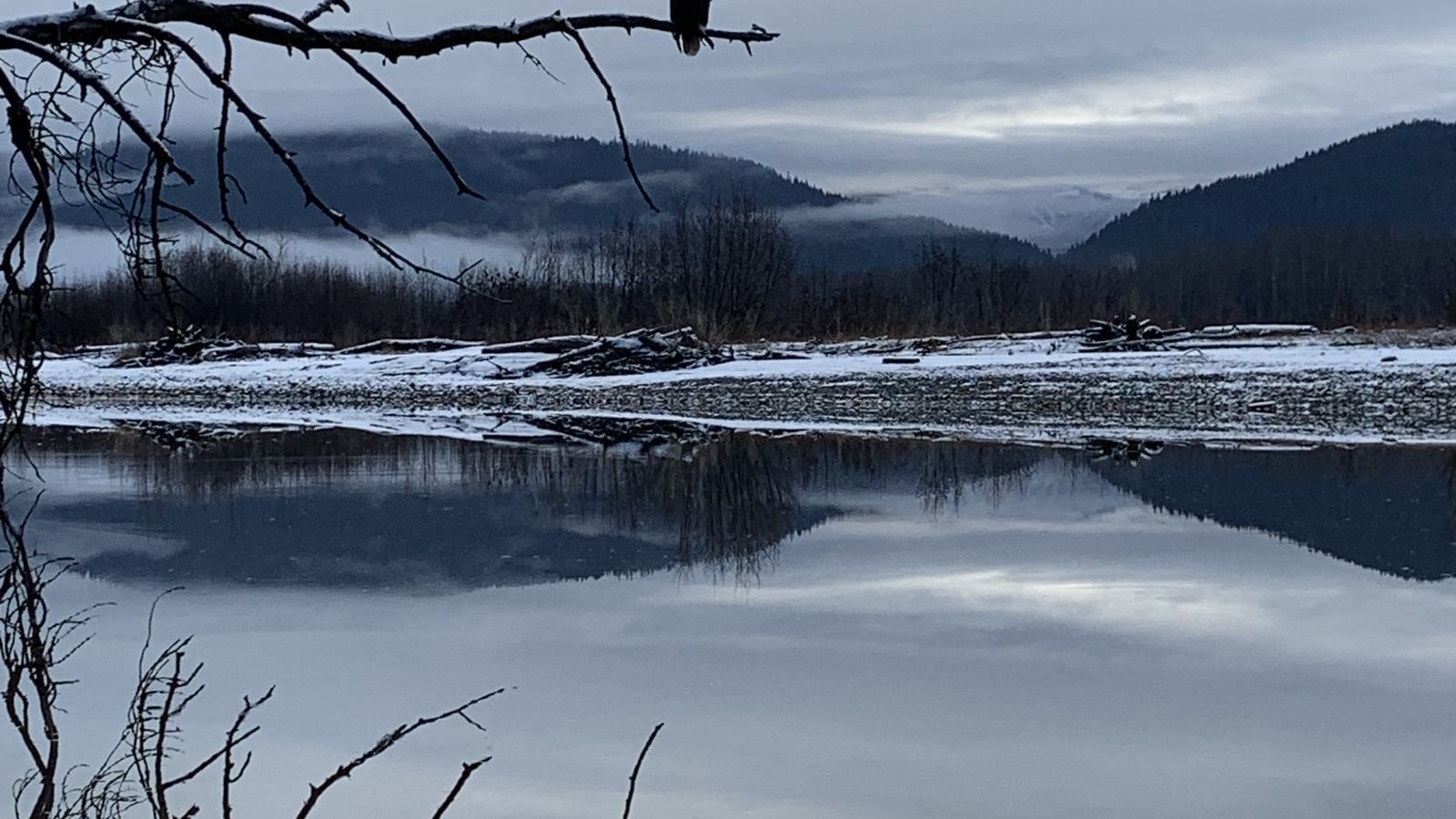
A researched superyacht expedition guide to Haines, Southeast Alaska, with realistic Portage Cove arrival planning, eagle and bear viewing ethics, and cultural heritage.
Where the Inside Passage opens into a mountain landscape
Haines is one of Southeast Alaska's most compelling calls for an expedition-minded superyacht. At the northern reaches of Lynn Canal, immense slopes frame the water and working waterfronts connect to valleys where salmon, eagles and bears shape the rhythm of local life. The attraction is not a luxury marina complex, but the possibility of returning to a quiet, well-managed yacht after a day spent with guides who understand a fragile northern landscape.
A visit is best approached as a small expedition within a larger Inside Passage voyage. The crew must balance navigational exposure, moorage or tender arrangements, weather windows and a shore programme that may change with river conditions or wildlife movement. Guests who embrace that flexibility can experience Haines more meaningfully than those racing between fixed photo stops, and the vessel becomes a comfortable base without insulating travellers from the region's character.
Portage Cove, arrival planning and large-yacht realities
Haines Borough administers Portage Cove Small Boat Harbor and publishes formal transient moorage rules and fees. Those public documents demonstrate that visiting vessels are part of the harbor's operating system, but do not amount to a guarantee of suitable berthing for a large superyacht. Before committing to Haines, the captain should contact the harbormaster with the yacht's length overall, beam, draft, displacement, desired dates and shoreside service requirements.
In particular, a marina designed around small fishing and recreational craft should not be assumed to have unlimited depth, turning room, shore-power capability or an unobstructed large-vessel berth. If the harbor cannot accommodate the yacht, any anchorage or tender strategy must be assessed independently for holding ground, forecast winds, sea state, tidal range and safe transfer. The crew should never improvise a guest landing at a working dock without permission.
The logistics of a successful Haines call are practical rather than glamorous: advance clearance with local facility managers, tender timings that match the day's weather, a clear emergency return plan and provisioning organised around what the town can actually supply. Coordinate passenger movement so it does not obstruct commercial operations, floatplanes or other local traffic. A discreet arrival makes the difference between a good visit and an intrusive one.
The Chilkat Bald Eagle Preserve: wildlife without spectacle
North of town, the Alaska Chilkat Bald Eagle Preserve protects an important landscape of the Chilkat, Klehini and Tsirku rivers. Alaska's Department of Natural Resources describes a preserve of approximately 48,000 acres established to support eagle habitat, salmon runs and traditional uses of the land. Its official visitor information recommends designated viewing pullouts along the Haines Highway and identifies a riverside trail and viewing platforms rather than unrestricted access to sensitive habitat.
Eagles use the preserve at different times of year, with the greatest concentrations generally in late autumn and early winter. The purpose of a shore trip should be to observe natural behaviour, not to demand close encounters or exact numbers of birds. With a knowledgeable local guide and enough unhurried time at approved viewing places, a guest can see the connection between the river ecosystem and the wildlife it sustains.
Keep binoculars and long lenses ready, remain within permitted viewing areas and allow animals a generous margin. The state asks visitors to avoid creating stress for feeding or resting birds, a principle worth extending to every wildlife encounter on this itinerary. Noise, drones and attempts to draw a bird closer are inconsistent with a high-quality conservation-minded expedition, however impressive the resulting photograph might look.
Chilkoot Lake: salmon, bears and a careful shore visit
Chilkoot Lake State Recreation Site offers a second distinctive setting, reached by road from Haines rather than by taking a large yacht into a freshwater lake. Alaska State Parks places the site at the south end of Chilkoot Lake near the Chilkoot River outlet, with boating, fishing and wildlife-viewing opportunities. The department also warns that migrating salmon attract bears to the river corridor, making access discipline and bear-aware guiding fundamental parts of the experience.
For a superyacht party, the right excursion is not a crowded dash to a riverbank. Choose a licensed or experienced local guide, keep the group together and follow all posted directions around salmon water. Never approach bears for photographs, block their travel route or leave food accessible; viewing conditions can change quickly, and the guide must have authority to shorten or cancel the outing.
Alaska's current park-status information should be checked before departure, particularly outside the summer season. A site can remain a worthwhile day visit while a campground, staffed service or boat facility is closed, and operators should not promise amenities on the strength of older guidebooks. A well-prepared return to the yacht can replace a rushed lunch or a stop that unexpectedly lacks services.
Indigenous knowledge and the history of Port Chilkoot
Haines and the Chilkat Valley should be understood first as a place of enduring Indigenous life and stewardship, not merely as an American gold-rush waypoint. A meaningful guest itinerary makes room for locally led cultural interpretation and respects the distinction between public stories and knowledge that communities do not offer for casual tourism. Arrange any arts or heritage visit through the relevant local organisation and follow its photography guidance.
The later military history is also visible in the streetscape near Portage Cove. The U.S. National Park Service identifies Fort William H. Seward as a National Historic Landmark associated with the Alaska gold-rush era and the boundary dispute with Canada. Historic buildings and the landscape can add context to a town walk, but many properties have private ownership or specific access conditions; a designation as a landmark does not mean unrestricted entry.
Combining Indigenous perspectives, the history of the fort and the life of today's waterfront produces a richer day than treating every site as a separate attraction. If time is limited, one thoughtful guided conversation followed by a quiet walk may offer more than a checklist of stops. The objective is to leave with an understanding of why this particular land-and-sea meeting point matters.
Weather, seasonality and the ethics of expedition cruising
Haines deserves a forecast-led itinerary. Lynn Canal and neighbouring inlets can experience local winds, rapid changes in visibility and uncomfortable conditions for tenders, while river excursions are influenced by rain, runoff and animal movements. Captains should use current official marine forecasts, charts and notices for their exact route and never interpret a scenic sunny image as assurance of conditions when the yacht arrives.
Seasonal timing influences what is possible on shore. Salmon and bear viewing are closely tied to ecological conditions, while eagle concentrations tend to change through the year, so the programme should promise landscape and learning rather than a guaranteed sighting. In shoulder seasons, daylight and the status of roads, park facilities and local guiding services also affect the viability of excursions.
The strongest luxury offer here is the quality of attention rather than the exclusivity of access. Small groups, no litter, patient wildlife watching, fair use of local guides and respectful relations with harbour staff make a tangible difference. The yacht's resources can provide warmth, medical readiness, dry clothing and flexibility, allowing guests to step ashore without expecting the local community to furnish every comfort.
A practical two-day Haines programme
On a first day, arrive in a suitable weather window, complete the harbor or anchorage arrangements and reserve a modest shore programme. A carefully arranged town walk could pair waterfront context with the exterior heritage setting of Fort William H. Seward, followed by locally guided cultural interpretation where available. Keep the evening flexible for a quiet dinner aboard and a reassessment of the next day's forecast.
On the second day, prioritise one wildlife landscape instead of treating the Chilkat Preserve and Chilkoot River as attractions to race through. Visit designated Chilkat viewing places when conditions make eagle watching worthwhile, or take a responsible Chilkoot Lake shore excursion with a qualified guide and bear-safe procedures. A contingency day or alternative low-impact town programme is sensible if road, weather or wildlife conditions advise against travel.
Before departure, confirm the yacht's next suitable fuel, water, waste and sheltered-port arrangements rather than assuming every requirement can be handled in Haines. The reward for this operational care is an Alaska itinerary that feels both adventurous and properly considered: mountain scenery, living communities and extraordinary wildlife observed on their own terms.