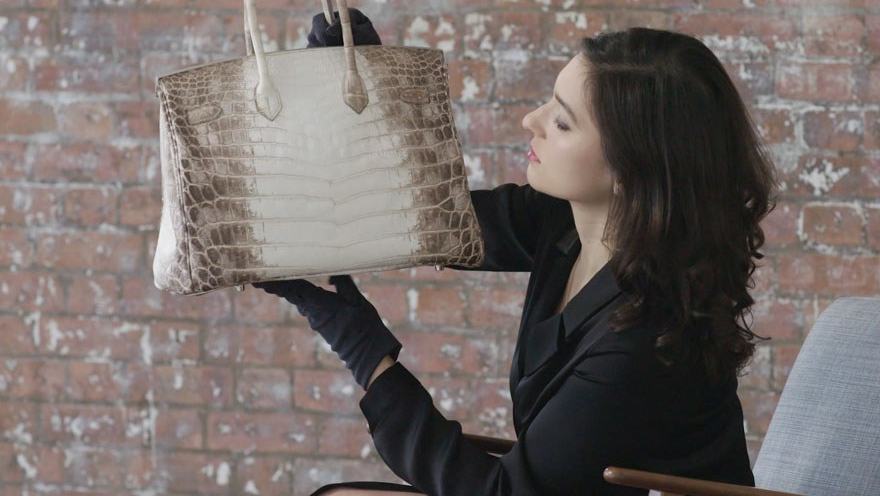
Christie's new collector guide explores the Hermès Himalaya's complex dyeing process as a 2002 Kelly 32 heads through a Paris online sale and a 2022 Birkin 25 enters Hong Kong.
High-end fashion collecting, 12 November 2026. This is a collector guide covering the Himalaya material and multiple upcoming auctions, not a duplicate claim that the Paris Kelly 28 previously listed by SYG has newly sold.
A fashion object that entered the collectibles market Christie's has refreshed its guide to the Hermès Himalaya, presenting the rare Birkin and Kelly variants through the perspective of specialist Rachel Koffsky Parker as the November 2026 Paris and Hong Kong handbag auctions approach. The bags have become valuable not only as accessories but as objects studied for their craftsmanship, scarcity and condition. The current guide identifies examples in separate forthcoming sales, including a 2002 Kelly 32 in Paris and a 2022 Birkin 25 in Hong Kong. This is a collector-focused development rather than an announcement that either has sold. The published estimates provide context but do not establish future prices. Experienced buyers will recognise that two bags sharing the Himalaya designation can differ dramatically in material, size, age, hardware and preservation. A responsible assessment begins with the individual object rather than the fame of the name.
The Himalaya name describes colour rather than origin The distinctive Himalaya appearance comes from a gradual transition between smoky grey and pale, almost white tones, intended to evoke a snow-covered mountain landscape. It does not mean the bag was manufactured in the Himalayas or sourced from that region. Christie's explains that the finish is particularly difficult to achieve on Niloticus crocodile leather, because lighter tones make inconsistencies more noticeable. A collector should be alert to the distinction between a seller's descriptive marketing language and the detailed manufacture information that can be verified for an individual bag. The specific shade and the quality of the gradation contribute to visual appeal, but they are not substitutes for authentication. Photographs may also distort subtle colour differences depending on lighting and editing, making direct examination or properly controlled images valuable.
Craftsmanship extends beyond the recognisable silhouette Hermès bags are often discussed as symbols of exclusivity, yet the collecting case depends on workmanship as well as branding. Cutting and assembling the material requires attention to the texture and scale pattern, while stitching, edge finishing and hardware installation influence durability and appearance. On a Himalaya piece, the placement of colour across the bag makes consistency particularly visible. The qualities that attract a serious collector may be imperceptible in a small online photograph. As with other rare luxury objects, craftsmanship can be evaluated through details such as symmetry, stitching, structure and signs of previous repair. An old bag with excellent original features may be more desirable to some collectors than a cosmetically refreshed specimen, even if the latter appears brighter. It is therefore important to understand which interventions have been performed and by whom.
The 2002 Kelly 32 appears in Paris Among the objects illustrated in the Christie’s guide is a matte-white Himalaya Niloticus crocodile Retourné Kelly 32 with palladium hardware, dated to 2002. It is offered in the Handbags & Fashion: The Paris Edit online auction, closing on 13 November 2026, with an estimate of €60,000 to €80,000. Those figures relate to the catalogue's expectations and are not a declaration of the sale result. Prospective buyers should review the specific condition statement, photographs, dimensions and included accessories rather than assume every historical Kelly is identical. A 2002 item is old enough that storage practices, use and possible restoration could influence its current condition. The estimate is also not the final all-in purchase cost, which may include auction charges, applicable taxes and international transport arrangements.
A Birkin 25 is scheduled for Hong Kong Christie's also identifies a 2022 matte-white Himalaya Niloticus crocodile Birkin 25 with palladium hardware, with an estimate of HK$1 million to HK$2 million, in its 23 November Hong Kong Handbags & Accessories sale. The difference in estimate from the older Paris Kelly is not a simple measurement of how much more valuable one Hermès silhouette is than another. Condition, date, size, finish, market demand and the individual specimen all matter. A buyer should also consider whether the bag suits a particular collection: some collectors focus on rare finishes across multiple sizes, while others seek representative examples of the Birkin or Kelly design through the decades. The price can reflect competition among bidders at a particular sale rather than a universally applicable market level. Auction results should be interpreted alongside the actual object descriptions.
Historical records show a volatile high-end market Christie's summarises several notable Himalaya results from prior years, including HK$2.3 million for a Birkin 30 in 2016 and HK$2.9 million for another in 2017. The specialist feature also cites HK$3.6 million for a Birkin 25 in 2025, together with prominent Kelly transactions. These figures demonstrate sustained interest in exceptional examples, but they cannot be used to forecast a resale price for an unrelated bag. A record lot may have unique condition, provenance or hardware that cannot be replicated. Exchange rates, buyer's premiums and the reporting convention used for individual records must be compared before drawing conclusions across regions. For a collecting family, the value of a rare accessory can be meaningful, yet it should not be treated as a liquid asset interchangeable with cash or listed securities.
Authentication is a specialist undertaking An expensive Hermès handbag warrants careful authentication, including construction details, hardware, stamps, condition and its accompanying documentation. Counterfeiters may imitate obvious markings while missing subtler elements; conversely, genuine bags can change appearance through age, storage or repairs. A buyer should follow the auction house's formal condition-report process and consider independent expertise where appropriate. It is wise to record the provenance and the exact features of the piece after acquisition, including receipts, photography and any permitted export or material documentation. A bag with missing accessories may still be authentic, but the absence of items can affect value. Authentication is not made stronger merely by an attractive story about a previous owner. Written evidence and consistency with known craftsmanship remain central.
Exotic leather introduces legal and ethical questions Crocodile leather is regulated in various jurisdictions, and the movement of a handbag across borders may require documentation under wildlife-trade rules. The fact that a luxury brand manufactured an object, or that it is offered by a major auction house, does not automatically mean it can be transported without restrictions to every country. Purchasers should confirm with the seller and competent authorities which documents are required for their intended delivery destination. Customs duties, taxes and insurance can also affect the total cost. Ethical considerations about exotic materials are important to some collectors and may shape acquisition decisions independently of market prices. Buyers who travel frequently with a collection should assess practical restrictions before deciding that a rare bag is suitable for carrying internationally. This is an area where careful advance planning can prevent expensive complications.
Storage can determine long-term condition A valuable bag may spend far more time in storage than in use. Leather and hardware respond to changes in humidity, temperature and handling; prolonged compression can distort shape, and unsuitable protective materials can cause marks. A collector should follow appropriate care advice from the manufacturer or qualified conservator, avoiding improvised treatments. The bag should be documented periodically so any changes in condition can be detected. For holdings distributed among multiple residences, a central inventory may help record location, insurance and custody. A Himalaya piece carried aboard a yacht could encounter humidity, salt-laden air or restricted storage conditions that demand additional attention. Owning a portable luxury object is convenient, but portability does not remove the need for an appropriate preservation strategy.
The bag as fashion history and personal expression The Himalaya's appeal spans more than material rarity. The Birkin and Kelly are enduring shapes within the history of luxury accessories, and unusual finishes can become a way for collectors to explore how design, branding and craftsmanship interact. Some private buyers regard these handbags as art objects to preserve; others intend to use them. Neither approach is inherently wrong, but the consequences for condition and insurance differ. A collector who plans to wear a rare bag should recognise that ordinary signs of use may affect future market value. Those who prefer display should ensure the presentation does not expose it unnecessarily to light or physical stress. A meaningful collection can include both frequently used pieces and historically significant examples maintained primarily for study.
What the updated guide establishes Christie's November 2026 feature explains the workmanship behind the Himalaya finish and highlights two separately catalogued opportunities: a 2002 Kelly 32 estimated at €60,000 to €80,000 in a Paris auction closing on 13 November, and a 2022 Birkin 25 estimated at HK$1 million to HK$2 million in Hong Kong on 23 November. The article also refers to historic high-profile results and discusses the challenges of production. It does not confirm a sale result for either upcoming lot or prove that a particular buyer can resell a bag at a prior record price. For wealthy collectors, the sensible response is to evaluate individual craftsmanship, documentation, condition, import requirements and total purchase cost. Scarcity may create fascination, but disciplined knowledge is what allows collecting to endure.
Original source: Christie's, 6 November 2026, The Hermès Himalaya deconstructed.