Hillwood Estate’s Russian imperial art, French decorative objects and Fabergé treasures offer insight into private collecting, provenance and stewardship.
At Hillwood Estate, Museum and Gardens in Washington, DC, Marjorie Merriweather Post's collecting interests provide an unusually coherent setting for the study of decorative art. The institution's online collection presents nearly 20,000 objects, encompassing Russian imperial works, eighteenth-century French decorative arts and the founder's personal jewellery, clothing and accessories. For a private client who enjoys exceptional goldsmithing, porcelain or important furniture, the breadth of the collection encourages a different kind of discussion from the examination of a single celebrated object at auction.
Hillwood offers an opportunity to think about the relationship between luxury objects, their original purposes and the responsibilities of the people who acquire them. Its importance for contemporary superyacht owners does not lie in a prescription for furnishing an interior in an imperial style. Rather, it gives owners the opportunity to refine their understanding of workmanship, the arrangement of collections and the long-term choices involved when valuable objects become part of private life. A visit can also complement a planned meeting with an adviser or an independent study of a particular category of decorative art.
The coherence of a personal collecting interest
Post accumulated a collection that spans several categories of material culture. The museum's catalogue, now available to explore online, allows the visitor to move between areas of interest rather than confining objects to a single narrowly defined subject. A collector of jewellery may discover connections with richly ornamented tableware, while someone interested in historic interiors may be drawn to smaller items of metalwork or personal adornment.
This is a useful reminder that collectors can develop a distinctive approach without deciding in advance that every future acquisition must fit a single historic period or category. A coherent collection may emerge through an interest in particular forms of craftsmanship, a history of travel or an appreciation of the way different cultures approached similar objects. What matters is understanding these relationships well enough to explain why the next acquisition belongs. Where a family has several residences and a yacht, such an approach can give the collection continuity without requiring each environment to contain identical styles or categories of work.
Fabergé and the significance of miniaturisation
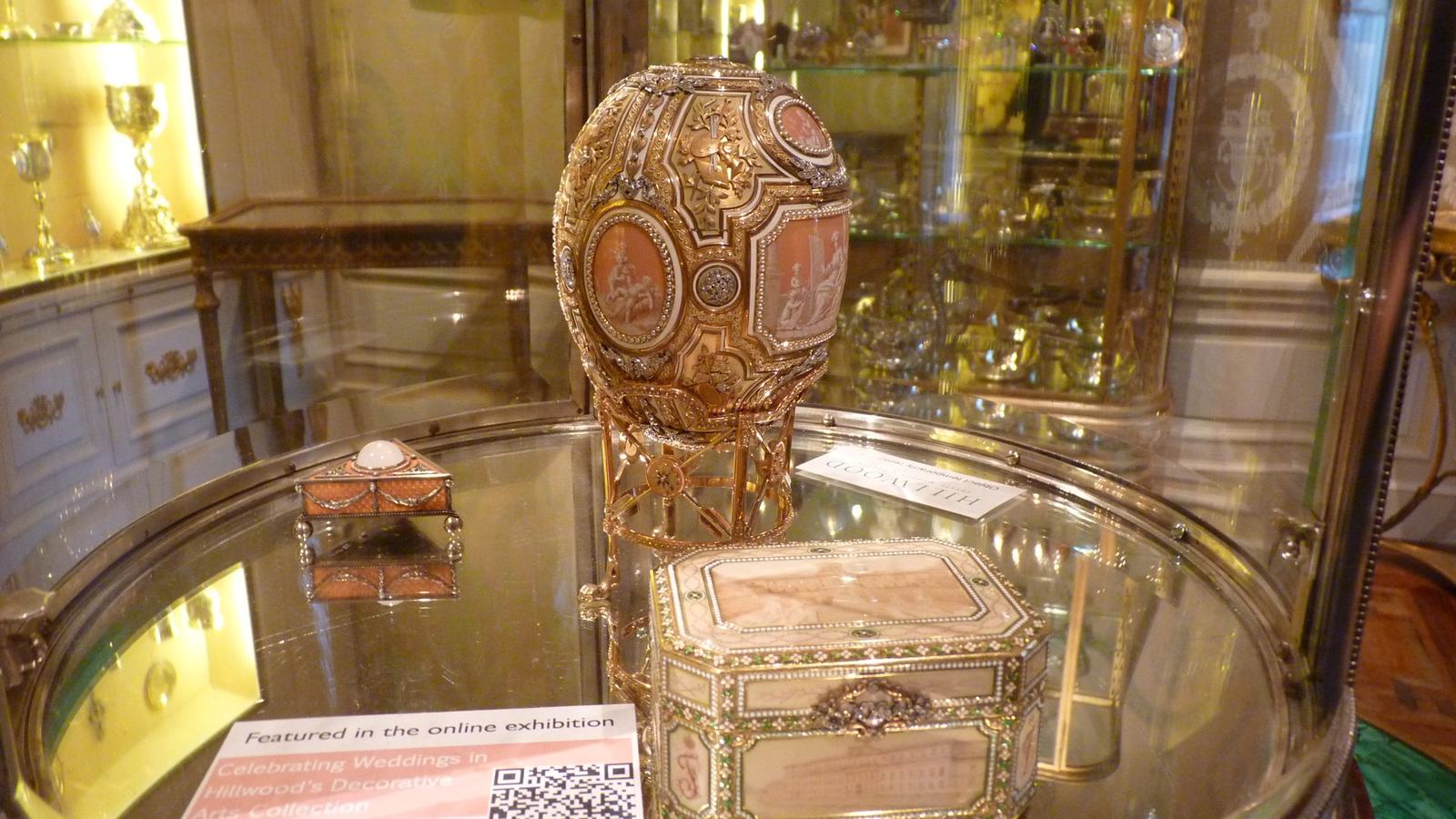
The Catherine the Great Easter Egg at Hillwood is a particularly recognisable example of the imperial objects associated with the house of Fabergé. Its place within a wider decorative arts collection encourages a closer consideration of the skill involved in creating a small, exceptionally detailed object. The selected photograph accompanying this article shows that specific work rather than an unrelated modern reproduction. Visitors should consult the institution's records for the detailed historical and material information concerning the piece.
One reason such objects appeal to collectors is that scale does not diminish the care needed to resolve problems of construction. When a maker works within a restricted volume, the relationships between proportions, surfaces and the structural elements of the object become demanding. Even a decorative object with no modern mechanical purpose may contain complex internal arrangements that are not visible at first glance. A commission for a modern jewellery case, a miniature carved object or a presentation piece can be approached with a similar interest in precision. The aim is not to copy an imperial treasure, but to appreciate what a highly resolved small object can contribute to a collection.
Ceramics and the history of formal hospitality
Hillwood's French decorative arts holdings include objects that can prompt a detailed interest in the provision of formal hospitality. Porcelain tableware is often perceived initially through its colour, pattern or association with a particular manufacturer. Historic collections reveal that table settings also reflect the social practices of the people for whom the pieces were originally made.
The requirements of modern private hospitality may differ considerably. A formal dinner on a superyacht might involve excellent service without adopting the conventions of an eighteenth-century household. Owners should discuss practical needs with both their hospitality team and the people responsible for selecting wares. The useful properties of a piece include its dimensions, weight, durability when handled and ease of storage, in addition to its appearance. A contemporary collection developed in consultation with a skilled maker can produce a coherent setting while allowing the operations of the vessel to proceed naturally. Sensitive older pieces can remain in a suitable residence or be enjoyed on occasions for which appropriate conservation measures can be arranged.
Collecting objects that tell a wider story
Russian imperial decorative arts can connect several areas of history: the circumstances in which an object was commissioned, the skills of the specialist responsible for it and the way it was subsequently preserved or dispersed. Individual pieces may have acquired a complex history by passing from one owner to another. Those relationships should be investigated carefully rather than being assumed on the basis of a familiar style or an association suggested by an auction description.
Private buyers should use qualified experts and consult reputable records when a proposed object is described as having historic or royal provenance. The significance of such documentation extends beyond the immediate negotiation of price. It can help distinguish substantiated historical links from speculative stories that have accumulated during previous transactions. A responsible acquisition process should also examine lawful ownership and any relevant import, export or sanctions restrictions before money changes hands. Those legal questions depend on the individual object, parties and jurisdictions, so they require appropriate independent advice rather than relying on broad historical labels.
The experience of a collection in a furnished house
A museum established around a former private residence can reveal aspects of collecting that are harder to appreciate in a display of objects without architectural context. Room dimensions, the relationship with nearby furniture and the sequence of adjacent spaces all change the way a visitor perceives a decorative work. A small object closely examined within a room may provide a different kind of experience from a much larger statement piece.
There is considerable relevance to the design of private residences today. An owner might decide that a library should be arranged around a group of small sculptures, while a reception room is better suited to larger paintings. These decisions can inform furniture placement and lighting arrangements before the interior is finished. For a yacht, the designer must also account for the movement of the vessel and the technical conditions in which the objects will be enjoyed. A significant work may need an independently designed support, or a personal collection may be more satisfactorily managed through rotating exhibitions at a family residence. Neither arrangement reduces the value of the work itself.
Making the collection accessible to future generations
The size and diversity of Hillwood's online records illustrate the challenge of maintaining useful information about a substantial collection. The institution describes its catalogue as an ongoing project; some objects do not yet have complete descriptions or photographs. That transparency is instructive because even a well-managed collection can contain gaps in its own historical documentation.
Families can address this issue while their knowledge of the objects is still available. Records should distinguish a verified attribution from a description provided by a former owner and from an opinion that has not been independently tested. Photographs can be taken to document condition, identifying details and installation requirements, with sensitive information retained privately. Advisors managing a growing collection ought to establish an orderly system of records that is capable of being used by a successor. A well-organised archive makes it easier for future owners to understand the reasons an object was acquired and to arrange its care without beginning the research again.
Preservation and the realities of ownership
There is a tendency for the public discussion of luxury collectibles to focus on impressive sale prices and rare objects. The preservation of a collection requires a different set of priorities. Many historic materials need advice on storage, display and environmental conditions, and some objects should not be cleaned or repaired through methods appropriate to ordinary modern possessions.
Owners contemplating a collection of precious metals, porcelain and other decorative objects can ask a specialist to provide a proportionate long-term care plan. The plan should account for the circumstances of the different materials and the requirements of any insurance arrangements. Items intended to accompany a family between properties or to be displayed on a yacht may require separate arrangements for handling and transport. The people responsible for the private residence, vessel and secure storage should understand their respective duties. This is particularly important when several household or management employees may take care of the collection at different times. The intention is to make its enjoyment sustainable, not to turn every use of an object into an administrative exercise.
A Washington itinerary for the discerning collector
A planned visit to Hillwood can be an important cultural component of a stay in Washington, beyond appointments conducted in the city for business or other purposes. Visitors with a particular interest in a category of decorative art should consult the museum's online records before arriving and verify the availability of relevant galleries or exhibits. The website's collection search is especially useful to those who wish to identify individual works in advance. A request for access to material not on ordinary display should be directed to the museum rather than assumed to be included in admission.
The most productive visits may be those in which a prospective patron is accompanied by a knowledgeable adviser or has prepared a short programme of objects to examine. No single afternoon can convey the significance of every category represented at Hillwood. There is value in returning to investigate a different aspect of the collection once the interests raised by an earlier visit have been explored in more depth.
Hillwood ultimately illustrates the potential of serious private collecting to create a lasting environment for the enjoyment and understanding of exceptional workmanship. Although the history and resources of its founder were distinctive, contemporary owners can apply the principle in a personal way: develop a clear interest, acquire through informed judgement, document each significant object and make responsible plans for its preservation. The results need not resemble a historic palace. They can become a distinctive and carefully developed part of the life of a family, whether enjoyed in a city residence, an estate or a setting created around its voyages.
Primary source: Hillwood Estate, Museum and Gardens — Icon Room and collection.
Catherine the Great Easter Egg at Hillwood, photographed by ctj71081; source: Wikimedia Commons, CC BY-SA 2.0. Image resized and JPEG encoded. Photograph and attribution · Licence.
