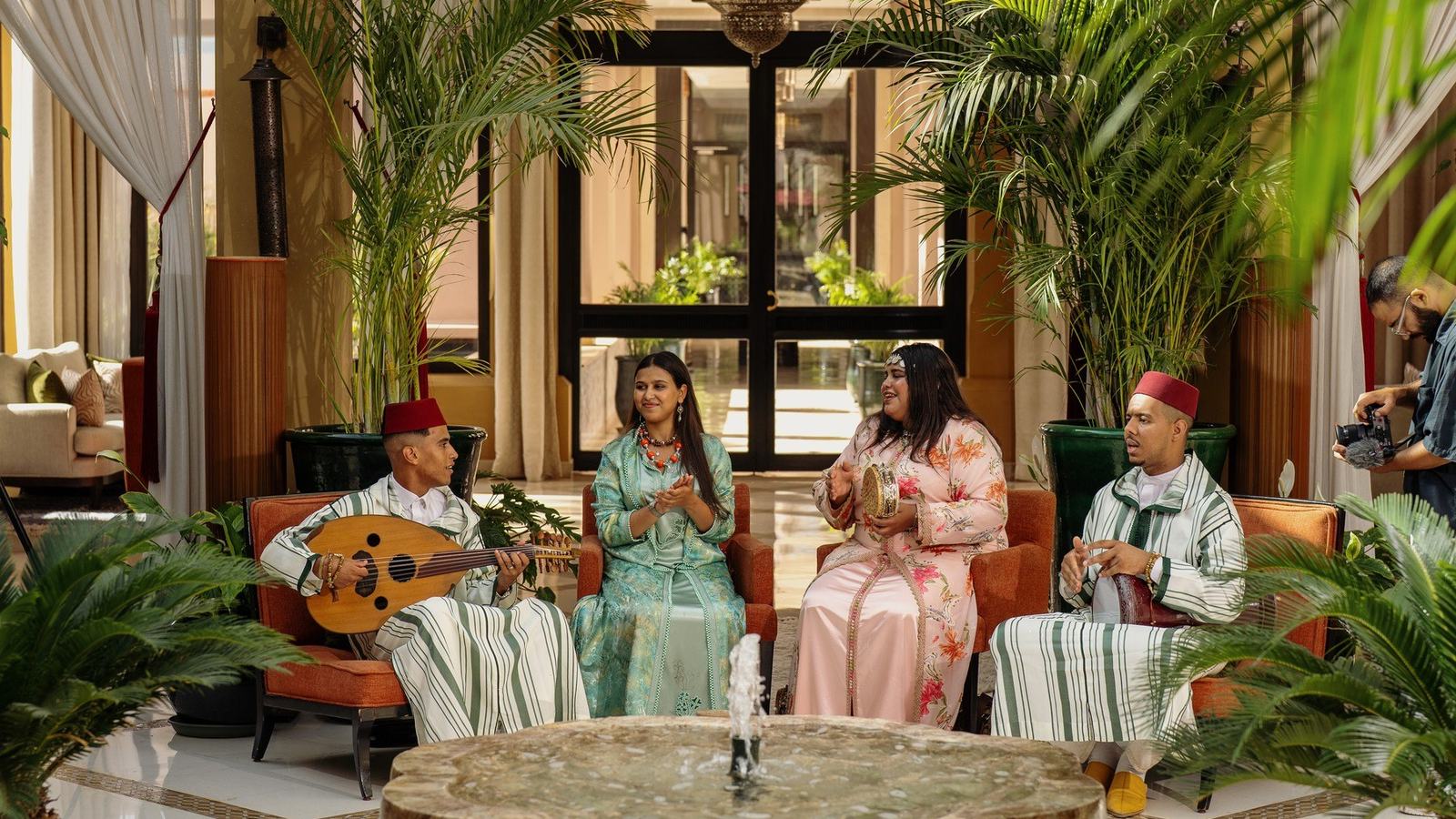
Inara Restaurant & Lounge has opened at Four Seasons Resort Marrakech, combining regional Moroccan dishes, a riad-inspired garden setting and musical traditions.
A new restaurant rooted in Marrakech
Four Seasons Resort Marrakech has opened Inara Restaurant & Lounge, adding a new dining address whose identity is deliberately Moroccan. The venue sits within the resort and takes design cues from a traditional riad, placing a central fountain and garden-facing terrace at the heart of the guest experience.
The opening is significant because a luxury international resort can choose to import a global restaurant formula or give its setting a more substantial voice. Inara takes the second route, drawing the food, music and atmosphere from Morocco's own regional traditions while adapting them for a contemporary hotel audience.
Executive chef Jean-Denis Rieubland's approach
Executive Chef Jean-Denis Rieubland, a holder of the Meilleur Ouvrier de France distinction, has developed a menu that moves from familiar Moroccan sharing dishes to more elaborate preparations. The emphasis is on recognisable ingredients and methods, although the presentation makes room for experimentation and the expectations of a luxury restaurant.
An assortment of Moroccan salads, filled briouates and a pulled-lamb mechoui batbout sit alongside quail pastilla with foie gras and almond jus. This is not a claim to reproduce one household's recipe exactly. It is a deliberately varied menu that acknowledges different strands of the country's culinary history.
Seafood carries the coastal influences
The seafood selection includes chermoula red mullet and Oualidia blue lobster with apple and saffron fennel. Oualidia is associated with Morocco's Atlantic coast, and its appearance in the menu helps extend the story beyond Marrakech. The city may be inland, but Moroccan cuisine has always been informed by coastal trade and fishing communities.
Seafood is also a useful test of a luxury kitchen's restraint. A strongly flavoured marinade or a fragrant herb can illuminate a fish without obscuring it. Inara's published menu points towards that balance, though diners should confirm seasonal availability and current preparations rather than expect every announced dish to remain unchanged.
The regional classics receive attention
Tangia Marrakchia, orange-braised lamb shoulder and seasonal tagines show the kitchen's commitment to slower-cooked meat traditions. Couscous appears both in a generously garnished presentation and a plant-based version with seven vegetables. The range allows diners to choose between celebratory dishes for sharing and more individual plates.
These preparations matter beyond their names. A tangia is associated particularly with Marrakech, while couscous carries social meaning in families and communities across North Africa. Featuring them in a hotel restaurant can be valuable if the cooking conveys the underlying techniques and hospitality, rather than treating them as decorative references.
Dessert and the country's aromatic palate
The sweet course draws on citrus, rose, dates, amlou, saffron and chebakia, ingredients and preparations that communicate Morocco's distinctive dessert culture. For guests unfamiliar with these flavours, the sequence after a savoury meal can introduce combinations far removed from a conventional international pastry list.
Amlou, commonly associated with almonds, argan oil and honey, shows how a comparatively simple regional preparation can carry a strong sense of place. The resort has not published a fixed dessert tasting sequence in the announcement, so this is a description of the culinary direction rather than a promise of a particular menu at every service.
Music is part of Inara's identity
Inara plans regular cultural programming that brings Moroccan music and artistic expression into the restaurant. The announced repertoire includes the poetic Melhoun tradition, Chgouri sounds and Al-Ala music associated with an Arab-Andalusian legacy. The intention is to make a meal part of an encounter with the country's living cultural heritage.
That ambition requires careful distinction between a scheduled performance and everyday dining. The venue says programming will take place regularly, not necessarily each evening, and visitors should verify dates if music is central to a booking. Where it is thoughtfully presented, the cultural element can give the restaurant depth beyond food and décor.
A garden retreat inside the resort
The riad-inspired design, central fountain and terrace opening onto palms and gardens suggest a calmer setting than the intense rhythm of central Marrakech. Inara can therefore act as a base for a lingering lunch or an evening meal after time spent exploring the city, without disconnecting entirely from the sense of place.
For international guests, the strongest experience may be the conversation between the resort's polished service and the restaurant's Moroccan references. The design does not recreate a historic riad in the medina; it interprets that architectural language within an existing luxury property, which is an important distinction for culturally curious travellers.
The practical invitation
Four Seasons says Inara opens daily from noon until 11pm. Its menu is expected to evolve with agricultural seasons, beginning with autumn references to olives, dates and the grape harvest. That timing offers travellers a reason to revisit as dishes and cultural programming change through the year.
Guests can reserve through the resort's official dining channels. Inara's opening adds a substantial Moroccan option to the dining landscape of Four Seasons Marrakech, with particular interest for travellers who want a meal to be both carefully executed and unmistakably linked to the place they have come to discover.