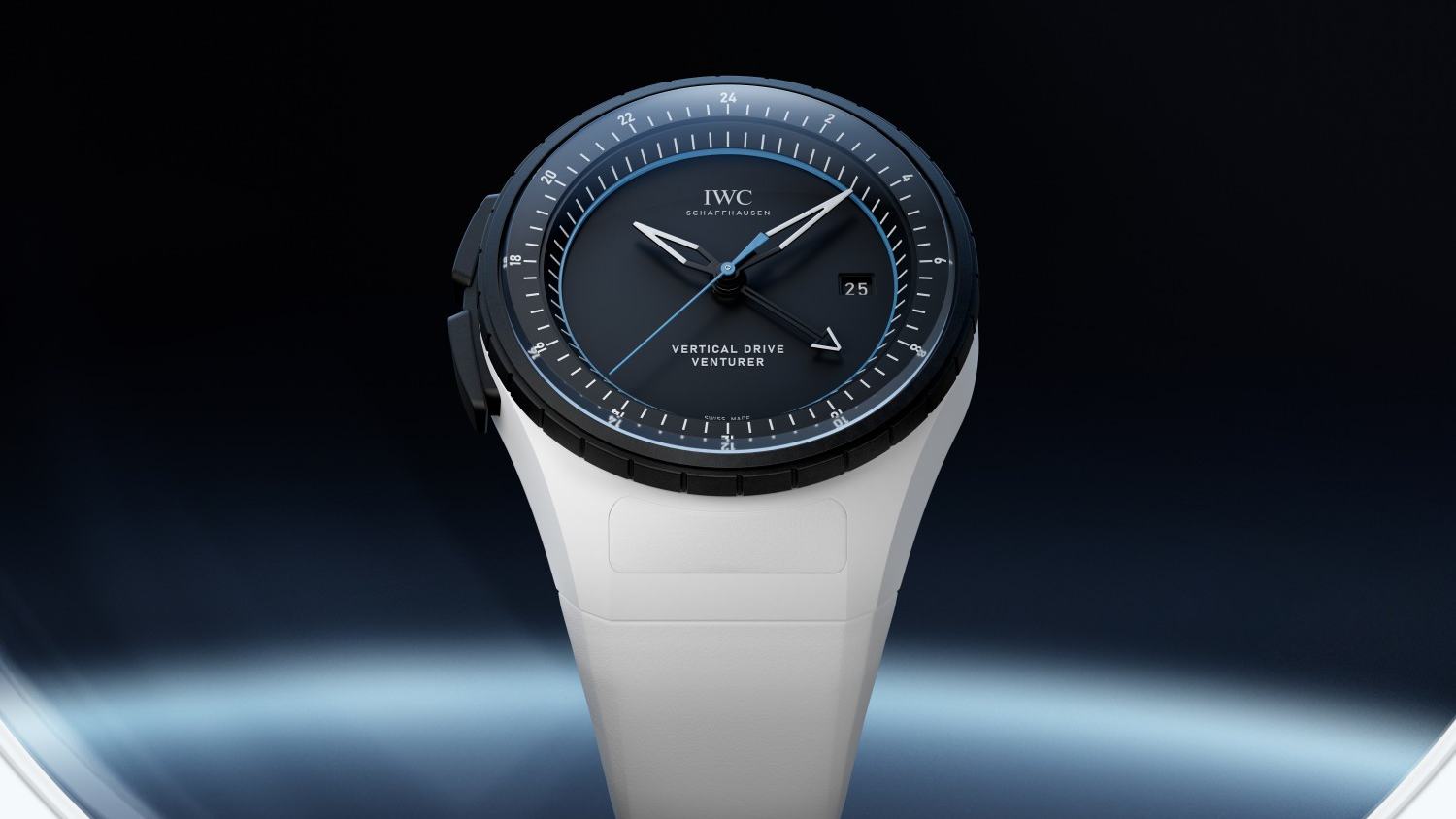
IWC's Pilot's Venturer Vertical Drive is engineered for astronauts, using a rotating bezel in place of a conventional crown and qualifying for Vast's Haven-1 mission.
A watch developed around the needs of astronauts
At Watches and Wonders Geneva in April 2026, IWC Schaffhausen unveiled the Pilot's Venturer Vertical Drive, a mechanical wristwatch conceived for human spaceflight rather than adapted from an existing aviation reference. The watch was developed with input from Vast, the company planning the Haven-1 commercial space station. Its key innovation addresses a practical question: how should an astronaut operate a mechanical watch while wearing protective gloves?
Conventional crowns are relatively small controls, designed for bare fingers and normal conditions. That becomes a limitation when gloves and restricted movement make fine adjustments difficult. IWC therefore approached the project as an engineering problem, beginning with the interaction between a wearer, a watch and the unusual circumstances in which it might be used.
A rotating bezel takes over the crown's functions
The Venturer Vertical Drive employs a patent-pending control arrangement centred on a rotating bezel. A rocker switch on the side selects operating modes, allowing the bezel to control tasks such as winding the movement and setting the home or mission time. The result is an approach intended to be manageable while wearing a spacesuit.
This system has implications beyond the novelty of an unconventional watch. Controls that can be identified by touch and operated with large movements may be easier to use under stress or with limited dexterity. The concept demonstrates how a specialist requirement can force designers to reconsider features that have remained largely unchanged for generations.
Ceramic and Ceratanium answer material challenges
IWC says the watch uses white zirconium-oxide ceramic and its proprietary Ceratanium material. Their combination is intended to provide durability, manageable weight and resistance to demanding environmental conditions. Spaceflight places different stresses on equipment from those encountered in ordinary use, so familiar claims about scratch resistance do not alone establish suitability.
The selection of materials is one part of a larger design process that includes mechanical operation, readability and testing. A watch may survive a laboratory demonstration without necessarily meeting operational requirements, making independent qualification and the defined test environment important distinctions for readers.
Testing with Vast gives the project context
Vast tested the watch as part of work associated with Haven-1, and IWC states that it received qualification for spaceflight on the planned station. That is a reported qualification by the partner for a specified programme, not evidence that the watch had already completed a mission when it was announced.
IWC had earlier experience through the Inspiration4 and Polaris Dawn missions, where watches derived from terrestrial models were worn in space. The Venturer is presented as a different step: designing a tool around the intended operational environment from the outset. Its eventual performance should be judged against the conditions of its mission.
The relationship between utility and collectability
A technically unusual watch can interest collectors even if few owners will use it in its intended environment. The value of such a project lies partly in the engineering choices it demonstrates and the records that explain why those decisions were taken. In this respect it resembles specialist diving or aviation equipment.
Collectors should distinguish an official technical qualification from broader marketing descriptions such as space-inspired or astronaut-style. They should also examine servicing arrangements, since an unconventional setting mechanism may require particular expertise over the watch's lifetime. A rare concept is most valuable when its details can be understood and maintained.
A Geneva launch with a future mission in view
The 14 April 2026 announcement establishes the watch's design, its collaboration with Vast and its intended use with Haven-1. The timing of any mission remains a separate matter from the release of the watch itself and should be checked against official programme updates.
For enthusiasts of modern horology, the Venturer illustrates how an extreme environment can produce meaningful innovations in an otherwise familiar object. It is a watchmaking story about ergonomics, materials and the demands of human operation, not simply a cosmetic reference to space exploration.