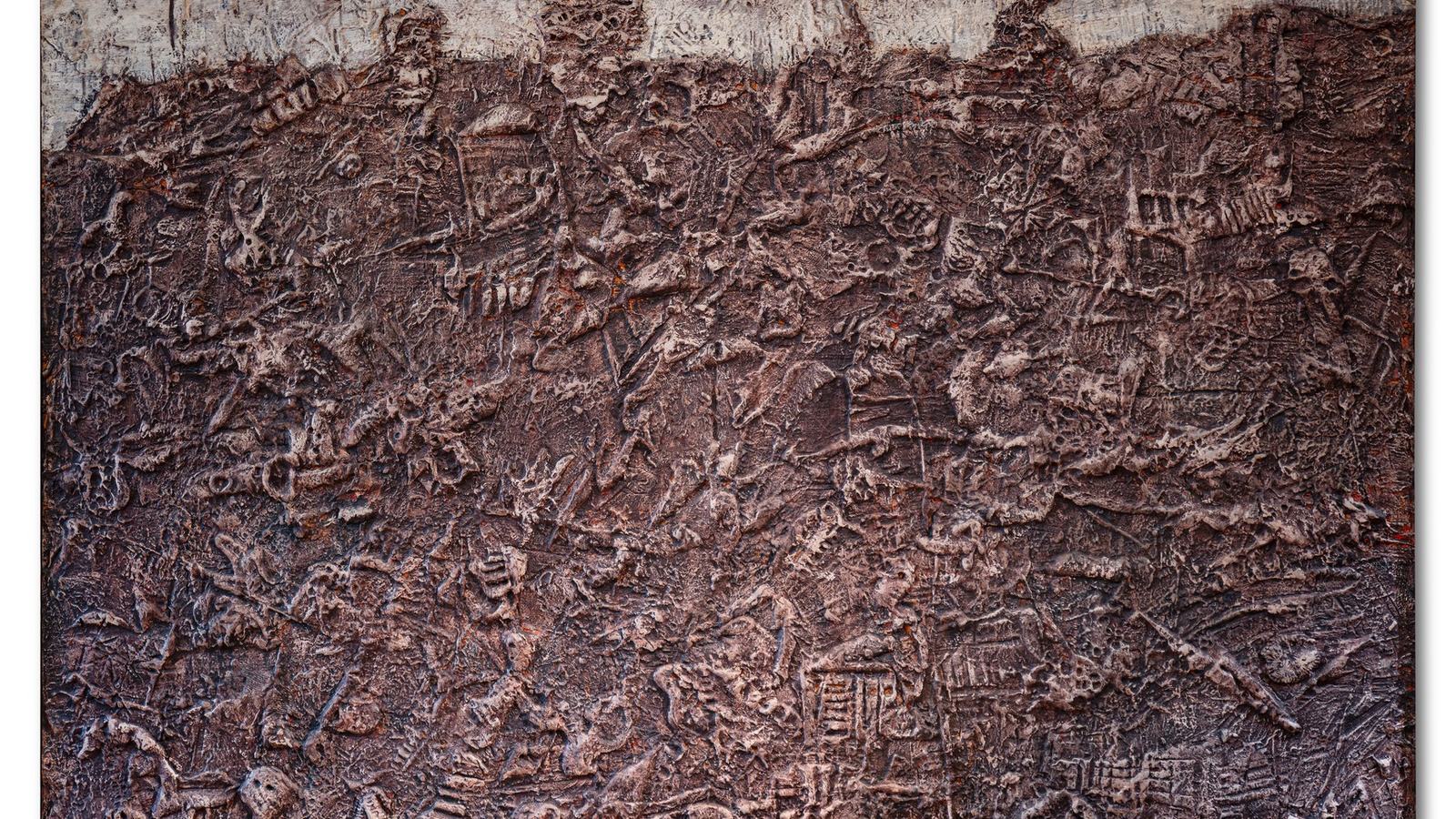
Jean Dubuffet's large 1952 oil-on-board L'Oberland is offered with a €400,000–600,000 estimate, supported by a provenance and exhibition record.
An important 1952 work enters the market
Sotheby's Paris is offering Jean Dubuffet's L'Oberland, a large oil painting made in August 1952, as part of its Modernités auction. The work measures approximately 150 by 195 centimetres and carries an estimate of €400,000 to €600,000.
Its scale and early date place it within a formative period in Dubuffet's investigations of surface, material and the boundaries of conventional artistic taste. The catalogue lists a substantial history of exhibitions and ownership, giving buyers several avenues through which to research the work.
Dubuffet challenges established ideas of beauty
Dubuffet is closely associated with the concept of Art Brut and with an interest in images and expressive practices outside the established academic canon. His own paintings frequently emphasised raw textures and unconventional forms rather than polished representation.
Such work may initially seem deliberately rough or unfinished, but its surfaces often contain carefully considered relationships between material, colour and form. Viewers can benefit from looking beyond the title to examine how the painting creates a particular sense of place or experience.
A large format and unusual support
L'Oberland is painted in oil on Isorel, a fibreboard-type support that differs from the traditional stretched canvas. The material can influence the way paint lies on the surface and how the work responds to changes in environmental conditions.
Collectors should not assume that a sturdy-looking board requires less conservation attention than canvas. Experts can assess stability, warping, past repairs and the condition of the painted layers before the work is installed or moved.
A record of exhibitions
Sotheby's records the painting in a 1952 Paris presentation and in a retrospective at the Musée des Arts Décoratifs spanning 1960 and 1961. These early appearances provide evidence of how the work entered discussions about Dubuffet's career while he was alive.
Exhibition records can help establish historical significance, although they do not by themselves settle questions of price. Scholars and collectors may wish to consult catalogues and archival documentation to understand how the piece has been described at different times.
Provenance and the life of a painting
The catalogue lists Galerie René Drouin and Galerie Daniel Cordier in Paris among its early sources, followed by private ownership and a 1988 Paris auction appearance. Such a sequence illustrates how a work can move from artist-associated galleries into international private collections.
For a purchaser, the quality of documentary evidence and a professional condition report will be important. The records should explain both ownership and any significant physical changes that occurred during the painting's seventy-plus-year history.
Why this particular lot matters
Dubuffet's work remains central to discussions about the relationship between fine art, raw expression and material experimentation. A painting from 1952 offers a specific point at which to examine those ideas, rather than treating his career as a single unchanging style.
The €400,000–600,000 figure is a pre-sale estimate, not a completed transaction. Serious bidders should also calculate associated costs and consider whether the work's size and conservation needs are compatible with their intended display environment.