A responsible luxury yacht itinerary to Jervis Bay on Australia's South Coast, from Murrays and Hyams beaches to Booderee National Park's Aboriginal heritage and marine-park rules.
Australia's white-sand maritime sanctuary
Jervis Bay makes a compelling superyacht stop on the New South Wales South Coast because its reputation is built on the natural world rather than on a dense line of marinas and beach clubs. Bright sand, forested headlands and remarkably clear water give the bay a sense of separation from city life. The regional tourism authority highlights its beaches, wildlife and national parks, while the state government recognises the wider waters through Jervis Bay Marine Park. A thoughtful visit uses that protected setting as the central attraction, never as an excuse to ignore local rules.
The bay may look placid in photographs, but a large yacht still requires professional passage planning, a suitable authorised place to anchor or berth, and safe transfers ashore. The marine park has specific zoning and anchoring exceptions, and the protected coastline includes habitats where even a brief unnecessary disturbance matters. That reality can actually enhance the itinerary. Guests who know the environment is special are more inclined to slow down, listen to a guide and appreciate the remarkable contrast between turquoise shallows and the dark blue beyond.
Entering the bay with a plan
Jervis Bay's relative shelter has made it a destination for local sailing and visiting coastal cruisers. The New South Wales marine-park authority specifically recognises boating as an important recreational activity, but it also publishes rules governing anchoring and the movement of vessels. Some sanctuary zones restrict anchoring except in designated areas, and a permit is required to install or move a mooring. Masters should consult the current zoning map and user guide before finalising the itinerary, using updated charts rather than assumptions based on past visits.
For a superyacht, the most successful arrival is the one guests barely notice. That depends on clear coordination with local authorities, safe tender options, a conservative weather assessment and a backup plan if the preferred anchorage is unavailable. The crew should also brief everyone on the difference between swimming areas, protected habitats and locations where equipment or fishing activity is restricted. These details are part of competent luxury service, not an interruption of it.
Murrays Beach and the Booderee coast
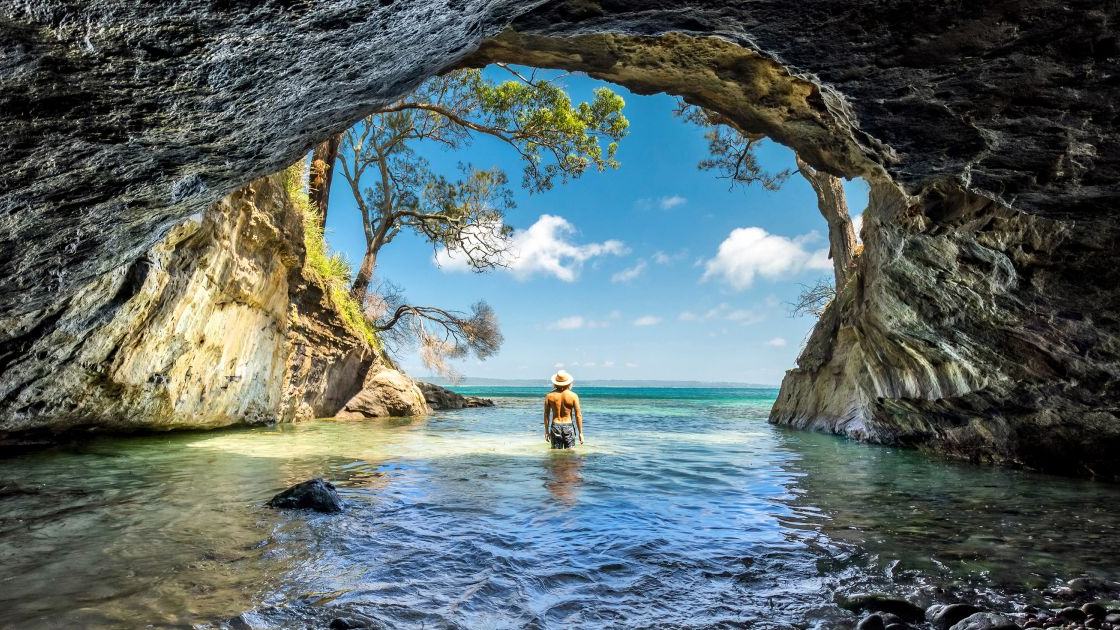
On the southern side of the bay, Murrays Beach is among the area's most memorable coastal settings. Visit NSW identifies it as a strong choice for swimming and snorkelling, with striking pale sand and nearby national-park scenery. Its beauty is obvious, but its significance goes deeper than the postcard view. The adjoining Booderee National Park is Aboriginal-owned land, held by the Wreck Bay Aboriginal Community and jointly managed with Parks Australia. Any shore excursion should begin with respect for that living cultural connection.
Guests may enjoy a beach visit, a guided nature experience or a walk through a permitted part of the park, according to current access conditions. Booderee also includes significant botanical and marine environments, so it should not be presented as merely an attractive beach reserve. Arranging an appropriate local guide helps visitors understand the landscape as Country with enduring custodianship. Photography, wildlife encounters and any recreational activity should observe the directions of park staff and the community's visitor guidance.
Hyams Beach and the pleasure of slow days
Hyams Beach has become a familiar name for travellers seeking fine white sand and calm-looking water. Its appeal is real, but it is best appreciated without the pressure of claiming an invented world record or joining a rush for the perfect photograph. Visit NSW describes swimming, snorkelling and stand-up paddleboarding around Hyams, along with coastal walks through nearby national-park scenery. For yacht guests, an early shore outing can be paired with a quiet lunch and a return aboard before the busiest part of the day.
The coastline also offers a useful lesson in the difference between distance on a map and the practicalities of access. A beach may appear close to a yacht, yet safe tender landing depends on surf, tide, bathers, environmental protection and permission. The master should identify a lawful, suitable transfer point before advertising any specific excursion. If the sea makes a particular beach unsuitable, a land-based visit arranged through local transport can preserve the experience without exposing guests or crew to avoidable risk.
Marine life without a timetable
Jervis Bay is associated with bottlenose dolphins and migrating whales, as well as an array of other marine species. The official regional guide describes whale movement along the South Coast and promotes specialist wildlife experiences. That is a starting point for planning, not a guarantee of sightings on a chosen morning. Wild animals should not be pursued to fulfil a charter promise, and vessel operators must observe applicable approach distances and park rules. A properly licensed local wildlife guide can bring the experience into focus.
Guests may find that the most memorable moment is an unexpected encounter observed quietly from a respectful distance. The same attitude applies to snorkelling and diving: approach the environment as a visitor, do not handle animals, and do not interfere with the seabed. Protected waters offer opportunities to see the natural world functioning in its own time. A luxury yacht provides exceptional comfort before and after the outing, but the creatures themselves are not part of an on-demand entertainment service.
The culture and stewardship of Booderee
Booderee's visitor experience is inseparable from the Wreck Bay Aboriginal Community. The Australian Government explains that the land was returned to the community and is now jointly managed through a board with an Aboriginal majority. Its botanic gardens and cultural landscapes are important expressions of ongoing relationships with Country, rather than decorative additions to a beach holiday. Visitors should seek current, community-approved experiences and listen to the way local guides explain the coastline.
For yacht parties travelling with children or guests unfamiliar with Australian history, this can become the most substantial part of the stay. A guided walk or cultural interpretation programme may shift the focus from how beautiful a beach looks to why the place matters. It is worth keeping the day's schedule loose enough for questions and quiet observation. Responsible tourism should support local guides and enterprises while respecting any sites or activities that are not open to casual visitors.
Huskisson, seafood and the Shoalhaven table
Beyond the water and protected parks, the wider Shoalhaven region has coastal villages and a food culture worth exploring. Huskisson is a natural local reference point for marine activities and a good place to connect with established tour operators. Visit NSW highlights local produce, small dining destinations and an active regional scene extending beyond the bay itself. A chef working aboard can build a menu around thoughtfully sourced South Coast ingredients, with seasonal availability and supplier arrangements confirmed in advance.
The pleasure of a food-focused afternoon need not involve elaborate staging. A waterfront lunch, a short village walk and time to meet local producers can be enough after a morning in the sun. For guests who prefer more privacy, local provisions can be brought aboard and served as the yacht remains in its approved location. This is an opportunity to make a luxurious trip feel closely connected to a particular part of Australia, rather than repeating the same menu regardless of latitude.
A voyage defined by care
The appeal of Jervis Bay is most persuasive when the cruise is shaped around what its marine park and communities need. That means consulting the state government's current zoning maps, respecting restrictions on anchoring, managing waste carefully and avoiding disturbance to wildlife. In Booderee, it also means recognising the authority of traditional custodians and following park directions. The boundaries may feel less permissive than a remote unregulated anchorage, but they exist because the place has substantial natural and cultural value.
A good two-day programme could blend a properly arranged wildlife activity with a cultural or nature visit at Booderee, then leave space for an easy morning near the bay's white-sand coast. Every element remains subject to weather, safe navigation and current permissions. Guests will remember the colour of the water, but they may remember something more valuable as well: the feeling that their visit left the place worthy of admiration by those who come next.