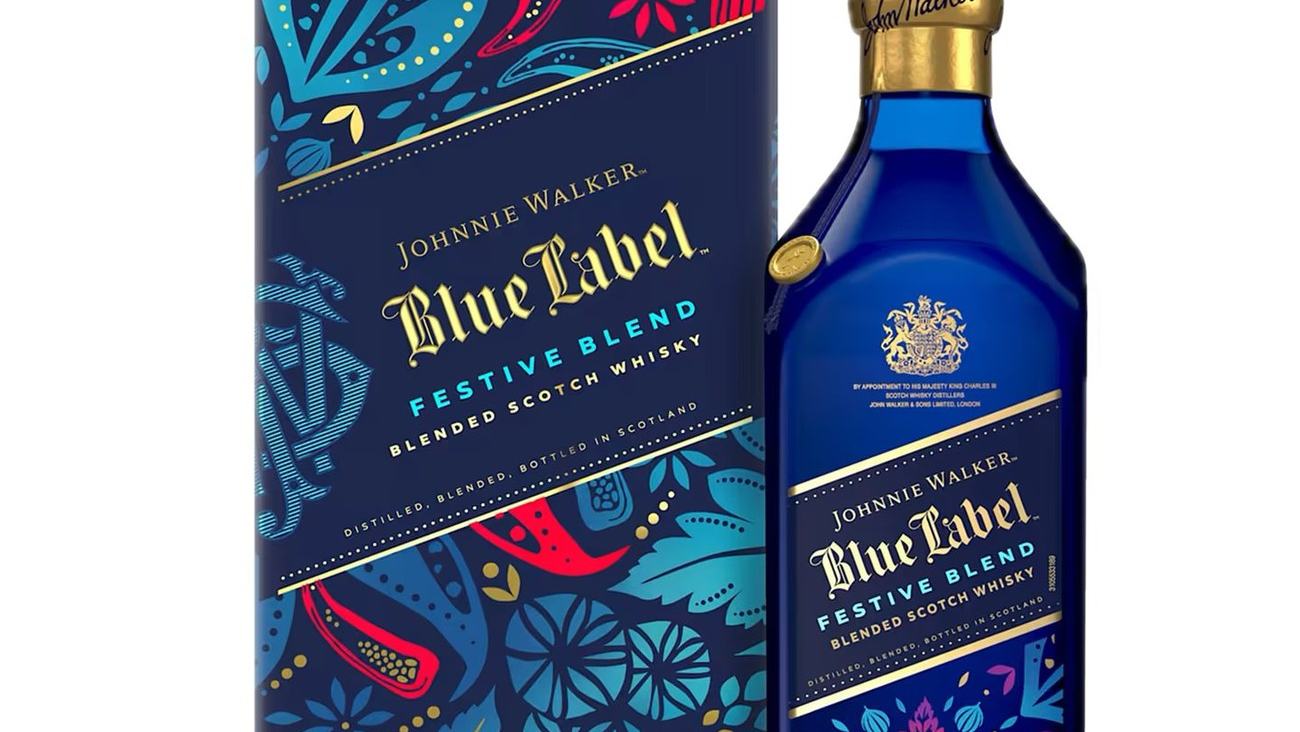
Diageo India has launched Johnnie Walker Blue Label Festive Blend, a limited-edition Scotch inspired by Indian culinary traditions and crafted by master blender Dr Emma Walker. The expression debuted in Mumbai on 30 October, ahead of availability in selected international markets.
A whisky inspired by Indian flavours
Johnnie Walker has introduced Blue Label Festive Blend, a limited-edition Scotch whisky drawing inspiration from India's culinary traditions. Announced by Diageo India on 3 November 2026, the expression is being presented as the first India-inspired edition of Blue Label in the brand's nearly two-century history. Its launch positions Indian flavour culture at the centre of a high-end Scotch conversation usually framed around Scottish provenance, cask selection and blending expertise.
The relationship between food and spirits is a familiar one, but this release goes further by turning an entire cuisine's aromatic vocabulary into the starting point for a blend. The distinction is important because an inspiration is not an ingredient list. Diageo describes a Scotch created through the selection and combination of whiskies; consumers should not infer that it contains cardamom, saffron or rosewater as added flavourings without a specific ingredients disclosure.
Emma Walker's blending approach
Master Blender Dr Emma Walker led the work, according to the producer. Diageo says the available inventory includes more than ten million casks, although only a small proportion meets the flavour demands of the Blue Label range. Its published comparison is that roughly one in ten thousand casks has the character required for Blue Label and even fewer were selected for this expression. These are company statements about its process, not independently audited figures.
For a whisky enthusiast, that description explains the thinking behind blending as an act of selection rather than simple recipe assembly. The master blender balances liquid from different sources and maturation histories to achieve a desired profile. A limited edition may therefore express a particular flavour brief while remaining within the character associated with the label. The final judgement must still come from sensory examination, preferably without assuming that rarity by itself guarantees personal enjoyment.
Cardamom, saffron and rosewater notes
The producer's tasting language introduces aromatic references associated with Indian cooking: cardamom, saffron, rosewater and citrus. It also describes honey, chocolate-dipped fruit, warm spices and a gentle suggestion of smoke. These descriptors are the house's account of the whisky's sensory character. They offer a way to imagine how contrasting aromatic impressions can remain harmonious without suggesting a literal reproduction of a particular dessert or festive dish.
Tasting notes are subjective and can vary with a person's experience, serving temperature and the glass used. A reference to cardamom might evoke warmth to one guest and herbal freshness to another. That flexibility is part of the appeal of descriptive vocabulary, but also a reason to read such notes cautiously. A useful tasting considers aroma, texture, sweetness, finish and balance, without treating the marketing description as a checklist every drinker must detect.
The Mumbai unveiling
The blend was introduced at an event held at The Taj Mahal Palace in Mumbai on 30 October 2026. Diageo says the occasion gathered guests from entertainment and business, including actor Alia Bhatt. The company also staged a projection on the Gateway of India, linking the launch to its longstanding Keep Walking message. These details place the product's debut within a highly visible cultural event rather than a conventional trade tasting.
Mumbai's historic waterfront gives such a presentation a distinctive setting, particularly for audiences interested in design, hospitality and travel. Yet the spectacle and the liquid should be considered separately. A projection or celebrity appearance can create awareness, but it reveals little about the composition, value or suitability of a bottle. For collectors and hosts, the event is relevant as the beginning of the edition's public story, not proof of its quality.
A bottle designed around festive ingredients
The release says the packaging uses a pattern of illustrated ingredients and vibrant colours intended to reflect Indian festive flavours. This is a departure in emphasis from packaging that relies only on conventional luxury codes of dark glass, metallic trim and restrained typography. It gives the edition a visual identity tied directly to the inspiration behind the blend, making the bottle itself part of the cultural proposition.
Packaging can matter to a gift purchase or an enthusiast who retains presentation boxes, but collectors should confirm exactly what is supplied with each market's version. Labels, bottle volumes, taxes and packaging formats can differ across distribution channels. A visual design is also not a reliable guide to how the whisky has been matured. Consumers seeking provenance should examine the producer's official release and product information rather than infer technical details from the decorative pattern.
Markets beyond India
Diageo names India, the United Kingdom, the United States and global duty-free channels among the intended markets. That reach indicates the edition is designed for an international audience, despite its specifically Indian inspiration. The announcement does not give a single worldwide retail price or commit to identical stock levels in every location. Anyone considering a purchase should therefore check with an authorised seller for local availability and the precise offering.
Travel retail is particularly relevant for people moving frequently between major cities or maritime destinations, because it offers an additional route to specialist spirits. However, cross-border purchases require attention to customs allowances, local alcohol laws and packing restrictions. A listed market is not a guarantee that a given airport or store has stock on a particular date. The sensible approach is to confirm details before travel, without making availability the basis of an impulsive purchase.
Blue Label and the idea of rarity
Diageo positions Blue Label as an expression based on careful cask selection and depth of flavour. The Festive Blend uses that familiar framework to make a new sensory argument. Rarity in a blended Scotch can mean the availability of particular mature components or a restricted production decision; the official announcement does not provide a verified bottle count for this edition. It would be misleading to invent one.
Collectors should distinguish an announced limited edition from a whisky with a documented serial-numbered output. The former may be uncommon in a particular shop yet still distributed broadly across many countries. Secondary-market interest depends on multiple factors, including condition, demand and the clarity of its provenance. A bottle's most direct value remains the opportunity to enjoy it responsibly, especially when the blend's flavour profile appeals to the purchaser.
Johnnie Walker Vault and luxury blending
The company's explanation also mentions Johnnie Walker Vault, a luxury blending platform that it says recently launched at Harrods in London. That reference connects the new festive release to a larger brand effort around rare whiskies, bespoke work and creative partnerships. Nevertheless, Blue Label Festive Blend should be considered on its own terms. Its release does not make it a Vault product or promise an individual custom blending experience to purchasers.
There is a meaningful difference between a programme offering highly personalised commissions and a bottled edition created for distribution. Both can draw on master blending, but they address different kinds of customer engagement. One asks people to participate in a process; the other offers a completed interpretation of a flavour idea. Clear reporting protects that distinction and prevents buyers from making assumptions about exclusivity or associated services not stated by the producer.
The relevance to hospitality
Luxury hotels, private dining rooms and yacht hospitality programmes often consider spirits alongside food, glassware and service, where balance and guest preference are more important than prestige alone. The Indian Festive Blend may interest hosts because its stated aromatic profile invites discussion about the connections between cuisine and whisky. That possibility is an editorial observation, not a claim that the product has been adopted by any named yacht or venue.
A responsible tasting environment should offer non-alcoholic alternatives and never assume that every guest drinks alcohol. Hosts also need to respect age restrictions and local requirements wherever an event is held, especially when travelling across jurisdictions. No particular pairing is mandated by the producer's announcement. Those wishing to explore the flavour references can do so thoughtfully, with small measures and without treating a premium label as encouragement to consume more.
A culturally specific limited edition
Blue Label Festive Blend illustrates how a global Scotch brand is increasingly using regional food culture as a source for new expressions. Its central facts are clear: Emma Walker created the blend, Diageo links it to Indian flavours, and it made its public debut in Mumbai before planned international distribution. The unresolved questions include market-by-market availability, exact bottle specifications and how drinkers will respond to the finished character.
The most interesting measure of the launch may be whether an Indian-inspired aromatic brief feels coherent within the existing Blue Label style. That assessment requires tasting, not merely reading notes or admiring the bottle. For now, the new expression offers a distinctive subject for collectors who follow whisky-making, design and global hospitality. Its appeal should be considered through provenance, personal taste and responsible enjoyment rather than assumptions about scarcity or future price.
Editorial source: Diageo India — official 3 November 2026 story on Johnnie Walker Blue Label Festive Blend. This original lifestyle feature is based on information from the named source; confirm current menus, seasonal schedules and reservation conditions with the hotel before visiting.