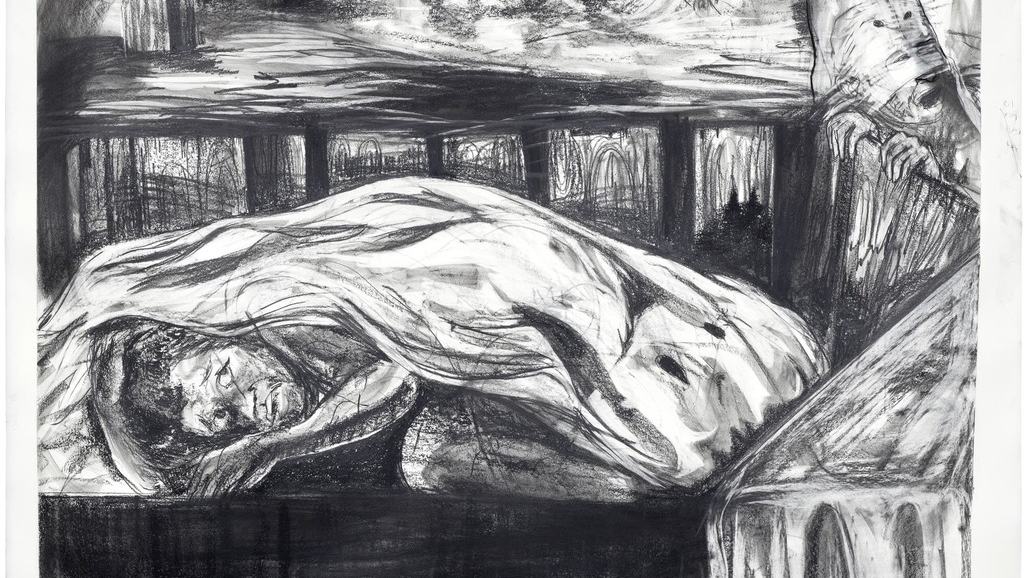
Phillips’ London contemporary-art presentation considers works by Kara Walker, Glenn Ligon and African-diaspora artists who examine history, representation and material.
A London art presentation centred on difficult histories
Phillips has examined works by Kara Walker, Glenn Ligon and artists with connections across Africa and its diaspora in the context of its October 2026 London contemporary-art programme. The preview considers how art can confront historical narratives that are uncomfortable, contested and often made invisible.
The presentation draws attention to approaches ranging from graphic drawing and text to textured surfaces and assembled materials. Those choices are not merely stylistic decoration: for many of the artists, material and process help determine how a viewer encounters the history addressed.
Collectors interested in contemporary art have an opportunity to study the ideas behind the pieces before focusing on their estimates. A work that engages with racial violence or memory deserves careful interpretation and should not be reduced to a convenient market category.
Walker confronts violence through drawing
Walker’s Kilroy Was Here is presented as an example of her use of figurative imagery to challenge the representation of Black American life and the legacy of racial terror. The work depicts a threatening scene and asks the viewer to reflect on how violence and historical narratives shape collective memory.
The artist is widely recognised for large-scale silhouettes, yet drawing provides another way to investigate her subject matter. Differences in medium affect the physical encounter with a work, including its scale, detail and the methods needed for long-term preservation.
Phillips also refers to Walker’s public installation Fortuna and the Immortality Garden (Machine), showing how her practice moves between intimate works and complex environments. Such comparisons can illuminate recurring themes without implying that the pieces share identical meanings.
Ligon turns language into an active material
Glenn Ligon uses text and layered visual fields to examine race, culture and the ways language can conceal or expose experience. His Study for Debris Field #27 appears in the preview as an example of how repetition and surface can become central to an artwork’s meaning.
Unlike a straightforward printed statement, partially obscured or disrupted text invites the viewer to consider the struggle involved in reading and interpretation. That difficulty can itself be part of the artistic purpose rather than a flaw that should be corrected.
The auction house places Ligon alongside other makers with different geographic and cultural perspectives. This broader framing is useful only when it retains the specificity of each artist and avoids treating diverse histories as interchangeable.
Collecting work with complex surfaces and messages
Contemporary paintings and drawings employing unusual media may require specialist conservation expertise, particularly where charcoal, heavy texture or delicate paper is involved. Collectors should understand display, transport and climate requirements before deciding on an acquisition.
Exhibition history, the circumstances of creation and records of ownership can contribute to a responsible interpretation. Condition reports can describe the physical work, but research and dialogue may also be needed to understand the cultural questions embedded in the image.
Phillips’ London presentation offers a chance to look at art as an inquiry into history rather than a decorative luxury object. Any auction outcome will reflect individual demand, while the enduring value of close study lies in taking the artists’ distinct positions seriously.
Source
Phillips Editorial