An original expedition-yacht guide to Katmai's Pacific wilderness coast, combining NPS information on bears and fjords with responsible anchoring, tender, safety and interpretation practice.
A wild coast built for an expedition yacht
Along Alaska's Shelikof Strait, the Pacific shoreline of Katmai National Park and Preserve feels far removed from the familiar world of superyacht marinas. Glaciated fjords cut deeply into the land, coastal meadows meet dark gravel beaches, and brown bears feed where rivers and tidal flats concentrate food. These are places an expedition-capable large yacht may approach with careful planning, not destinations where a beach club or waterfront tender dock can be assumed.
The attraction lies partly in a profound change of scale. A well-equipped yacht gives guests a warm, comfortable base from which to appreciate an enormous wild landscape, yet its crew must understand that remote-water cruising is governed by weather, tide, safe anchoring and responsible wildlife distance. Katmai rewards owners who build an itinerary around experienced local knowledge, patient observation and the willingness to wait for a sensible window rather than trying to make the coast fit a fixed entertainment schedule.
Understanding Katmai's two different worlds
Many travellers know Katmai through photographs of bears catching salmon at Brooks Falls, but the park's eastern Pacific coast tells a different story. The National Park Service describes a richly varied shoreline of narrow fjords, broad coastal flats, estuaries, gravel beaches and sedge meadows, sheltered in places by high mountains and exposed elsewhere to the full force of the North Pacific. Coastal brown bears are abundant in suitable habitats because of marine food sources.
Brooks Camp and the adjacent lake system should not be confused with an ocean anchorage that a visiting yacht can simply enter. Access to those inland visitor areas requires a separate transport and visitor plan. For a marine expedition, the coastline itself is the primary destination: the sheltered views from a permitted and safe vessel position, the changing wildlife along tidal flats, and the chance to understand how geology and ecology interact in one of Alaska's great protected regions.
The route begins long before the first photograph
Getting a large yacht to Katmai's coast requires professional navigation planning at the scale of the Gulf of Alaska and the Shelikof Strait. The crew must select an appropriate departure or staging port, analyse the yacht's range and fuel reserves, obtain current charts and weather forecasts, and consult notices relevant to the region. Shore support should be verified rather than assumed; this is an expedition where the absence of a nearby repair service can turn a small technical failure into a serious delay.
An itinerary should allow generous time for exposed passages, changing anchorage conditions and a return to reliable shelter. Captains should assess ground tackle, tender launching gear, bridge systems, cold-water rescue provisions and the suitability of the crew for remote Alaskan waters. Guests may see only a quiet arrival and a carefully set table at dinner, but that ease depends on many hours of navigation, safety and logistics work behind the scenes.
Katmai Bay, inlets and the view from offshore
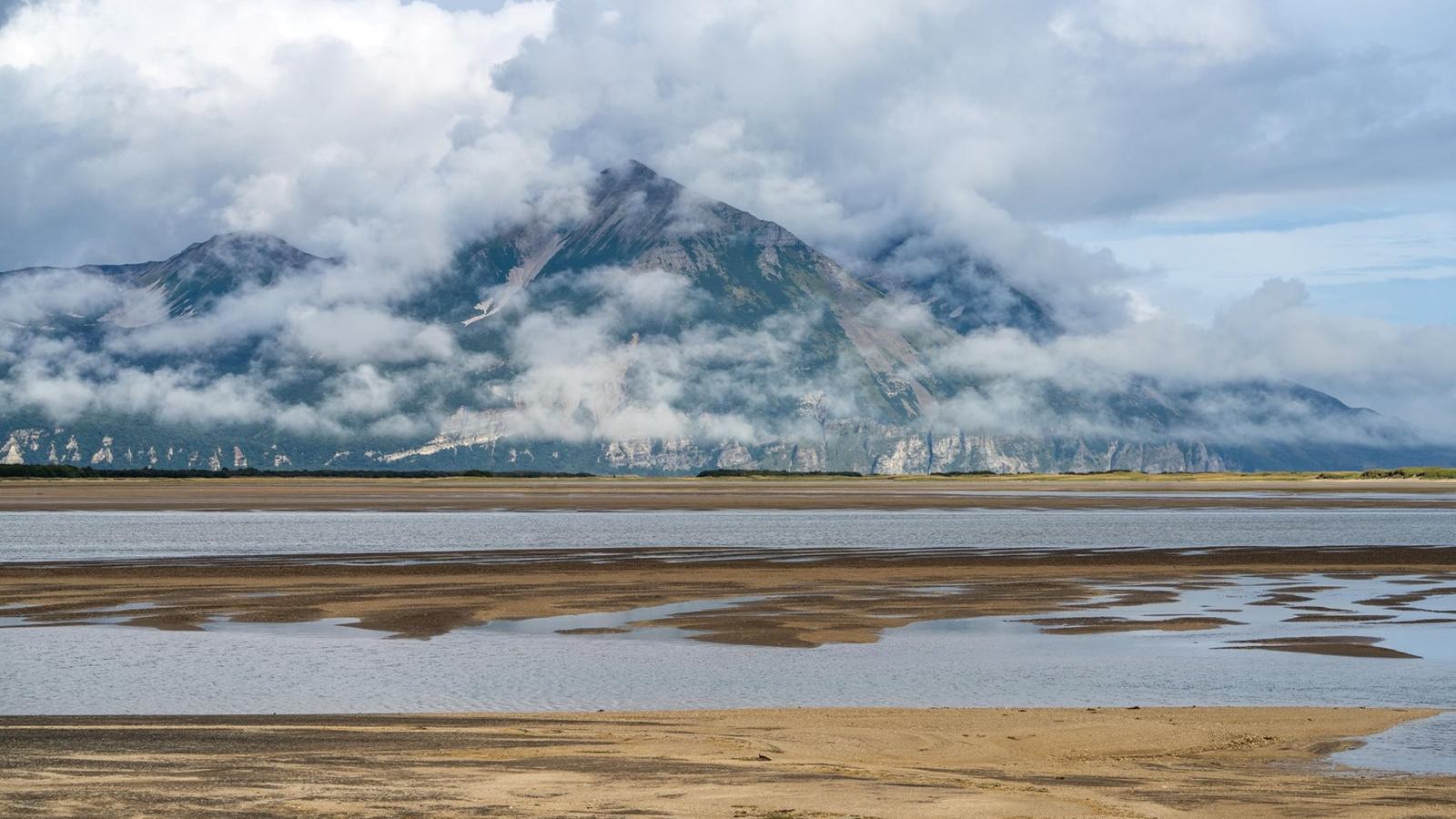
Katmai Bay and neighbouring coastal reaches show the forces that have shaped this extraordinary shoreline. The park describes a tidal landscape of fjords, valleys and varied beach types. On a clear day, mountains provide a dramatic background to the water, while shifting cloud and mist can make familiar-looking shore sections difficult to distinguish. A slow passage with enough sea room can reveal the landscape's architecture without requiring guests to step ashore.
These waters are not guaranteed safe anchorages simply because they look protected on a photograph. Tidal range, depth, holding ground, wind funnels and swell can all complicate a proposed stop. The captain should decide where the yacht may safely remain, ensure that any tender activity has a reliable return plan and be prepared to abandon an exposed position. The pleasure of the coast is enhanced when the day's plan is flexible enough for safety to take priority.
Brown bears and the ethics of watching
Coastal brown bears rely on salmon, clams, sedges and other resources that are abundant in parts of Katmai. The National Park Service explains that concentrations of food bring bears to tidal flats and river corridors, creating remarkable opportunities for observation. Those same feeding areas make careless visitor behaviour especially damaging, because a person or vessel that forces an animal away from food can disrupt an essential part of its routine.
Park guidance prohibits approaching bears too closely, including remaining near an animal using concentrated food sources, and says people must not interfere with a bear's feeding or usual route. The exact rules should be checked against the current park publication before anyone leaves the yacht. A respectful viewing programme may mean watching from a distant safe position with binoculars and telephoto lenses or arranging an authorised local guide. It should never involve using food, sound or deliberate pursuit to bring bears closer.
A photograph is not permission to land
A wide, empty beach can seem like a natural invitation to launch a tender, but the Katmai coast is genuine bear country. The presence of an animal may not be apparent from offshore, and dense vegetation can hide movement near the tideline. A landing programme should be assessed by experienced guides familiar with local conditions, park requirements and safe conduct around bears. It may be wiser to remain aboard or to choose a shore-based excursion elsewhere if the crew cannot establish an acceptable level of safety.
Any permitted shore visit should include an agreed party size, communications plan, emergency response procedure and strict food and waste handling. Guests must receive a briefing before transfer, not after arriving on a beach with an animal approaching. The luxury of a superyacht is the freedom to decline a risky excursion while still appreciating the coast from the water. The operator should make that judgement clearly and without pressure from the expectations of a photographic itinerary.
A quiet, science-led programme aboard
Katmai's ecosystem lends itself to an unusually rewarding natural-history programme. A guide can explain how glaciers carved the coastal valleys, why tidal flats attract birds and bears, and how salmon connect inland rivers with the broader marine environment. Guests might compare photographs taken from the same position as light changes, listen to a short illustrated talk after dinner or keep a shared wildlife log rather than continually moving the vessel in search of the next sighting.
Such interpretation makes the experience richer without adding unnecessary disturbance. Binoculars and good camera optics allow wildlife to remain distant, while carefully chosen reading and discussion give younger guests useful context. Expedition crew can also explain why noise, wake and tender approaches are considered carefully. When the habitat remains the subject and the vessel becomes a respectful platform for observation, the distinction between entertainment and education largely disappears.
Cold water, variable weather and tender decisions
Remote Alaskan water demands preparation even during apparently settled summer conditions. Wind can strengthen unexpectedly, precipitation may reduce visibility and cold seawater can make a minor tender mishap dangerous. A large yacht's stability and heated accommodation should not encourage complacency when guests transfer into a smaller boat. Personal flotation equipment, warm protective layers, communications and a recovery plan must match the actual conditions and craft.
The crew should inspect tender launching points and the expected return route, establish clear cancellation criteria and ensure someone aboard can monitor the operation. Shore parties need a realistic turnaround time that preserves daylight and allows for a rising breeze or changing sea. Medical equipment, evacuation arrangements and satellite communications deserve attention before leaving a full-service port. A beautifully executed voyage is one in which guests rarely notice these precautions because the crew has already considered them.
The people and resources behind a remote cruise
An expedition yacht may be self-sufficient for many ordinary needs, but it should not mistake self-sufficiency for independence from local expertise. Alaska-based agents, qualified guides, maritime authorities and park staff can provide essential information about current conditions, permitted activities and seasonal limitations. The National Park Service directs visitors to official guidance on bear safety, boating and backcountry travel, which should be reviewed together rather than treated as separate subjects.
Provisioning should reflect uncertainty over weather delays and access to shore support. Fresh food, potable water, spare parts, fuel margins, waste-storage capacity and redundancy in navigation and communications all have more consequence in this environment. The crew should establish how waste will be retained and disposed of legally, and should avoid introducing material to sensitive shorelines. The result can still be a refined guest experience, but its refinement is the product of responsible planning.
A season of possibility, never a guarantee
Coastal bear activity changes with the food available through spring, summer and autumn. The National Park Service explains that bears may feed on coastal vegetation and clams during part of the season and concentrate along salmon streams later. Wildlife watching should therefore be planned for broad natural cycles rather than promised as a guaranteed close-up spectacle on a particular date. Local guides can help explain what is realistic while keeping the animals' welfare central.
Weather deserves the same humility. The captain may choose an entirely different coast, spend an extra day sheltered or return to port if the forecasts make a planned call marginal. A cruise that never attempts an unsafe landing is not a failed cruise. For an owner willing to accept nature's pace, even a day spent watching cloud move through the mountains from a secure anchorage can become one of the most memorable parts of the voyage.
What a great Katmai voyage leaves behind
Katmai's Pacific coast is most compelling when visitors resist the urge to turn its wildness into another commodity. A yacht can bring thoughtful hospitality to remote waters, but it should not bring pursuit of wildlife, careless anchoring, intrusive noise or abandoned rubbish. Every route and activity should be measured against conservation rules, local conditions and the ability to leave a place undisturbed.
For a discerning superyacht guest, the lasting image may be the distant outline of a bear on a tidal flat, a calm fjord beneath changing light or a long evening spent discussing the coast's living systems. Those experiences do not require proximity at any cost. They require a vessel capable of the voyage, a crew that knows when to wait, and the respect to let Alaska remain Alaska.