An online sale of 40 lots from the Kermit Oswald collection focused on Keith Haring and artworks associated with his distinctive visual language.
A focused look at an unmistakable artistic language
Sotheby's Haring's House: Works from the Collection of Kermit Oswald was a 40-lot online auction held in New York between 25 September and 8 October 2026. The sale brought together works connected with Keith Haring, an artist whose energetic drawings and graphic symbols became some of the most recognisable images of late-twentieth-century art.
Unlike a broad contemporary sale, a focused collection can help viewers trace the interests of one owner and the connections between individual works. It also allows buyers to see different expressions of an artist's visual ideas, including works whose scale, materials and character may differ considerably from the large public murals for which Haring is widely remembered.
A small artwork with a distinct narrative
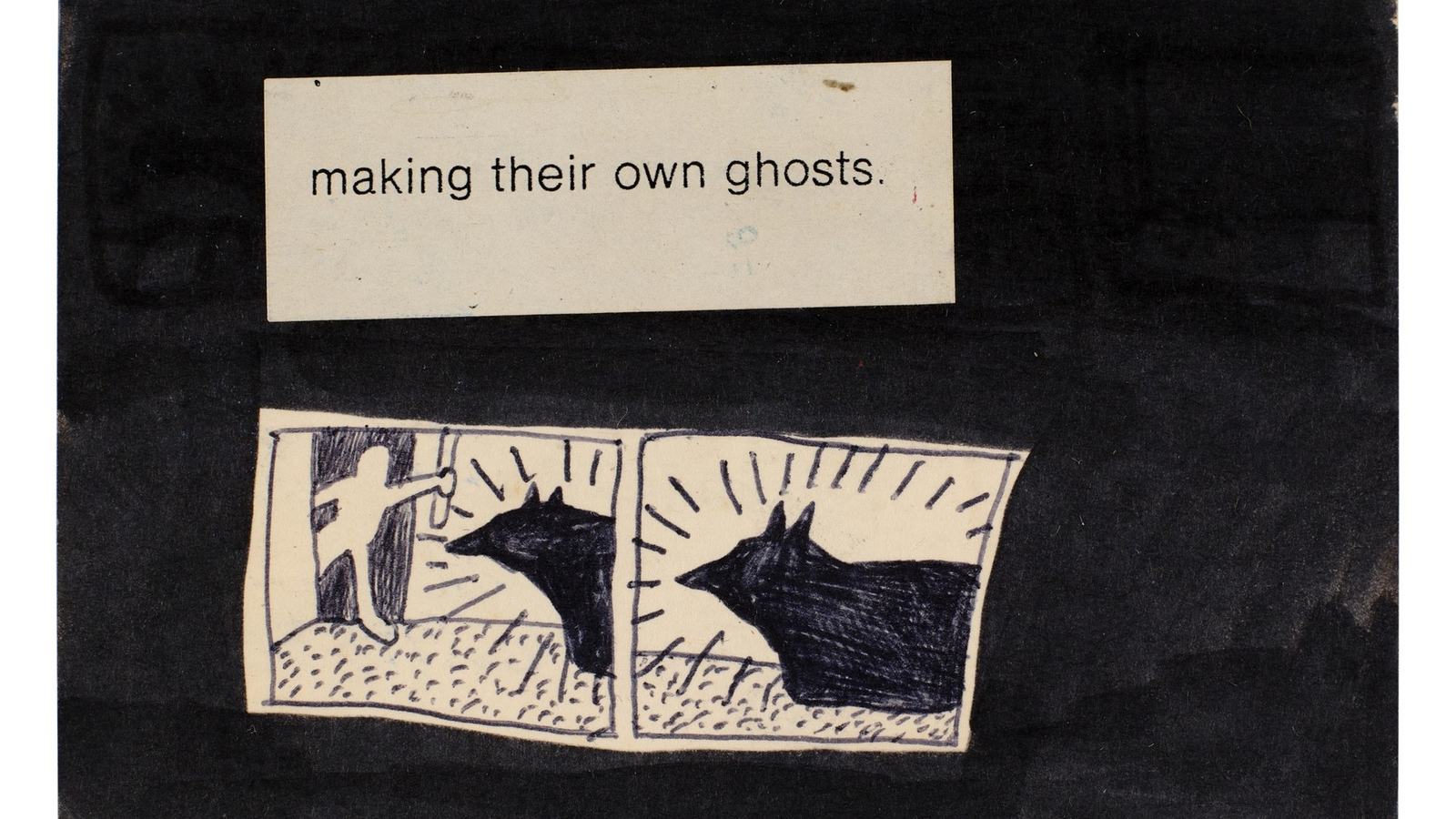
One of the catalogue images depicts the work Untitled (making their own ghosts), combining the written phrase with a deliberately spare sequence of drawn forms. Rather than relying on a brightly coloured large canvas, it demonstrates how much personality can emerge from a limited composition.
The piece offers a reminder that Haring's practice was not confined to dancing figures on a flat surface. His drawings frequently make use of text, narrative devices and repeated signs, inviting viewers to connect the individual elements. A collector should examine the exact medium and origin of each work rather than making assumptions from a familiar style.
From street culture to private collections
Haring emerged from the cultural environment of New York in the early 1980s and developed a visual vocabulary accessible to people well beyond formal art institutions. His subway drawings, public projects and political commitments form part of that history.
When work associated with such an artist enters a private collection, questions arise about the relationship between public communication and private ownership. Collectors can preserve significant material, but its interpretation benefits from clear documentation and opportunities for wider study. Understanding the setting in which a work was made is part of appreciating the art itself.
Provenance is particularly important
The familiarity of Haring's imagery has also created a market for reproductions and objects loosely associated with his style. Prospective buyers must pay attention to attribution, signatures, exhibition records and the chain of ownership presented for an individual item.
A catalogue listing by a major auction house provides specialist research, but the details still matter. A drawing on paper, a printed edition and a one-off object are not interchangeable categories, even if they contain similar motifs. Collectors should examine edition information and condition before making a financial commitment.
Forty lots and an online format
The Sotheby's catalogue listed forty artworks, with sale estimates varying according to medium and the significance of the individual piece. Some entries were offered without reserve, making the mechanics of the auction potentially different from lots carrying a confidential minimum.
The bidding window has already closed, so a prospective reader should use the official results page to see which lots sold and at what amounts. Pre-sale estimates cannot be presented as achieved prices. Buyers should also understand that premiums, taxes and transportation can alter the total cost of acquiring a work.
What the collection reveals about cultural collecting
One attraction of a focused sale is that a group of related objects can convey a collector's taste even after it has been dispersed to new owners. Here the organising theme makes it possible to think about Haring's artistic methods rather than treating each work only as a standalone commodity.
The collection reinforces the place of post-war street-influenced art within the international luxury collecting market. A thoughtful buyer will bring the same attention to history, authenticity and care that would be applied to a historic watch, a rare motor car or an important design object.