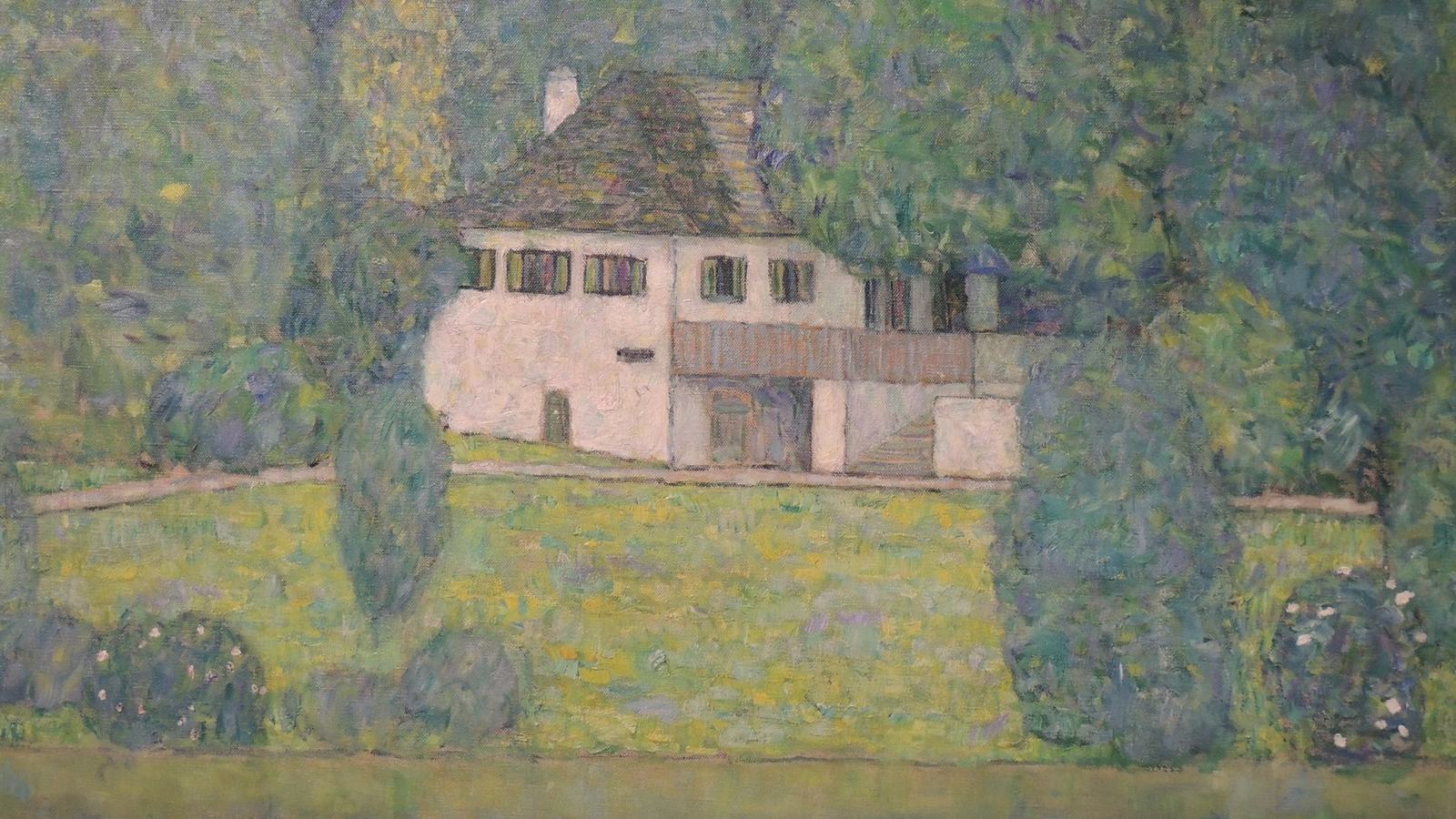
Gustav Klimt's 1915–16 landscape Litzlbergkeller heads to Christie's New York on 17 November with a $60m–$80m estimate, inviting a closer look at its history.
Collector's preview, 11 November 2026. The auction and estimate below are forthcoming. No result or hammer price is claimed before the sale.
A lakeside Klimt becomes the focus of a New York sale Christie's has announced that Gustav Klimt's landscape Litzlbergkeller will be a headline work in its 20th Century Evening Sale in New York on 17 November 2026. The painting dates to 1915–16 and carries a presale estimate of $60 million to $80 million. The announcement is especially relevant to collectors who have an interest in modern painting, provenance and the way major private holdings return to public view. An estimate is a guide to the auction house's expectations, not an accomplished sale price.
The subject is a waterside building among trees, rendered in a closely worked surface of colour that approaches abstraction without abandoning the scene. It is a picture whose intimate scale of subject contrasts with its market prominence. For collectors who spend time travelling between cultural destinations, including those who arrive by yacht, the attraction is not simply the headline valuation. A major sale creates an opportunity to examine how a work's visual qualities, history and documented ownership are understood together.
Why the picture belongs to Klimt's late landscape period Klimt is often associated with gilded portraits and the ornamental language of his earlier career, but his landscapes form a distinct body of work. Litzlbergkeller belongs to the years in which he concentrated intensely on gardens, trees and lakeside scenery. The late landscapes have an all-over pictorial texture that can make foreground and background seem to merge. The viewer can recognise the architecture and foliage yet also experience the picture as a complex arrangement of shapes.
The 1915–16 dating places the work near the end of the artist's life; Klimt died in 1918. It is useful to separate that historical context from romantic stories about the painter's intentions. The auction house's catalogue and specialist research are the proper starting points for documentary claims about when, where and for whom a work was made. Close viewing, meanwhile, can reveal decisions about brushwork, rhythm and contrast that a small photograph cannot convey.
The estimated value is substantial but remains provisional Christie's $60 million to $80 million estimate establishes the level at which it expects serious interest, but auction outcomes depend on bidders, reserves, guarantees, conditions and the prevailing market. A high estimate does not prove a future record, and the eventual hammer price is not identical to a buyer's final invoice after fees and applicable charges. Owners of important works should resist treating a headline number as a direct valuation of a different painting.
The previous market history of Litzlbergkeller is unusually prominent. Christie's says it last appeared at auction in May 1997 in the estate sale of Serge Sabarasky, a co-founder of New York's Neue Galerie, and that the picture then set a Klimt auction record. It has remained in the same private collection for almost three decades, according to the press release. The time away from the auction market is relevant, but scarcity on its own does not determine a buyer's response.
Provenance is more than a list of fashionable names The passage of a major artwork through collections can explain how it survived, was studied, exhibited and understood. A buyer needs a documented chain of ownership rather than an attractive anecdote. Auction catalogues may reference exhibitions, published scholarship and earlier transactions; these details should be checked against supporting records where necessary. It is also important to identify gaps, changes in attribution or restoration, and any claims that have not been independently resolved.
Works made in Central Europe in the early twentieth century warrant particular care in provenance research because the region experienced war, political upheaval and forced transfers of property. That does not imply an unresolved claim relating to this particular Klimt. It simply means that sophisticated collecting practice should involve appropriate historical due diligence, specialist legal advice when needed, and scrutiny of the information made available about the specific work.
The composition rewards more than a quick catalogue glance Litzlbergkeller depicts an inn beside the water, but the painting resists the traditional division between a clearly articulated foreground and a distant view. The dense trees, the building and the reflective surface occupy a compact field of colour. That structure can make the scene appear simultaneously tranquil and active. Observers interested in Klimt's evolution may compare it with other late landscapes rather than with the gold portraits that dominate popular accounts of his career.
Photographs and digital reproductions can help a collector learn the picture's composition, but they cannot provide a complete account of texture, colour or surface condition. Lighting, varnish, past cleaning and the quality of a photographic reproduction can all influence appearance. Any serious buyer should arrange appropriate examination and review condition documentation. For a cultural visitor who has no intention to bid, the exhibition itself can still be an opportunity to see a significant work firsthand.
Hong Kong and Rockefeller Center form the exhibition route Christie's announced a Hong Kong viewing from 27 to 29 October before the painting's New York display at Rockefeller Center from 7 November. The New York exhibition therefore began before the scheduled 17 November evening sale. Times, entry arrangements and temporary closures should be checked on the auction house's current calendar, especially during installation and viewing days. A public exhibition does not guarantee that every lot will be visible at every moment.
For a yacht owner or guest visiting New York, the practical question is how to fit a gallery appointment into a short stay without confusing a general exhibition with a private preview. Christie's offers different access options and specialists, but any private service should be booked and confirmed directly. Public availability of an artwork should never be represented as an entitlement to handle it, inspect it outside the stated conditions or obtain confidential information about sellers.
Collecting involves documentation, conservation and space The financial commitment of acquiring a major painting extends beyond bidding. Insurance, transport, climate control, security, professional condition assessment, framing and future conservation arrangements can all matter. A work displayed in a yacht's interior faces additional environmental and movement considerations, including vibration, humidity, sunlight and the operational needs of the vessel. Those risks should be assessed by qualified conservators and insurers; aesthetic suitability alone is not enough.
Serious collectors may choose to keep an exceptional work in a controlled residence or institution rather than aboard. That decision can be as important as the purchase itself. A yacht can nevertheless serve as a setting for conversations about art, or for visits to museums and galleries during cruising. The connection between collecting and yachting is therefore often cultural and logistical, not a claim that every important canvas should travel at sea.
What the sale can and cannot tell us The November sale will add a new data point to the public market for Klimt if the work sells and the result is disclosed. It will not establish the value of every Klimt landscape or predict the direction of the broader art market. The auction house's estimate, specialist commentary and preview programme are confirmed statements; the outcome remains unknown as of this article. Any later report should distinguish the hammer figure, premium-inclusive total and currency conversions.
The real appeal of Litzlbergkeller lies in its unusual combination of quiet subject and intricate form. Seeing the original work, studying its documented history and understanding the terms of the sale provide a much richer basis for judgment than a headline estimate. For collectors and art-minded guests planning a New York visit, the exhibition offers a focused reason to look closely at a painting made more than a century ago.
Primary source: Christie's Press Office.
Photo licence and source
Gustav Klimt, Litzlbergkeller (1915–1916). Public-domain reproduction of Gustav Klimt's Litzlbergkeller, sourced separately from Wikimedia Commons; not a Christie's press photograph. Public-domain image source.

Source
Christie's Press Office