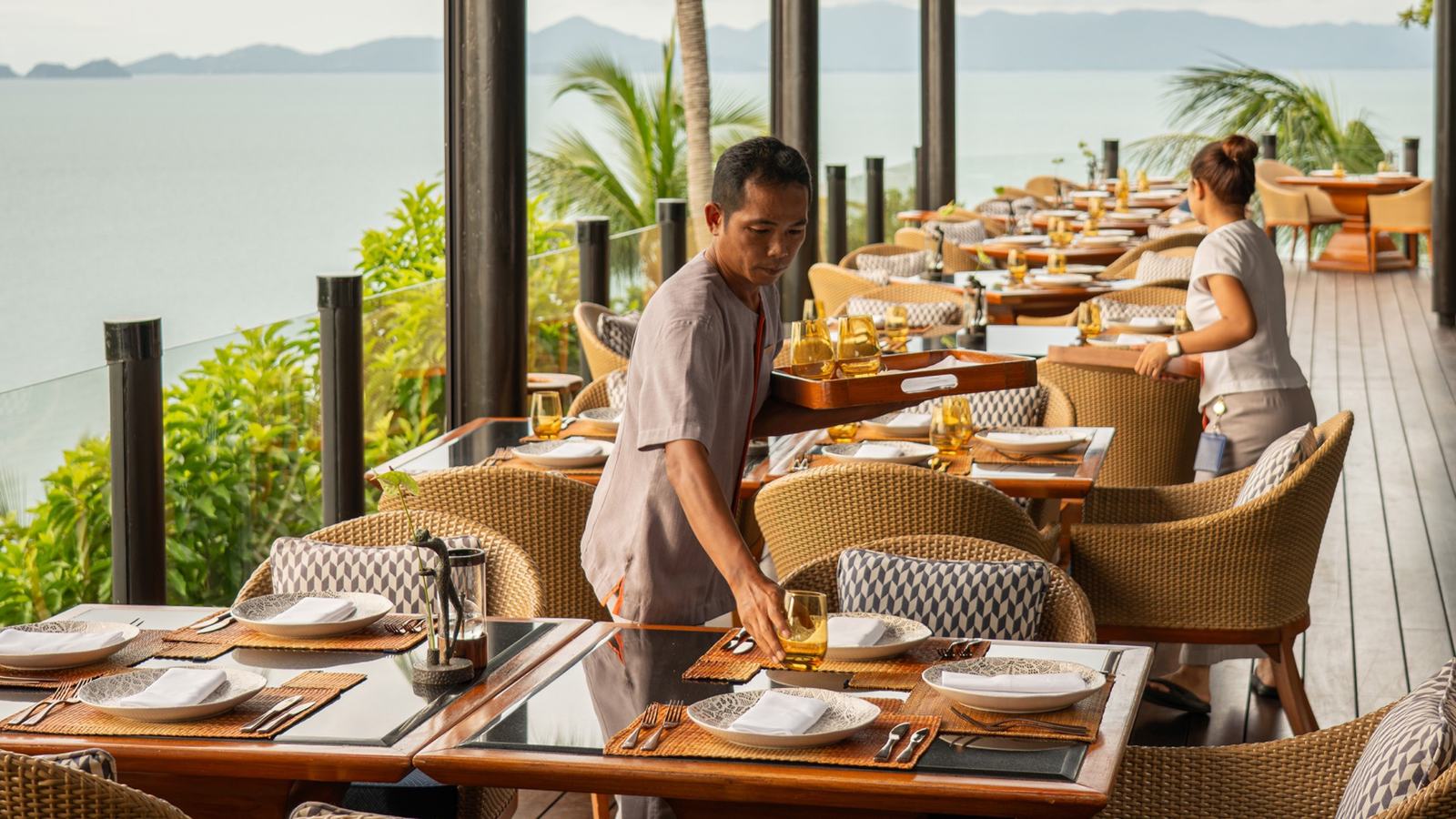
A three-night collaboration at KOH Thai Kitchen brought chef Chumpol of R-HAAN together with the island's Chef Jeab to explore Thai culinary traditions.
Two perspectives on Thailand meet at one table
Four Seasons Resort Koh Samui hosted a three-night culinary collaboration from 21 to 23 August 2026 with chef Chumpol Jangprai of Bangkok’s two-Michelin-starred R-HAAN. He worked alongside Sumalee Khunpet, known as Chef Jeab, and the KOH Thai Kitchen team to explore ingredients and traditions from different parts of Thailand. The event has already taken place, so its significance lies in the dishes and exchange of knowledge rather than a future reservation opportunity.
Chumpol brings a broad interest in Thai culinary history and refined preparation, while Jeab’s experience is closely rooted in the south of the country. Originally from Nakhon Si Thammarat, she has lived on Koh Samui for more than twenty-five years and worked with Four Seasons since 2008. Their collaboration offered a way to understand how geography informs flavour.
The opening bites established a conversation
The meal began with four small preparations including mee krob, a mixture of crisp vermicelli and aromatic ingredients, and sago miang kham with peanuts, dried shrimp and ginger. A hamachi preparation brought bird’s-eye chilli and coriander into the sequence, while a tom yum seafood croquette offered another interpretation of a familiar Thai flavour profile.
The contrasts were deliberate: sweet and sour, fresh herbs, heat and texture created a progression rather than a set of unrelated amuse-bouches. Diners accustomed to expensive international tasting menus may find that the more revealing luxury is the depth of regional knowledge. An ingredient earns its place by supporting the dish, not simply by carrying a prestigious price.
Seafood and palace cuisine provided the centre
Phuket lobster was served with palm heart and a sauce inspired by nam jim seafood, combining the sweetness of shellfish with a characteristically bright, spicy dressing. Another course, Khanom Jeen Chow Wang, drew on Chumpol’s earlier work with palace cuisine and included kingfish, scallop, caviar and coconut cream. It offered a particularly clear example of how traditional references can be adapted through precise contemporary technique.
A separate grouper dish combined fresh catch with coconut, turmeric and lime leaf, returning the meal to the coastal ingredients of southern Thailand. These plates did not attempt to make every course taste alike. Instead, they allowed distinct maritime and regional influences to emerge within one structured evening.
Beef and local botanicals changed the pace
Sichon Angus beef from Nakhon Si Thammarat followed with turmeric, flower salt, an old-style curry and a jasmine-rice preparation. The provenance of the meat mattered because the menu was intended to speak of place, not merely the international prestige of a particular cut. Local names and preparation methods gave diners more context than generic descriptions such as premium beef.
A torch-ginger sorbet supplied a floral interval, using a plant familiar to southern Thai cooking. Dessert later drew on a local expression about four months of sun and eight months of rain, representing the annual cycle through ingredients and presentation. These choices connected climate, seasons and food without requiring a formal lecture.
A completed event leaves a broader story
Three evenings were never intended to turn the restaurant permanently into R-HAAN on an island. They were an exchange between chefs whose knowledge overlaps but is not identical. For visitors interested in culinary travel, such collaborations are valuable because they illuminate a region’s food culture through particular people and dishes.
Future guests should not expect the August menu to be available as a standing offer, since the event ended on 23 August. The resort’s release records the participating chefs and their detailed creations, providing a useful view of Southern Thai gastronomy. It is that documented exchange, rather than a misleading claim of current availability, that warrants coverage.
Source
Four Seasons Press