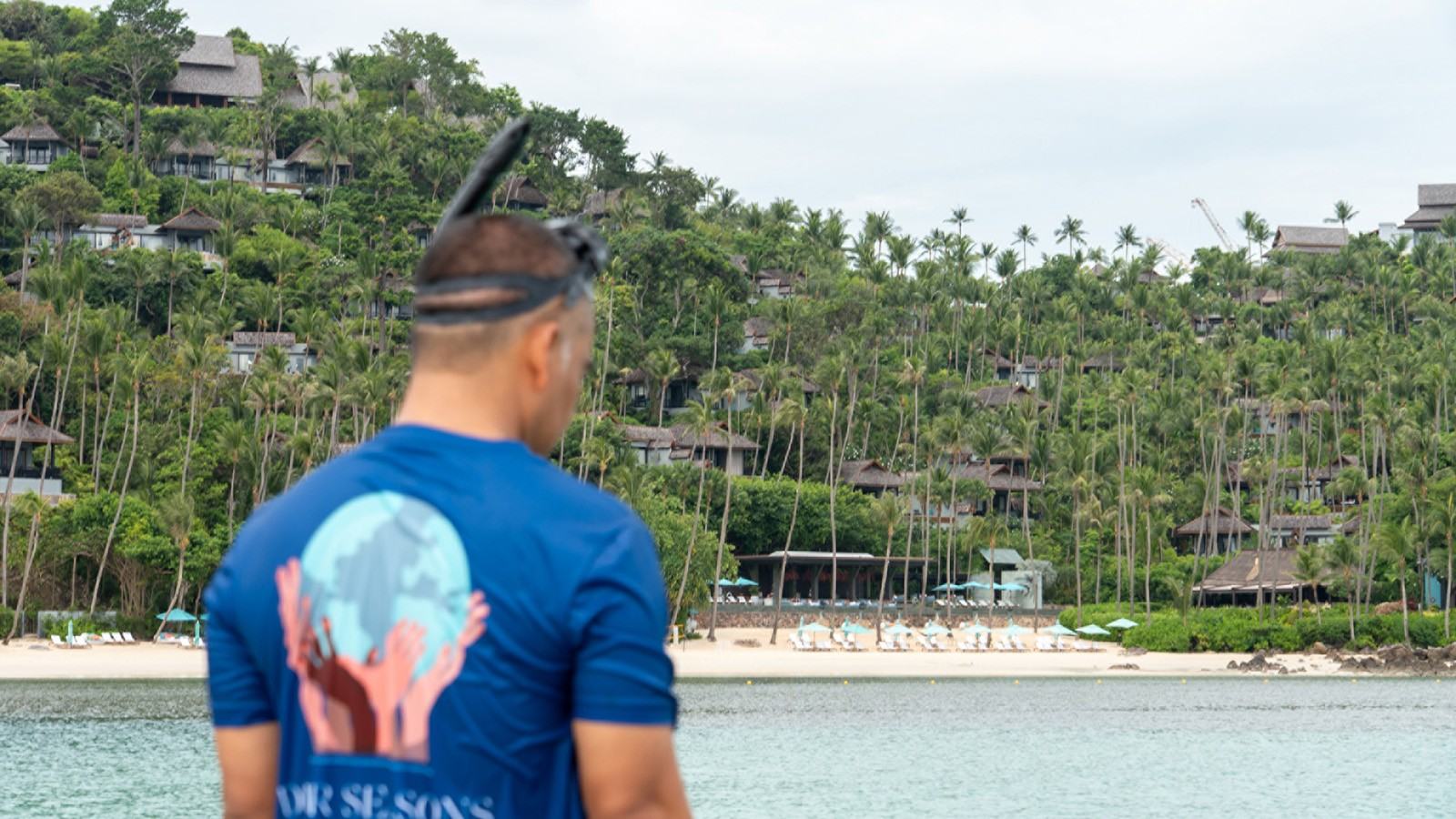
The hillside resort describes its local coral surveys, rehabilitation work and opportunities for guests to learn about reef ecosystems in the Gulf of Thailand.
An island resort looks beneath the surface
Four Seasons Resort Koh Samui has provided an account of its ongoing coral rehabilitation and reef-monitoring work in the Gulf of Thailand. The resort, whose villas descend from a hillside towards a sheltered cove, is putting marine habitat alongside the scenery that attracts visitors in the first place. The programme is not presented as the opening of a new reef attraction or a promise that coral conditions have been fully restored.
Coral reefs provide habitat and shelter for fish and invertebrates, but are vulnerable to rising ocean temperatures, sediment, pollution and physical disturbance. In a destination that benefits from clear water and marine recreation, understanding that fragility is an important part of responsible hospitality. An attractive snorkelling photograph alone cannot demonstrate ecological recovery, which needs sustained observation.
Surveys provide a starting point
The resort says its team recently conducted a coral survey to assess the condition of nearby reefs and identify areas requiring attention. Such surveys matter because the success of any rehabilitation work must be evaluated against an understanding of the site rather than a headline number of fragments planted. Repeated monitoring is particularly important where conditions change between seasons.
The operator describes an ongoing effort to rehabilitate damaged reef structures and create conditions that support coral growth. Those are meaningful objectives, although the available release does not publish a complete scientific methodology, monitoring dataset or independently audited survival figures. Visitors should treat the work as a continuing programme with results that need time to establish.
The reported early signs require context
Resort sustainability manager Thada Whasagool reports encouraging survival among replanted corals and says young fish and crabs appear to have increased near the work. These are observations attributed to the operator rather than independent evidence of a measured change across the wider ecosystem. A cautious interpretation recognises the reported progress without assuming every factor behind it is understood.
Coral rehabilitation can be affected by local water quality, suitable substrate and continued protection from damage. Even successfully attached fragments may remain vulnerable to bleaching and storms. The work therefore needs to be considered alongside broader stewardship, rather than as a stand-alone solution for threats acting across the region.
Guest participation is part of the approach
Four Seasons says it involves guests in learning about local coral species and the role reefs play in the surrounding marine ecosystem. That engagement can be valuable when it is guided by knowledgeable staff and respects local environmental rules. Educational participation is not equivalent to authorising visitors to handle wildlife, remove specimens or enter protected sites without supervision.
For travellers accustomed to navigating tropical waters aboard yachts, reef awareness has an immediate practical relevance. Careless anchoring, close approaches and contact with delicate habitats can cause damage irrespective of a vessel's size or the intentions of its crew. Captains should use recognised local guidance and appropriate mooring practices in sensitive areas.
A programme measured over years, not an afternoon
The June 2026 World Ocean Day report gives context to work described as part of the resort's longer environmental priorities. The destination's value is partly ecological, and preserving it is an ongoing obligation rather than an amenity that can simply be purchased. Visitors may appreciate the opportunity to learn more, but claims of measurable ecosystem recovery require continued evidence.
The strongest conclusion from the available source is that Four Seasons Koh Samui is conducting coral assessment, rehabilitation and guest education, with staff reporting promising local observations. It does not establish the reef's full health or quantify a verified environmental benefit from any individual guest. That distinction makes the conservation story more credible and useful to sea-going readers.
Source
Four Seasons Press