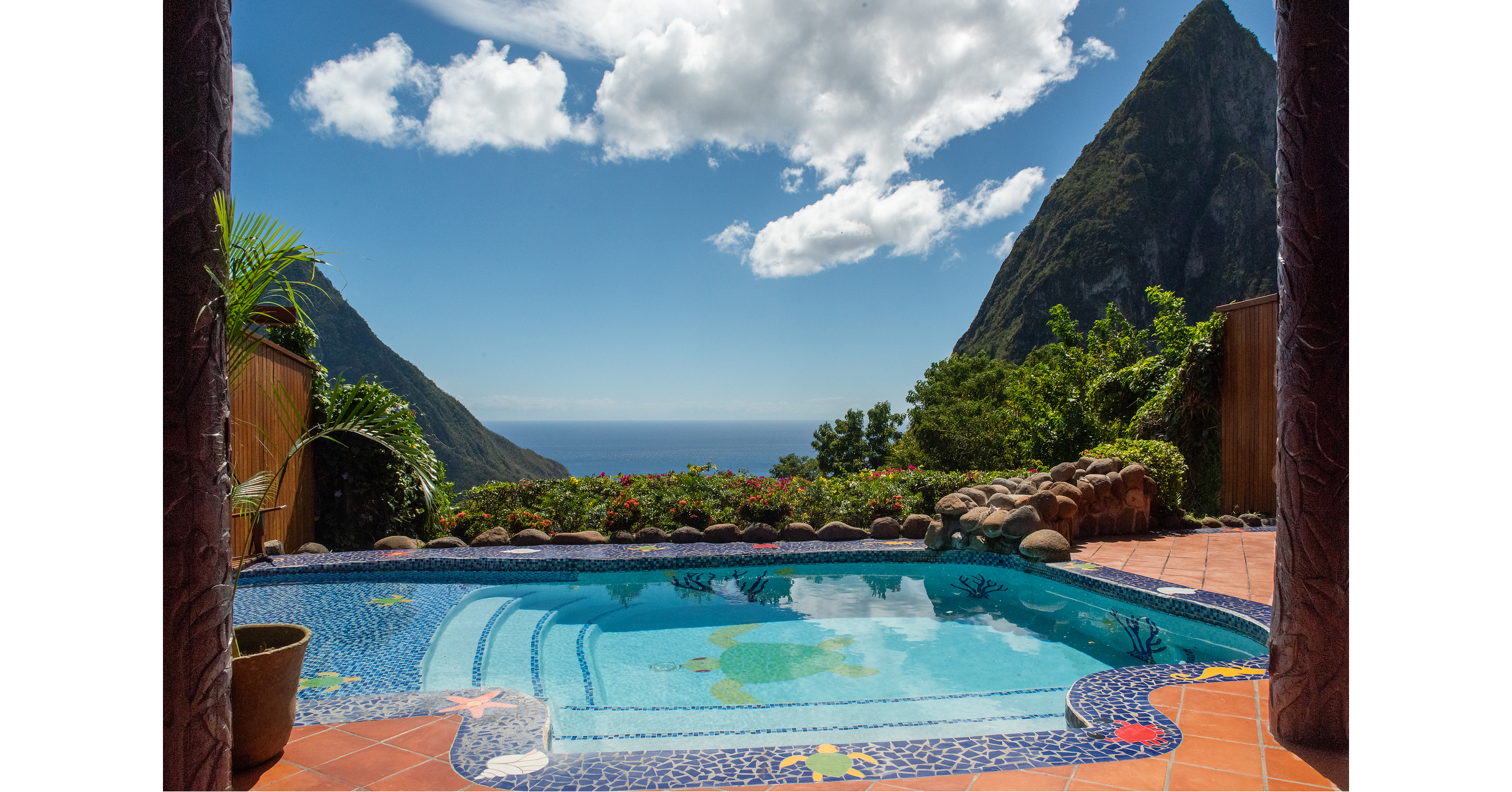
Ladera’s open-wall suites overlooking Saint Lucia’s Pitons earn the 2027 Condé Nast Johansens Best Design award, highlighting local craftsmanship.
Ladera Resort in Saint Lucia has received the 2027 Condé Nast Johansens Best Design award for North, Central and South America, the resort announced on 10 November 2026. The recognition follows a renovation completed in November 2025 that renewed the property's suite accommodation while retaining the architectural principle for which the establishment is particularly known. Thirty-five of its 37 suites and villas open directly towards the Pitons, with no conventional exterior wall separating the accommodation from that part of the landscape. The resort occupies an approximately 18-acre former cocoa plantation on a volcanic ridge about 1,000 feet above the Caribbean. Its position within the Pitons Management Area makes the relationship between architecture and landscape central to the way the hotel operates. For superyacht owners considering a shore-based interval in the Eastern Caribbean, the property represents a deliberately different way of experiencing a coastal destination from the perspective normally available aboard a vessel.
The significance of building between the Pitons
Gros Piton and Petit Piton are among the most recognisable features of Saint Lucia's coastline. The Pitons Management Area has been on the UNESCO World Heritage List since 2004. The resort identifies itself as the only hotel within that protected landscape. Ladera's position on elevated ground, rather than directly on the beach, gives its accommodation a relationship with the two mountains that cannot be reproduced simply through the construction of a more elaborate hotel on the shore.
A guest approaching the island by yacht may initially appreciate the mountains as features of the coastline. From an elevated residence or resort, the relationship between the peaks, forested slopes and the sea becomes different. Changes in light and weather can alter the apparent distance and shape of the surrounding land. The opportunity to observe that landscape over an extended period is one of the advantages of making an overnight stay ashore, rather than viewing it solely during a scheduled excursion. Access arrangements from the yacht and the road journey to the hotel should nevertheless be planned separately. An elevated property does not provide immediate access by tender, and local transport arrangements must form part of the actual itinerary.
Accommodation designed without a conventional fourth wall
The architectural decision recognised by the design award is unusually consequential for a hospitality property. Instead of placing a large window or glazed door between a suite and its principal view, Ladera has omitted that boundary from most of its accommodation. The resort describes 35 of its 37 suites and villas as having this open-sided arrangement. Each suite has a private heated plunge pool.
The absence of a wall changes the experience of the room beyond the appearance of the view. Outdoor air, sounds and variations in natural light enter the accommodation more directly. The design may be especially appealing to individuals who prefer the sensory qualities of a sheltered terrace to those of a fully enclosed room. It is not necessarily the appropriate arrangement for every guest or every season. A traveller should examine the actual suite description, including any difference between the categories offered and the arrangements designed to protect privacy. Someone accustomed to the highly controlled environment of a large yacht may appreciate this different form of connection with the surroundings, but should assess its practical characteristics independently of the appeal of the photographs.
A design adapted to the contours of the ridge
Ladera's accommodation follows the existing topography, according to the resort, resulting in different outlooks from individual suites. This is a valuable quality in a relatively small hospitality development. A visitor selecting accommodation should consider the actual position, access and orientation of the suite rather than assume that two rooms belonging to a similar pricing category necessarily provide the same experience.
The relationship between the accommodation and the ground also illustrates why the design of a hillside property cannot be assessed entirely through its interior finishes. Circulation between rooms and shared facilities, the handling of supplies and the maintenance of structures situated at different elevations are necessary aspects of the estate's operation. Guests with mobility requirements should ask for precise information about the routes associated with their chosen accommodation and the assistance available. The spatial character of a hotel built around a ridge may demand arrangements quite different from those of a level coastal resort. The important question is not whether the physical conditions can be eliminated, but how successfully the hotel's operation responds to them while preserving the features that make the place distinctive.
The contribution of Saint Lucian craftsmen
The resort's November statement emphasises the local manufacture of furniture, frames, vanity units and signs. Boniface Modeste, identified as one of the island craftsmen involved, received the 2025/26 GIMIES award for craft and souvenir retail. The buildings themselves use locally sourced wood, stone and clay, and the operator reports that approximately 99 per cent of its staff come from Saint Lucia.
For owners of privately commissioned interiors, the relationship between a particular object and the person making it can be more interesting than its resemblance to a widely available luxury product. Selecting an individual craftsman permits a design to respond to the location and the intended use of the object. The irregularities associated with hand production may contribute to the character of a piece, but good construction and the suitability of the finish remain necessary. A guest at Ladera can examine how the furniture relates to its open-air environment, where wood and other materials encounter conditions different from those of a continuously enclosed room. Those observations may be useful when considering a private residential commission, although furnishings installed aboard a yacht would additionally need to satisfy the applicable marine technical and safety requirements.
A twenty-five-thousand-square-foot wellness centre
The renovation included the lévé Wellness & Spa, designed by Saint Lucian designer Darnal Augustin and constructed locally under the resort's property management team. The 25,000-square-foot facility received the preceding year's Condé Nast Johansens Best Hotel Spa recognition for North America and the Caribbean. The latest design award therefore follows earlier recognition of another part of the same property.
The spa's scale gives guests a second way of spending time in the hillside setting beyond their individual suite. One of its advertised experiences is the couples' Harmony for Two treatment. Guests should confirm the precise services, duration, availability and any personal suitability considerations before arranging treatment. The hotel's design and the presence of a spa may contribute to an enjoyable period of rest, but neither establishes a medical benefit for every visitor. Owners who value privacy may want to know how particular treatments are organised for individual guests or couples rather than assume that the general description of the wellness facilities determines the experience offered at a specific appointment.
Dining associated with the island
The recent programme also includes changes and additions to food and beverage facilities. Ladera identifies the Hideaway Rum Bar, presented within a cave-like environment, and the Wine Room at its Dasheene restaurant, with a selection exceeding 170 labels. The latter provides an opportunity to explore the restaurant's locally inspired tasting menus in combination with a dedicated wine selection.
The importance of a culinary programme at a property of this kind lies partly in its relationship with the region's producers. Travellers who spend much of their time aboard yachts may be accustomed to meals prepared from ingredients obtained across several ports. A visit to a stationary property provides an opportunity to consider the ingredients and approaches associated with a particular island in more depth. Guests wishing to investigate specific local products can enquire about suitable encounters with producers or the culinary team. Current menus and dietary arrangements should be confirmed in advance, particularly if the visit is organised around a particular meal. The resort's facilities are also relevant to visitors interested in dining without necessarily staying overnight; individual access and reservations should be established with the property.
Stewardship within a World Heritage landscape
Ladera reports initiatives including rainwater collection, solar water heating and extensive use of forest and garden areas within the property. Its November announcement also identifies a recent national sustainable tourism award. These measures are particularly relevant because the protected landscape is one of the main reasons guests choose the property. The hotel depends on maintaining a meaningful connection with its natural surroundings.
The statements describe specific measures taken by the operator rather than demonstrate that every aspect of the property's operation has no environmental impact. The demands placed on water, energy, waste management and local infrastructure remain important to the continued operation of an island hotel. An interested guest can ask how the property manages these matters, or seek further information about conservation organisations working in the Pitons Management Area. A yacht owner contemplating shore activities in a protected landscape should also recognise that access rules and local regulations may apply to the intended activity, regardless of the quality of the accommodation chosen for the visit.
A shore retreat to complement a Caribbean voyage
Ladera is an adults-only property. Its combination of relatively few suites, individual pools and unusually open accommodation makes it particularly appropriate for a couple seeking a different rhythm during a wider island itinerary. It is also important to distinguish the experience advertised by a resort from the conditions that actually apply during an intended stay. The specific room, seasonal conditions, travel arrangements and availability of desired services should be confirmed directly with the hotel.
The 2027 Best Design award provides a reason to examine Ladera's approach, but the value of the property's architecture for an individual guest does not depend on the distinction alone. It rests on the ability of the accommodation, the original landscape and the local hospitality operation to work together. In that respect the resort represents an interesting alternative to luxury accommodation designed chiefly around enclosed interior environments. Its most distinctive architectural feature is an absence: the deliberate decision to let the landscape perform a role that would otherwise be occupied by a built surface.
Primary source: Ladera Resort, official Best Design award announcement, 10 November 2026.
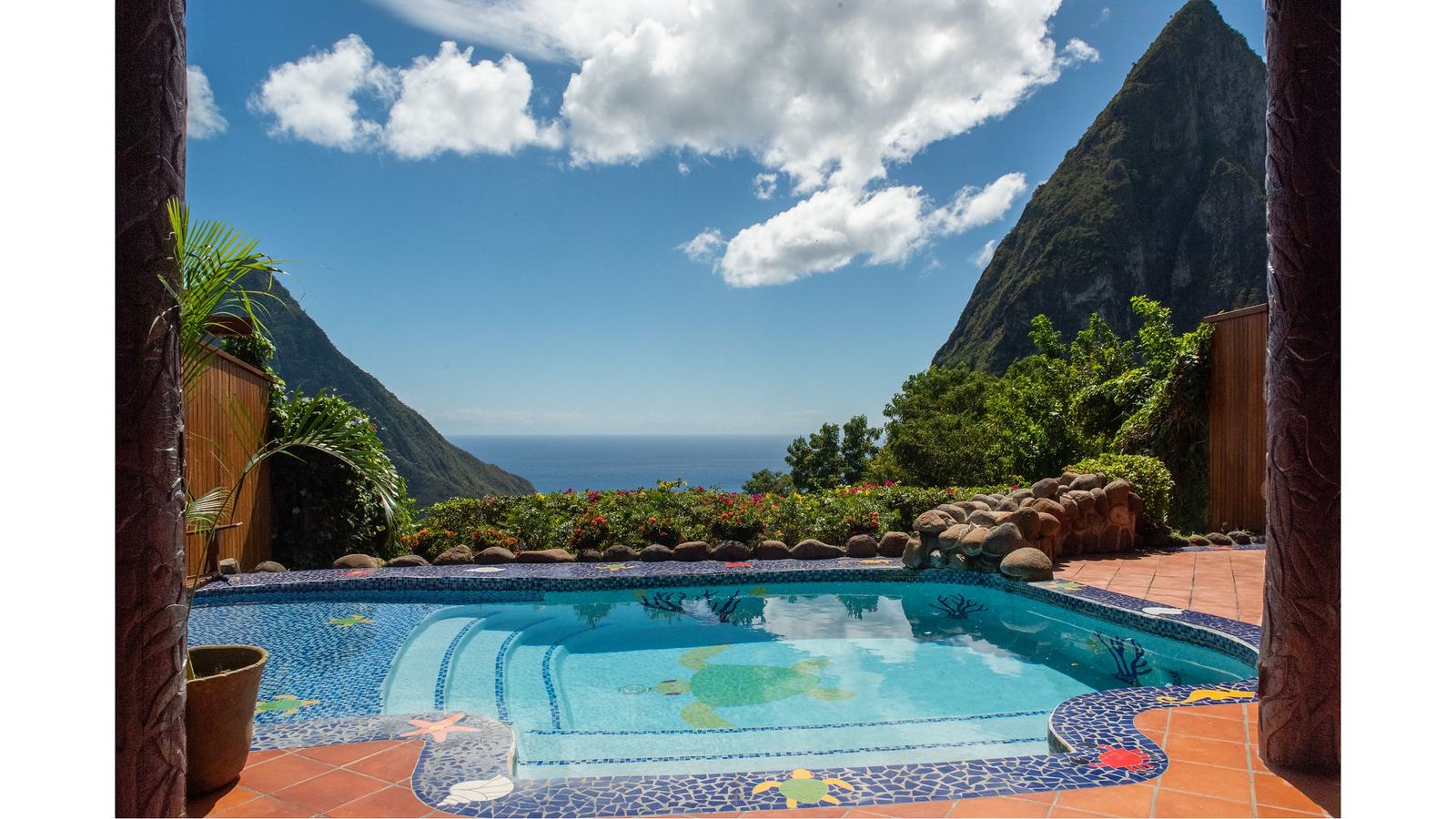
Ladera Resort — official Paradise Ridge photograph distributed in its 1 October 2026 Michelin Key press release via PR Newswire. Official source.