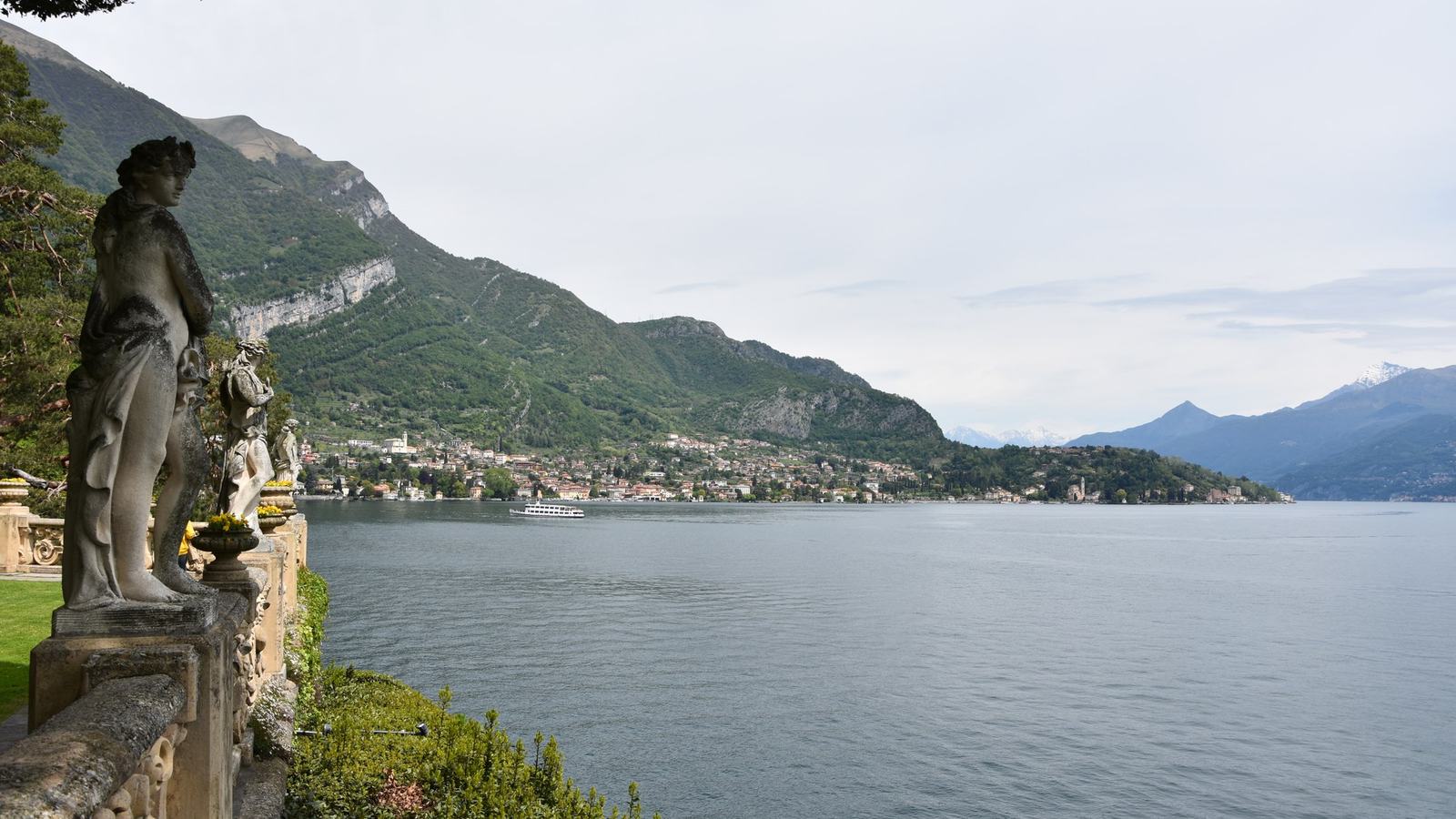
Explore Villa del Balbianello on Lake Como, its carefully composed gardens, historic architecture and the collections of explorer Guido Monzino with FAI.
On the western shore of Lake Como, a wooded promontory provides the setting for one of the most instructive historic houses in northern Italy. Villa del Balbianello is worth approaching not simply as an excursion from a waterfront hotel, but as an opportunity to study the relationship between architecture, water and landscape. For private clients accustomed to commissioning houses or large yachts, the estate offers a lesson in how carefully designed views can confer a sense of place that expensive finishes alone cannot achieve.
The Italian heritage organisation FAI, which manages the property, traces the site to a Franciscan religious establishment and explains its subsequent transformation into an elegant retreat under Cardinal Angelo Maria Durini. The last private owner, businessman and explorer Guido Monzino, left the property to the organisation in 1988. Its interiors preserve evidence of his journeys as well as his collecting interests. The estate is now a public heritage site rather than a privately available residence, and visitors should arrange their day through the official visitor service.
A position that makes the architecture distinctive
The villa occupies the Lavedo peninsula near Lenno in Tremezzina, a geographical position that determines how the visitor experiences the buildings. Instead of standing in a garden with a single principal facade facing a predictable direction, the complex occupies a point from which the views change considerably as one moves through it. The lake is the constant element, but the position of the opposite shore, the distance to the mountains and the apparent movement of the water vary with each terrace. For an architect, those differences are more useful to study than the decorative character of any individual window. They demonstrate how a building can borrow an atmosphere from its surroundings without requiring the surrounding landscape to be altered extensively.
The significance of that principle extends to contemporary waterfront houses. A client who acquires an expensive coastal plot may assume that the largest possible glazing area is the best way to capitalise on the view. At Balbianello the more interesting quality is the sequence through which the view is revealed. A moment of enclosure increases the effect of a subsequent opening, while a sheltered seat permits a much longer appreciation of the prospect. A successful design brief could therefore begin with desired experiences rather than a schedule of window sizes. This is also relevant to a yacht, whose decks are often arranged for social use in changing weather and whose relationship with the sea is central to the reasons for its commission.
The garden as a sequence of rooms
The garden is not a neutral strip of greenery surrounding a house. It participates in the composition of the estate, creating intermediary places between enclosed architecture and the expansive landscape. FAI highlights the skill of its gardeners, whose carefully managed trees and clipped planting contribute to the distinct atmosphere of the grounds. The terraces and paths give the arrival and movement around the property a deliberate pace.
For a private owner interested in landscape design, this is a reminder to include the garden in the architectural programme from its inception. The distances between seating areas, the choice of sheltered routes and the interruptions to sightlines will determine how often a garden is used. A planting scheme should be considered in relation to the time required for its development. The most convincing examples of mature topiary depend upon sustained care rather than a succession of expensive replacements, and any client considering comparable planting should understand the long-term commitment to specialist horticultural labour.
The loggia and the art of framing water
The loggia is among the architectural features associated with Durini's transformation of the property. Its open character establishes a transition from the protected rooms of a house to the changing conditions of the lake. It is a particularly compelling example of an architectural type that remains relevant to modern coastal projects, even when their formal language is entirely different.
A loggia can provide a useful lesson for the planning of a yacht's covered aft deck. The technical requirements of the latter are distinct, but both types of space must reconcile shelter, a satisfying view, access and the opportunity for people to converse comfortably. The brief should address orientation, reflected sunlight, prevailing winds and how an area will work when guests wish to remain outdoors for more than a few minutes. Furnishings must permit the passage of other people without turning a social space into an extension of the circulation route. The lesson is that a relatively simple arrangement of architectural elements can become memorable when the scale is right and the relationship with the environment is convincing.
A collector's house rather than a showroom
The late Guido Monzino was an explorer as well as a collector. FAI describes a house whose contents reflect his interests in expedition history and decorative objects. These layers of personal history distinguish the interiors from an ensemble of antique furniture assembled purely to reproduce a fashionable historical style.
A collector commissioning a new interior can learn from the distinction between possession and display. There are considerable advantages in establishing a clear account of why particular objects matter to the family before deciding where they should be installed. Items associated with journeys, previous residences or inherited collections can be more significant to the occupants than an accumulation of prestigious names. A designer can use those relationships to develop a coherent interior, provided that the pieces are individually important and their scale, materials and condition are taken into consideration. In a marine setting the desired visual effect must also be reconciled with movement, vibration and the need for secure installation.
Expedition history as an intellectual interest
The estate preserves records of Monzino's expeditions, including material associated with his geographical and mountaineering interests. This aspect of the visit changes the way one interprets the property. The quiet order of the house and gardens stands in marked contrast to the difficult environments in which the explorer travelled. The owner was not simply collecting beautiful objects; his collection also represented experiences that required preparation, judgement and personal effort.
Modern explorer yacht ownership can develop comparable interests without treating exploration as a decorative theme. A family expedition might be undertaken in collaboration with qualified naturalists, cultural historians or other specialists, with the itinerary arranged around genuine learning rather than the pursuit of a destination for its own sake. Appropriate permissions and environmental safeguards are essential. Journals, photographs and recordings can become a lasting account of a voyage, complementing objects legitimately acquired from recognised dealers rather than encouraging the removal of culturally significant material from its original context. The connection between travel and knowledge is particularly relevant for younger members of a family who may otherwise encounter extraordinary places only briefly.
Organising a thoughtful Lake Como day
A visit should allow enough time to appreciate the garden, the architecture and, where available, the interiors. The official visitor information should be checked before a party leaves its accommodation, since access arrangements, ticket availability and opening days can change. The property is a managed historic site, so a request for special access or photography should be handled in advance rather than assumed to be included in a standard visit.
For a group travelling with a private driver or local boat operator, advance coordination makes the difference between a relaxed visit and a day spent negotiating traffic or unexpected waiting times. The plan should provide a suitable interval for lunch, allow for changes in lake conditions and recognise any mobility requirements among guests. It is unwise to construct a schedule around an unconfirmed private arrival at the villa. A heritage visit benefits from the absence of unnecessary urgency, and there is no obligation to turn every part of the day into a separate hospitality experience.
Stewardship beyond the original commission
FAI's ongoing responsibility for the estate underlines a subject often overlooked at the beginning of a major private project: the long-term stewardship of a property after its creation or acquisition. A historic building and garden require a continuing programme of care, appropriate expertise and funding. Maintenance is part of their architectural identity, not an unfortunate interruption to it.
A family considering an estate with mature landscaping or important decorative interiors should establish a stewardship plan before committing to a major redesign. That plan can encompass the documentation of objects, preventative maintenance, responsibilities for specialist contractors and the conservation implications of environmental changes. The same discipline can inform the management of a large yacht, where deferred technical maintenance may compromise both the owner's enjoyment and the asset's condition. In each case, the objective is not merely to preserve expenditure already made but to allow the property to retain the qualities that originally justified its acquisition.
Why the visit belongs on an owner's cultural itinerary
Balbianello offers a perspective that is different from a conventional tour of luxury hotels or contemporary developments. It brings together architecture, garden design, personal collections and the history of travel within a distinctive landscape. Its relevance lies as much in its coherence as in its individual attractions.
The visit can be particularly rewarding for an owner preparing to commission a residence, a landscape or a new yacht interior. Observing the proportions of the terraces, the transition between enclosed and open spaces and the relationship of the collection to the former occupant yields practical questions worth discussing with a design team. Those observations cannot be converted automatically into a contemporary design, because the conditions and requirements of each commission are different. They can, however, sharpen the owner's understanding of what makes a place rewarding to inhabit over many years.
The greater luxury of an afternoon here is the opportunity to look carefully at a place that has acquired its character over generations. Lake Como may be internationally celebrated for its residences and hospitality, yet this particular estate is best understood through its combination of personal history and a sustained commitment to conservation. That combination makes it a persuasive reference for anyone who values the lasting character of a privately commissioned environment.
Primary source: FAI — Villa del Balbianello.
Villa del Balbianello, Lenno — Phyrexian; source: Wikimedia Commons, BY-SA/4.0. Image resized. Photograph and attribution · Licence.

Source
FAI — Villa del Balbianello