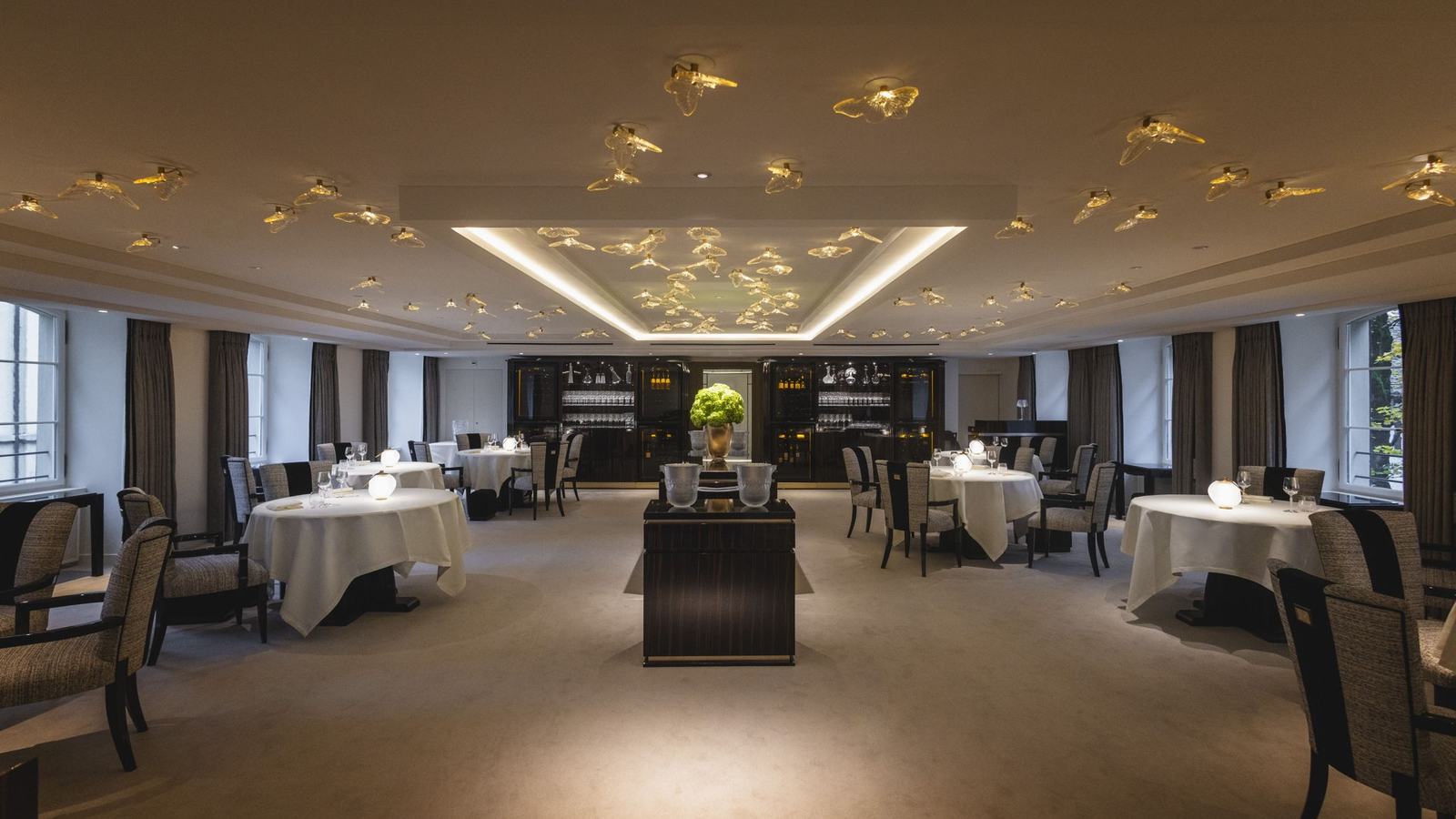
Lalique opens Villa Florhof’s Signature Restaurant in Zurich, pairing its illuminated crystal interiors with guest chefs and seasonal menus through December.
Zurich's Villa Florhof has introduced its first-floor Signature Restaurant with an inaugural programme that places the cooking of several established chefs alongside the interior craftsmanship of Lalique. The restaurant opened on 11 November 2026, approximately three months after the boutique hotel welcomed its first guests. Rather than immediately assign the new dining room a permanent culinary identity, Lalique Hospitality has invited chefs from its existing properties and from elsewhere in Switzerland to devise individual multi-course menus through 19 December. A further programme is expected in January. For travellers who appreciate the relationship between gastronomy and the design of a particular place, the opening offers an opportunity to examine several distinct approaches to cooking within the same setting.
A historic Zurich house with a new hospitality programme
Villa Florhof occupies a listed building whose origins, according to Lalique's announcement, reach back to the fifteenth century. The site became associated with Zurich's silk trade from the sixteenth century. Its transformation into a boutique hotel followed an extensive restoration, and the hotel opened on 1 August 2026 with thirteen individually designed rooms and suites. The comparatively small number of accommodations is significant to guests who prefer a domestic scale rather than the workings of a large international hotel.
The introduction of a restaurant in the first-floor salons allows the house to extend its hospitality beyond those staying overnight. It also places the dining experience within rooms that look towards the surrounding historic neighbourhood, rather than in an isolated purpose-built extension. The attraction of such a property lies partly in its ability to introduce contemporary services without completely losing the character of an established building. Guests who frequently occupy newly designed residences or yachts can appreciate the different opportunities offered by historic rooms, where the proportions and existing architectural context provide the design team with a more specific framework.
Crystal work above the dining tables
A particularly distinctive detail is the arrangement of 104 illuminated Papillon crystal butterflies in the restaurant ceiling. Lalique identifies the installation as the work of its own Interior Design Studio, developed specifically for the space. The butterfly motif occurs elsewhere in the hotel and is intended to recall the building's association with the silk industry. The installation thus provides an architectural expression of a historical theme rather than simply introducing a series of decorative objects made from the group's characteristic material.
In a dining environment, the effect of decorative lighting needs to be evaluated in relation to the illumination of faces, food and surrounding surfaces. Crystal can produce visually compelling highlights when light enters or passes through it, but those highlights should not overwhelm the activity occurring below. The relationship between the luminous installation and the more ordinary lighting required by guests and staff is particularly relevant to owners considering a comparable commission aboard a yacht. The physical execution must support access for maintenance, suitable electrical arrangements and the intended atmosphere at different times of day. Villa Florhof offers a useful example of how a recognisable decorative motif can be extended into an architectural feature.
Christian Hoffmann begins the programme
The opening menus have been developed by Villa Florhof sous chef Christian Hoffmann. His professional experience includes Palais Coburg in Vienna and a number of Michelin-starred kitchens in Berlin. The initial five-course menu listed by Lalique introduces contrasts between seafood, vegetables and richer meat dishes. Langoustine appears with pumpkin, vadouvan and preserved lemon; sweetbread is paired with hazelnut and vin jaune; and Australian Wagyu beef is accompanied by Jerusalem artichoke, pear and savoy cabbage.
Hoffmann's programme is particularly interesting because he is working within the new restaurant rather than arriving solely for an external guest appearance. After the opening dates of 11 to 14 November, he is scheduled to return from 25 to 28 November and again from 15 to 19 December. These separate periods give returning visitors an opportunity to experience the developing culinary identity of the property. The announced price of his menu is CHF 245. Guests interested in the composition of a particular evening should confirm its current details directly, since the availability of ingredients and the requirements of individual diners may influence the precise menu served.
Jérôme Schilling brings a vineyard perspective to Zurich
From 18 to 21 November, Jérôme Schilling is due to take over the kitchen. He leads Restaurant Lalique at Château Lafaurie-Peyraguey in Sauternes, a property whose culinary identity is closely associated with its vineyard setting. The Zurich announcement notes that the château's restaurant received its first Michelin star in 2019 and a second in 2022. Schilling also attained the distinction of Meilleur Ouvrier de France in 2023.
His Zurich menu is organised around the vineyard as a creative theme rather than solely around the selection of accompanying wines. The announced courses include cauliflower with Oscietra caviar, hake with bergamot and elderflower, and black pork with chestnut and kumquat. These combinations suggest an interest in contrasts between acidity, fragrance and richer flavours. For a guest intending to explore the relationship between gastronomy and fine wine, it is worth discussing the available pairings with the restaurant before the evening. The five-course menu is advertised at CHF 289; wine and other additional services should not be assumed to be included in that price without confirmation.
Two distinct culinary backgrounds meet for one evening
On 24 November, Hoffmann is scheduled to work alongside Paul Stradner for a joint dinner. Stradner leads the restaurant at Villa René Lalique in Wingen-sur-Moder, where his cooking draws on Alsatian ingredients and his Austrian background. A collaborative dinner is particularly appealing when the participants retain their individual interests while arranging the successive courses to form a coherent experience. It is not simply a sequence of signature dishes placed alongside one another.
Lalique's advance description identifies Stradner's langoustine with Hokkaido pumpkin and his venison with porcini, while the contribution from Hoffmann includes foie gras associated with quince, veal tongue and sage. The choice of ingredients reflects a seasonal setting extending from late autumn towards winter. For guests who enjoy comparing the decisions of different chefs, the dinner provides a useful opportunity to consider how each approaches richness, acidity, texture and the presentation of familiar ingredients. The published menu price is CHF 289. As the event is confined to a single date, prospective visitors should arrange their travel only after confirming the availability of the desired reservation.
An Engadine chef with a wider international background
James Baron is due to present his menu from 2 to 5 December. He and his wife operate Hotel Krone Säumerei am Inn in La Punt Chamues-ch, where La Chavallera received a Michelin star shortly after its opening in 2022. His earlier experience includes serving as chef de cuisine at Amber at The Landmark Mandarin Oriental in Hong Kong. That combination of Alpine and Asian professional influences is reflected in the courses announced for Villa Florhof.
The proposed menu includes capuns, associated with the canton of Graubünden, and a pear ravioli preparation with brown butter and marjoram. Other courses bring kimchi together with veal tartare or associate pike-perch with barley and bacon. The published menu concludes with an interpretation of a traditional nut tart. These dishes illustrate how a chef can retain identifiable regional references while introducing techniques and flavour combinations developed through experience elsewhere. The most interesting aspect may be the dialogue between those influences rather than the presence of expensive individual ingredients. The advertised menu price for Baron's appearance is CHF 250.
A game-focused menu from Martin Dalsass
From 9 to 12 December, the programme moves to Martin Dalsass, whose career includes the establishment of Ristorante Santabbondio near Lugano and the management of Talvo in the Engadine. Lalique describes him as an important figure in Swiss gastronomy whose cooking reflects Mediterranean influences and a particular interest in olive oil. His proposed contribution to the new restaurant is a menu focusing on game. Detailed dishes and pricing were not yet specified in the opening announcement.
Game cookery can offer a distinctive experience in the late autumn and early winter, but prospective guests should obtain the actual menu before booking if they have dietary restrictions or preferences. The relationship between the ingredients, the season and the chef's approach should determine the appeal of the evening rather than the prestige of the invitation alone. Guests who wish to combine the menu with a broader stay in Zurich may also include time exploring the city's galleries and specialist dealers. The hotel provides a convenient base for guests interested in design, collections and fine dining within a relatively compact urban itinerary.
Visiting Villa Florhof during its opening season
The Signature Restaurant operates through 19 December before its announced winter closure from 20 December to 12 January. Vegetarian options are available on request. The hotel's separate Bar & Brasserie continues to operate daily under John Schiffmann. The restaurant's address is Florhofgasse 4, and its website provides the current reservation information. Any plans involving the January programme should await the publication of the individual guest chefs and dates.
For a superyacht owner travelling between seasonal cruising grounds and European cities, the opening is an opportunity to encounter the kind of hospitality that derives much of its character from the interaction of a particular building, its interiors and the personalities of the people who work there. Lalique has not yet announced the permanent chef of the new restaurant. The temporary programme should therefore be understood as a series of defined culinary occasions rather than as a promise of an unchanging experience. The illuminated crystal installation and the historic setting provide continuity while the character of the cooking changes from one guest appearance to the next.
Primary source: Lalique Group official Villa Florhof press release, 12 November 2026.
Villa Florhof / © DigitaleMassarbeit, courtesy of Lalique Group's official press and media gallery. Official source.
