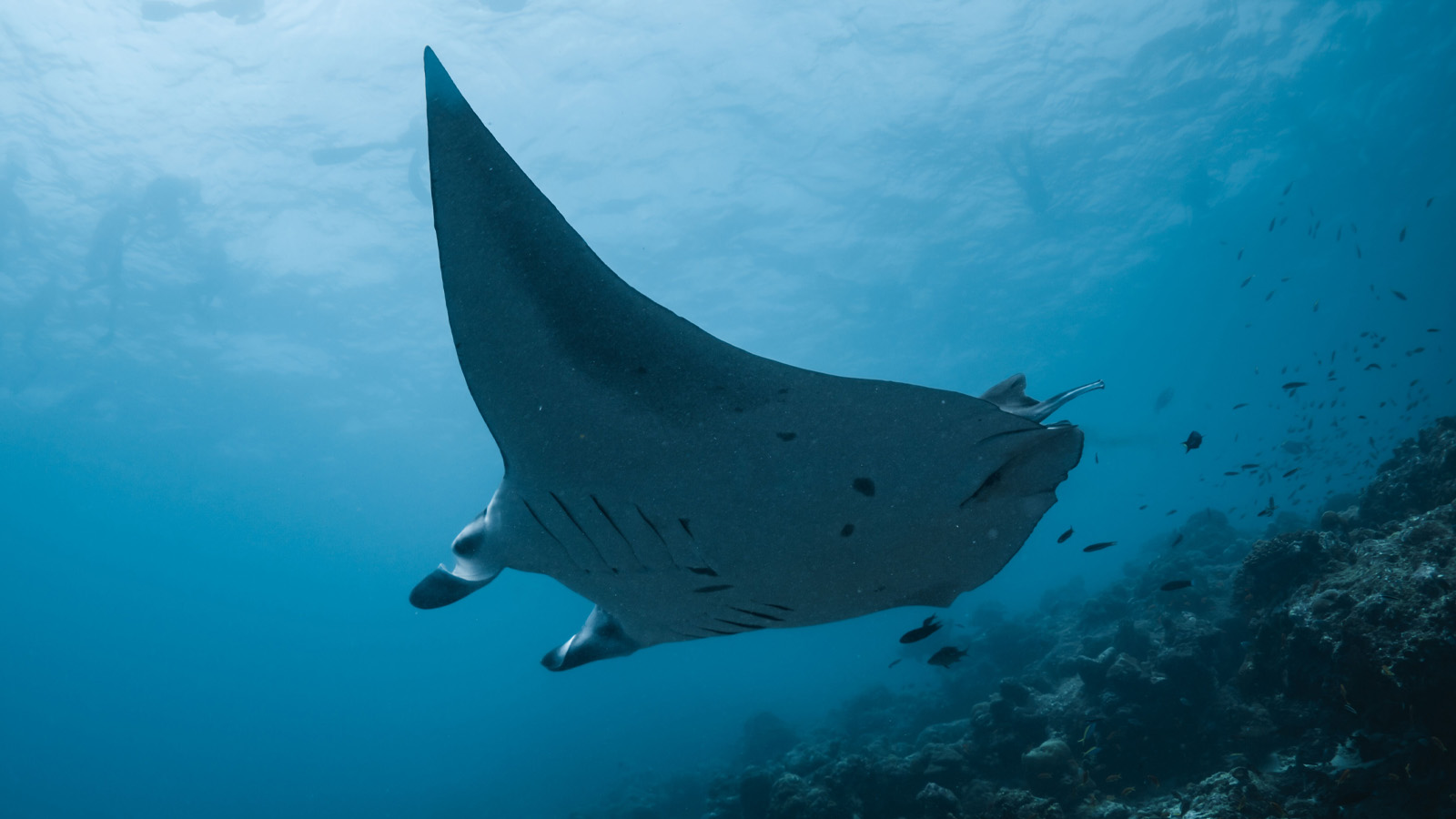
Landaa Giraavaru marks two decades of support for manta research, highlighting long-term monitoring, local partnerships and responsible wildlife encounters for yacht guests.
An anniversary with a purpose beyond hospitality
Four Seasons Resort Maldives at Landaa Giraavaru has reported the twentieth anniversary of its support for manta ray conservation. The announcement of 13 November 2026 looks back at activities held from 11 to 17 September, rather than describing a celebration happening this weekend. The partnership with the Maldives Manta Conservation Programme and Manta Trust stretches back to 2006 and illustrates how an established island resort can provide continuity for scientific work. For a superyacht owner, the story raises a wider question about how a marine holiday can contribute to rather than simply consume the natural qualities of a destination.
A meaningful conservation experience differs from entertainment designed around seeing an animal at close quarters. Researchers need time, suitable equipment, dependable access to field sites and the ability to collect consistent information. A resort that provides support over many years can help make this type of work feasible. Guests may gain an unusual opportunity to learn about the species being studied, but the priorities of the research and the wellbeing of the wildlife should remain more important than the desires of any individual visitor.
Why long-term field records matter
Manta researchers use individual identification to follow animals encountered over time. Patterns on a ray's underside make photographic records particularly valuable. The resort's anniversary statement reports that the research programme has recorded more than six thousand individual reef mantas and accumulated over eighty thousand sightings. These are programme figures attributed to the partnership, not an independently conducted census by Superyacht Guide. They demonstrate the difference between a photographic encounter and a sustained observation programme.
Identification records can enable scientists to ask questions about movements, seasonal use of habitats and encounters with particular threats. A single charismatic animal observed during a holiday becomes part of a much larger picture when its identity and circumstances can be recorded responsibly. The process requires careful documentation and consistent techniques. Visitors interested in contributing observations should follow the researchers' instructions, rather than attempting to collect additional photographs or approach angles that might alter a manta's behaviour.
A shared effort rather than one institution's achievement
The conservation programme draws on the work of local communities, scientists, authorities, educators and other partners. The resort's role has included providing an island base for personnel and practical support. It would be misleading to attribute the entire body of research or all conservation outcomes to the hotel alone. Protecting mobile marine species requires cooperation across geographical, institutional and national boundaries, often involving individuals whose work is not visible to holidaymakers.
For private donors, this is an important distinction when evaluating conservation projects. A successful initiative may rely on many kinds of contribution: transport, accommodation, scientific expertise, local knowledge, monitoring systems and long-term funding. Visible encounters with wildlife are only one small part of that work. An owner considering support for a programme should ask how priorities are established, how researchers evaluate results and whether the groups involved are adequately represented in the decisions.
Habitat protection and the Baa Atoll context
The anniversary account connects the research with protective measures in the Maldives, including the recognition of Hanifaru Bay and Anga Faru as marine protected areas in 2009 and the Baa Atoll UNESCO Biosphere Reserve designation in 2011. These designations have different purposes and management arrangements, so visitors should not treat them as interchangeable. The history underscores why the habitat, including the conditions in which rays gather and feed, deserves as much attention as the animals themselves.
Yacht captains visiting protected waters must establish the current rules before planning operations. A permit, authorised guide or designated access arrangement may be necessary at a particular site. Local regulations can change independently of a resort's excursion schedule. Anchor placement, proximity to wildlife, tender movements and the conduct of swimmers may all require special care. The appropriate way to prepare is to consult current local authority guidance and specialist operators, not to rely on the experience of a previous season.
Learning before the encounter
The Marine Discovery Centre at Landaa Giraavaru offers a range of opportunities for resort guests to learn about marine biology. The company's report describes a team of fourteen full-time biologists and experiences introducing participants to the work of manta researchers. Such an introduction can be especially interesting for families whose children are fascinated by the sea and who want a deeper understanding than a conventional snorkelling trip provides. It also sets expectations about the unpredictable nature of wildlife observations.
A pre-departure conversation can help a guest recognise behaviour that they might otherwise overlook. Observing feeding, movement or interactions from an appropriate distance may be more interesting than focusing narrowly on trying to obtain a photograph. A biologist can explain the significance of the conditions encountered and why certain decisions are made during an excursion. If the animals do not appear, an informed discussion of the habitat can still make the experience worthwhile. No responsible operator should promise that a manta will be present on a particular schedule.
The Manta-on-Call approach
The resort describes a system through which registered guests can be alerted when suitable manta encounters become possible during the season, generally from May to December. The availability of an excursion depends on conditions and on the relevant wildlife management arrangements. This approach recognises that the natural world does not follow a room-service timetable. It may appeal to a private group staying for several days and willing to keep part of its schedule flexible.
For a superyacht itinerary, the same principle can inform the broader programme. Avoid arranging a rigid sequence of activities that creates pressure to deliver a wildlife encounter within a single hour. Captains and guests should accept that poor visibility, rough water or a change in animal movements may require cancellation. An alternative day aboard or an educational session ashore is a better option than asking a guide to proceed when circumstances are unsuitable. The freedom to adapt is one of the real advantages of private travel.
What responsible swimming looks like
An encounter with large marine animals should be planned around the instructions of qualified local guides and relevant authorities. Visitors should not touch, pursue, obstruct or attempt to ride a manta. Remain aware of the other swimmers, the position of the boat and the conditions at the surface. Even a confident swimmer can encounter difficulty when moving in unfamiliar water, particularly if attention is focused entirely on photography rather than the immediate environment.
The most rewarding observation is often obtained by staying still and allowing an animal to determine the encounter. This requires patience, buoyancy control and respect for other people in the water. A professional guide will explain how to enter and leave safely and how to respond if an animal changes direction. Guests who prefer not to enter the water should have alternative ways to participate in the experience. The resort's educational facilities include dry-land interpretation intended to make aspects of marine life accessible without immersion.
How yachts can help without interfering
Large yachts may have extensive resources, including tenders, trained crew, diving equipment and communications systems. These can sometimes be useful in supporting conservation work, but their availability does not automatically make every offer appropriate. Researchers may require specific transport schedules or methods for collecting observations. An offer of assistance should begin with a discussion of what the authorised conservation team actually needs rather than an assumption that a large vessel can improve its existing methods.
Financial support can also be valuable when it goes towards priorities identified by the organisation. Ask about governance, current research objectives, local participation and the practical consequences of proposed donations. Funding a less conspicuous task, such as maintaining a monitoring programme, may have a larger long-term effect than supporting an attractive one-off event. Owners should allow expert teams to guide the use of resources. The point of conservation sponsorship is not to create an opportunity for a photograph with a donor.
Encouraging the next generation
The anniversary programme included educational and community activities, recognising that conservation cannot depend entirely on visiting researchers or holidaymakers. Continued work requires people who understand the local environment and can participate in decisions about its management. This is especially relevant in island communities where the marine environment influences livelihoods, food security and tourism. A visitor's perspective should be balanced with the needs of those who live in the area throughout the year.
For a family travelling on a yacht, one useful approach is to make marine education part of the holiday before arriving in the Maldives. Children can learn how reef structures, currents and plankton connect with larger animals. A discussion with conservation staff then becomes an opportunity to ask more searching questions. Afterwards, the family can decide whether it wants to continue following a particular project. That interest does not require turning the trip into a classroom: the fascination comes from understanding something genuinely encountered in its natural setting.
The next twenty years
The significance of the Landaa Giraavaru anniversary lies in continuity. It acknowledges a partnership that has developed over two decades and whose participants continue to identify research, responsible tourism and local education as priorities. The anniversary is not evidence that every threat to manta rays has disappeared. It is evidence of an established effort to understand the animals and support their protection through cooperation.
Superyacht owners visiting the Maldives can contribute by arranging compliant vessel operations, choosing responsible operators, listening to local expertise and considering informed support for long-term projects. The finest marine experiences are not measured solely by proximity to an animal or the number of photographs taken. They are measured by what visitors understand afterwards and whether the waters remain healthy enough for future generations to experience them. In that sense, the story at Landaa Giraavaru is as relevant to private yachting as it is to resort hospitality.
Primary source: Four Seasons Hotels and Resorts.
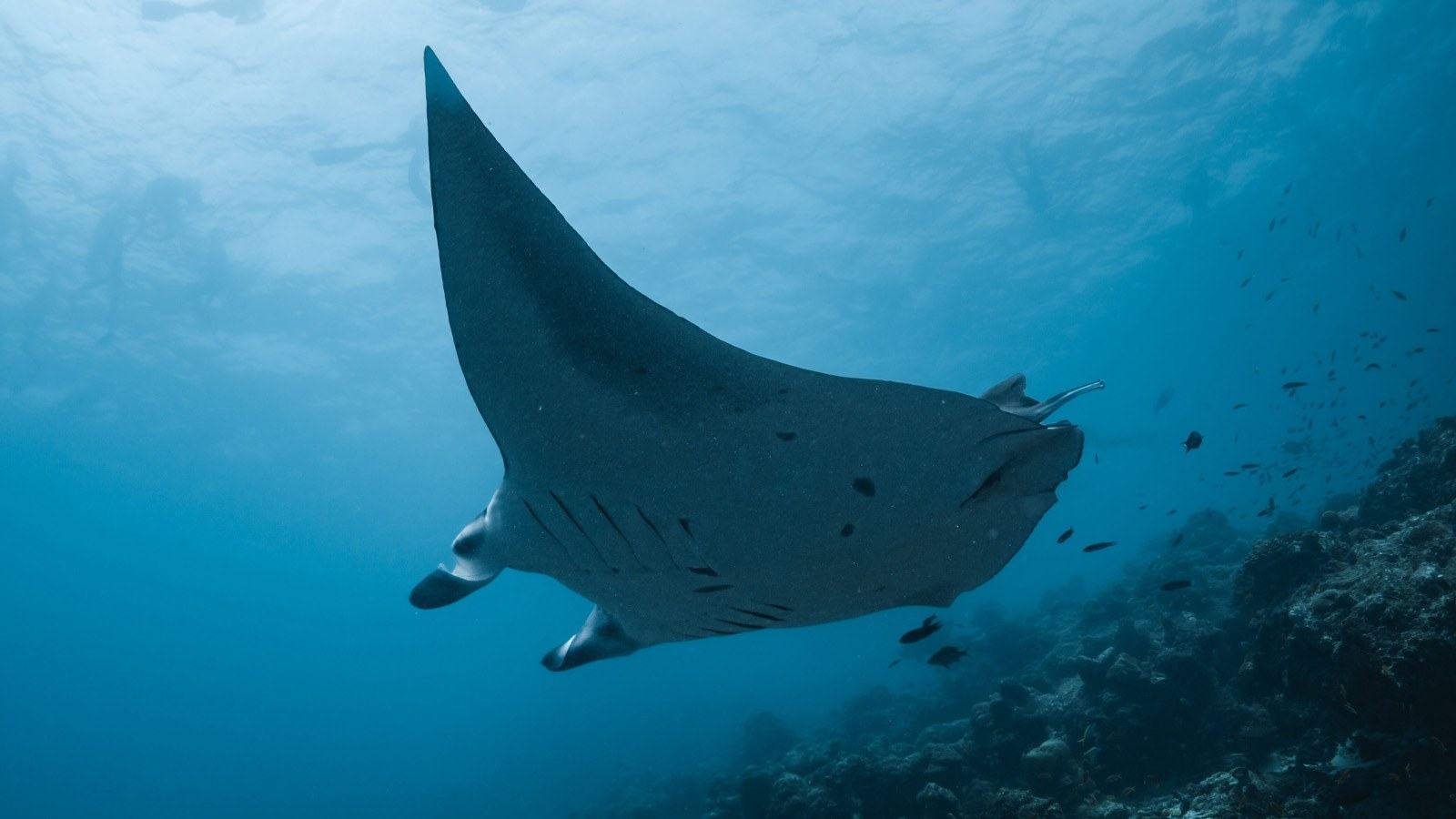
Landaa Giraavaru manta conservation anniversary — official press photograph. Released with the 13 November 2026 official announcement. Official source.