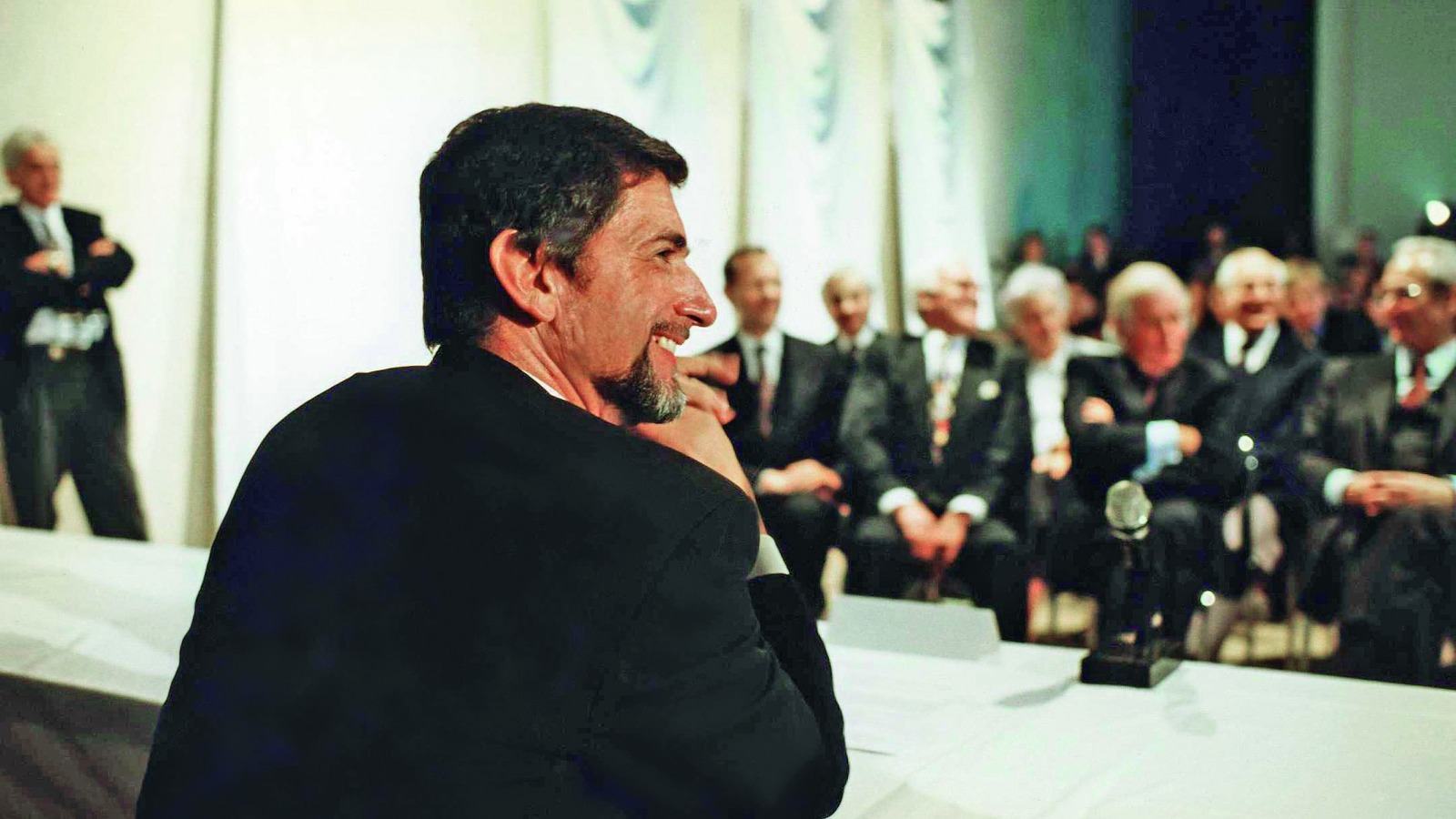
Lange honours the executive who helped revive the manufacture with Walter Lange and establish a new era of mechanical watchmaking.
A. Lange & Söhne remembers Günter Blümlein
A. Lange & Söhne is marking the legacy of Günter Blümlein, the executive whose partnership with Walter Lange was essential to reviving Saxon precision watchmaking after German reunification. The tribute arrives twenty-five years after Blümlein's death on 1 October 2001 and reflects on the difficult work of rebuilding an international luxury-watch business around an almost vanished historic name.
The manufacturer credits Blümlein not just for an individual model but for building the organisational and commercial foundation behind its return. The historical photograph accompanying this report is from A. Lange & Söhne's own archive rather than an illustration intended to represent a reconstructed event.
Reunification opened an unusual opportunity
Ferdinand Adolph Lange founded his watch manufacture in Glashütte in 1845, but the business was expropriated after the Second World War. For decades its historic identity survived largely in records and memories. Walter Lange, a descendant of the founder, wanted to relaunch it and found in Blümlein a partner with industrial experience and a clear understanding of mechanical-watch demand.
Reviving the brand required more than acquiring a name. It involved restoring the ability to design and manufacture movements, recruiting skilled watchmakers, establishing suppliers and persuading collectors that new wristwatches could match the seriousness of the old pocket watches.
Blümlein understood mechanical watchmaking's recovery
Born in Nuremberg in 1943, Blümlein studied precision engineering and developed a career involving the Diehl Group and later important responsibilities connected with IWC and Jaeger-LeCoultre. The quartz era had forced many mechanical-watch businesses to reassess how they communicated their value, and he understood that specialised craftsmanship could have lasting appeal.
His contribution was both commercial and technical. Success demanded disciplined product strategy, carefully chosen distribution and the ability to develop watches whose mechanisms justified their status. A collector's interest in a brand often begins with design, but confidence rests on the engineering and services behind it.
Four watches reintroduced the house in 1994
On 24 October 1994, the reborn manufacture presented its initial wristwatch collection at Dresden's Royal Palace. The LANGE 1 became particularly recognisable through its off-centre arrangement and outsize date. It appeared alongside the ARKADE, SAXONIA and the TOURBILLON Pour le Mérite, whose mechanical ambition immediately established a high technical standard.
The launch did not recreate a nineteenth-century catalogue verbatim. Instead it translated the heritage of Saxon precision watches into contemporary wristwatch design. That distinction is relevant when owners assess a modern Lange: it belongs to a new production era, even though it draws on historic principles.
The DATOGRAPH became a milestone
The 1999 DATOGRAPH extended the manufacturer's reputation into sophisticated chronographs at a time when fully developed in-house movements of that sort were relatively uncommon. Blümlein did not live to see every subsequent evolution, but the technical programme he helped establish continued through developments including the DOUBLE SPLIT and later TRIPLE SPLIT.
A chronograph is judged by more than the number of functions printed on a dial. Mechanism construction, reset reliability, finishing and serviceability contribute to its distinction. The visible movement architecture can also reveal choices that a casual observer cannot evaluate through the case design alone.
A memorial remains in the manufacture
A bronze relief by artist Beat Künzler was unveiled in 2002 in memory of Blümlein and today stands in the company's Lange II building. The portrait incorporates the recognisable LANGE 1 dial, linking his business and technical leadership to a lasting product symbol.
A. Lange & Söhne's present leadership describes Walter Lange and Günter Blümlein as complementary contributors. The commemoration is a reminder that a watchmaker's heritage depends on less visible decisions about people, capital, design discipline and production quality.
Legacy is visible in today's collecting culture
Collectors seek historic Lange wristwatches for their own finishing, rarity and mechanical character, but they also benefit from understanding the context in which the modern company was established. Documentation, correct maintenance and independent assessment remain essential when buying any significant mechanical timepiece.
The 2026 tribute is a historical reflection rather than a product release. It places an important entrepreneur back into the story of a brand that might otherwise be described only through movements and market values, preserving the human decisions behind the objects collectors admire.