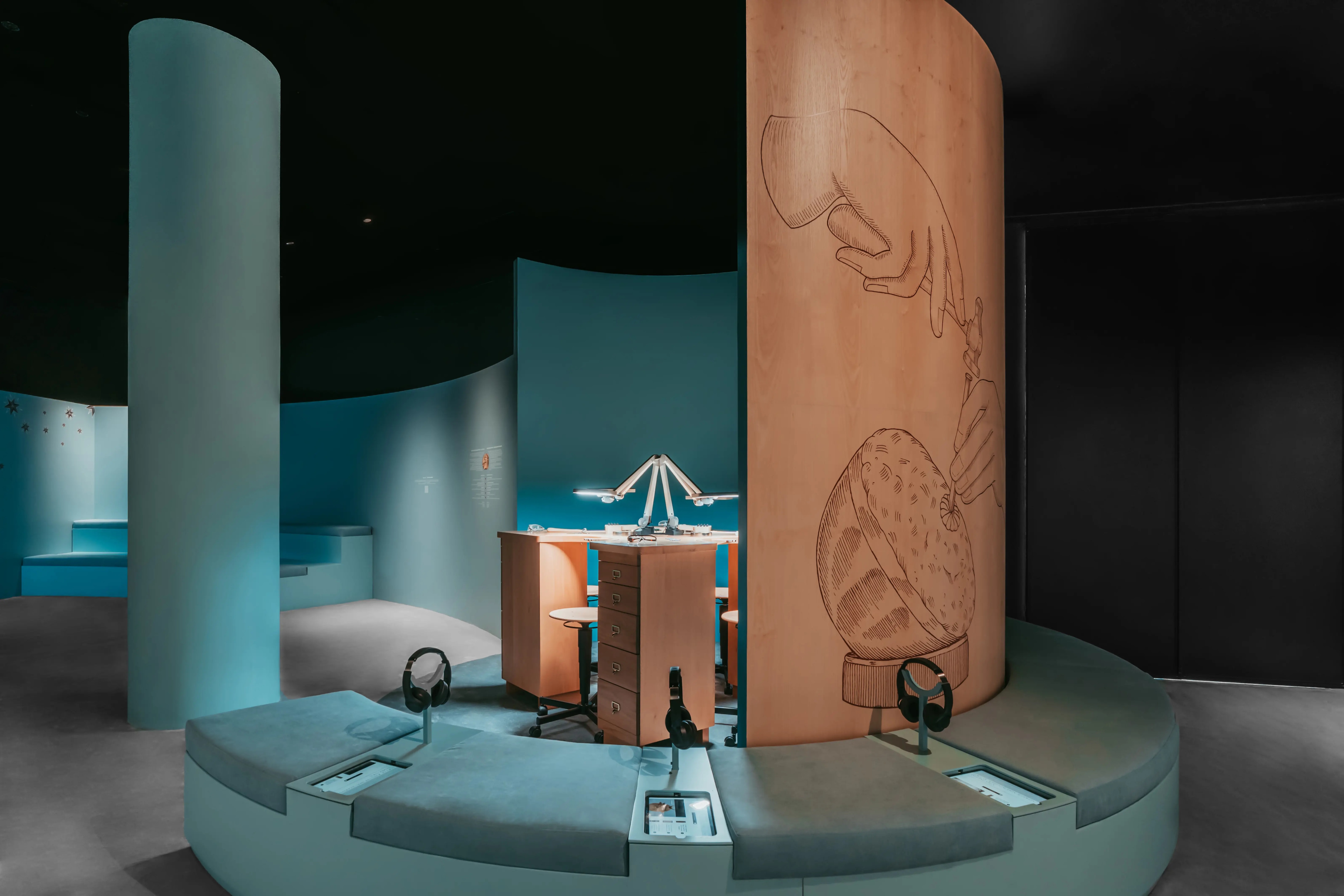
An exhibition at Dubai Design District examines the reconstruction of a Celtic gold torque through experimental archaeology, tools, films and guided workshops.
An ancient necklace becomes the subject of contemporary experiment
L’ÉCOLE, School of Jewelry Arts, supported by Van Cleef & Arpels, has brought its exhibition Recreating Gesture: Crafting a Gold Necklace from the Iron Age to Dubai Design District. The school announced the presentation on 11 November 2026, following its opening during Dubai Design Week on 5 November. It is scheduled to continue until 24 April 2027. At its centre lies a reconstruction of a Celtic gold neck ornament more than two thousand years old, an object whose study brings together the skills of present-day goldsmiths and the evidence assembled by archaeologists.
The exhibition offers a distinctive experience for collectors familiar with modern high jewellery. Instead of presenting a collection of objects primarily for appreciation of their appearance, it investigates the sequence of decisions and physical actions involved in producing one historic piece. The reconstructed necklace is the outcome of an experimental research programme, not an archaeological find offered for sale. The difference is fundamental to understanding what the visitor is being invited to examine.
The torque as an object of technical and historical enquiry
A torque is a neck ornament associated with several ancient cultures. The reconstruction presented in Dubai concerns the example from Montans and the traditions of the Second Iron Age, dated in the school's announcement to approximately 450–25 BCE. Its production would have involved an understanding of the properties of gold and the physical techniques through which the metal could be formed and decorated. The research project investigates these processes through the making of a replica.
For a person who collects jewellery, the attraction lies in what this reconstruction can reveal about the relationship between design and manufacture. A finished object does not necessarily disclose how many separate operations were required to create it. Marks left on its surface, the arrangement of decorative elements and the physical structure may provide clues. A master craftsperson examining those clues can identify possible methods of achieving the result. The aim is not simply to demonstrate that a visually similar object can be made using modern equipment, but to consider the feasibility of processes that might have been available to historic makers.
Experimental archaeology connects scholarship and practice
L’ÉCOLE developed the presentation in partnership with the Centre archéologique de Montans and the Musée d’Archéologie nationale. The announcement identifies the role of Antoine Legouy, a master goldsmith and chaser, working with archaeologist and goldsmith Barbara Armbruster and Grégory Weinstock, director of high-jewellery métiers at Van Cleef & Arpels. Bringing these disciplines together makes it possible to examine the object through different forms of evidence.
An archaeologist can consider the context in which objects were discovered, the surviving evidence for workshop activities and the methods by which material objects are studied. A practising goldsmith can investigate the resistance and behaviour of the metal under working conditions and the practicality of proposed operations. Knowledge of modern jewellery techniques can help the research team identify which actions are plausible, although it cannot establish that ancient craftspeople used exactly the same approach. An experimental reconstruction is therefore best understood as a demonstration of a possible historical method grounded in evidence. It may support an interpretation without eliminating all uncertainty about the practices of the original maker.
A reconstructed object and the tools used to create it
The Dubai exhibition includes the reproduced torque in 24-carat gold alongside tools and materials used in its production. Infographics and documentary films address the sequence of operations and bring the viewer into contact with the work of the researchers. The presentation gives unusual prominence to the intermediate stages of making an object, which are often absent when historic jewellery is exhibited in a display case.
Pure gold's material properties are part of the inquiry. Its ability to be deformed under controlled conditions makes many forms of working possible, but a goldsmith must also consider thickness, the distribution of material and how to achieve the desired shape without undesired damage. Different techniques will produce different surface characteristics and patterns of deformation. An exhibition that connects tools with the results of their use can make these matters intelligible to visitors who have not themselves worked with metal. The reconstructed object provides a physical outcome against which those observations can be considered.
Learning through the gestures of making
A particularly interesting element of the Dubai presentation is its provision for visitors to experience aspects of metalworking under guidance. The school's programme allows participants to handle tools, become familiar with their weight and undertake selected actions with assistance from jewellers and lecturers. Such a workshop provides a different form of learning from listening to an account of historical processes or watching a demonstration.
A person who has tried to carry out a particular operation can appreciate how the position of a tool, the movement of the hand and the control of pressure affect the result. The challenge can be especially revealing where a movement appears straightforward when performed by an experienced craftsperson. The workshop does not turn a visitor into a qualified goldsmith, nor is it represented as allowing every participant to reproduce the complete ancient necklace. Its value is the opportunity to engage with the physical character of skilled work and acquire an informed appreciation of the precision and experience involved. Participation arrangements and individual session dates should be confirmed with L’ÉCOLE.
Connecting European and Arabian archaeological heritage
Although the reconstructed necklace belongs to a Celtic tradition, the curatorial programme in Dubai also aims to explore connections with the history of goldsmithing in the region. L’ÉCOLE is collaborating with Dubai Culture and Arts Authority and Athar Dubai, and the exhibition refers to finds at the Saruq Al Hadid archaeological site. A series of cultural visits under the title Jewels and Journeys will involve partner institutions in Dubai, Al Ain and Sharjah.
The wider geographical context is valuable because techniques, objects and materials should not be understood solely through the modern boundaries of luxury brands. Different societies developed their own forms of ornament and systems of production. There may be similarities in how craftspeople addressed a practical problem without those similarities necessarily establishing a direct connection between the communities concerned. The programme offers an opportunity to study such questions with the benefit of specialist guidance. It can also introduce collectors of contemporary jewellery to archaeological collections whose interests and methods are distinct from those of commercial galleries.
A research programme with a lasting educational purpose
The school traces its mission of sharing jewellery knowledge to its establishment in 2012. Its educational work includes historical and gemmological subjects as well as practical craftsmanship. It identifies research as a central aspect of that mission and says a future campus in Sharjah is scheduled to open in 2029. The torque exhibition has previously appeared in Paris, Lyon, Seoul and Shanghai before its arrival in Dubai.
The international presentation of a research project allows different audiences to encounter the same underlying enquiry while adapting the surrounding educational programme to a local context. Dubai's exhibition includes Arabic versions of three podcast episodes exploring the history of gold and provides opportunities for guided practical activities. Those aspects extend the presentation beyond an audience that already possesses specialist knowledge. For collectors, the resulting combination of historical interpretation and practical examination can complement the experience of visiting an auction, jewellery boutique or private collection, without requiring a commercial transaction.
Planning a visit during a Gulf itinerary
The exhibition is scheduled at Building 10, ground floor, in Dubai Design District and is open Tuesday to Saturday, from 10:00 to 19:00, according to the announcement. Admission is free, although registration is recommended. Workshops and associated events have separate schedules which visitors should confirm before arranging travel. The stated closing date of 24 April 2027 gives guests visiting the Gulf during the winter and early spring a substantial period in which to consider the exhibition.
For a superyacht owner or guest spending time in Dubai, this is a cultural experience centred on jewellery as a form of knowledge and skilled material practice. It invites the viewer to encounter a single historic object in considerable depth, from archaeological interpretation to the creation of a modern replica. That approach offers a useful contrast to the experience of viewing contemporary high jewellery through its finished appearance alone. The Richemont press office lists its media contact as pressoffice@cfrinfo.net.
Primary source: Richemont official Maison media release.
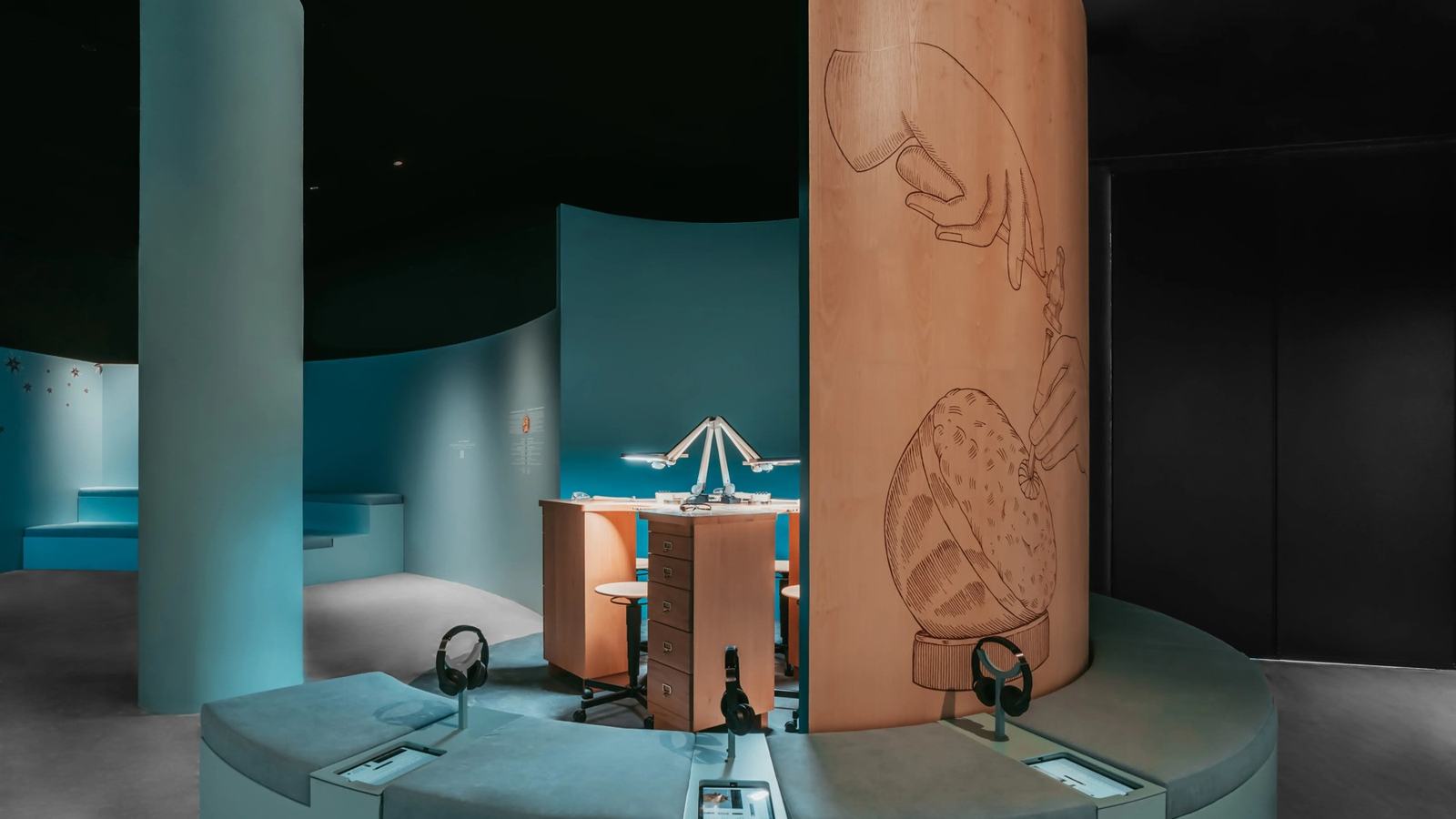
Recreating Gesture exhibition in Dubai — L’ÉCOLE press photograph. Richemont media centre. Official source.