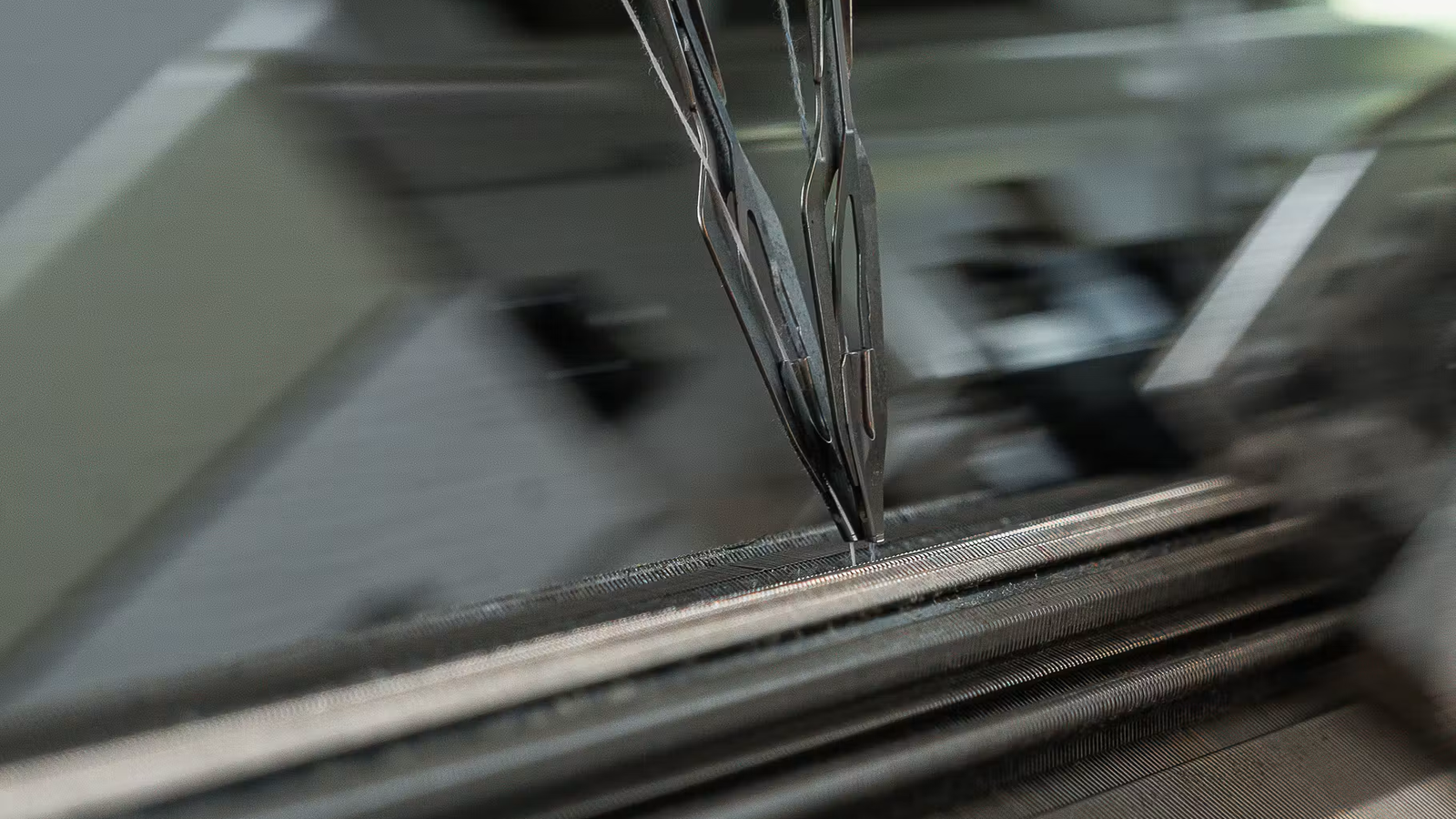
Loro Piana has opened an 8,000-square-metre knitwear centre in Ghemme, bringing research, knitting, assembly, finishing and craft training together.
Loro Piana has opened an 8,000-square-metre centre dedicated entirely to knitwear in Ghemme, Piedmont, marking the Maison’s first new manufacture in more than 30 years. The site brings research, development, programming, knitting, assembly and finishing together under one roof, giving the company greater control over a category closely associated with its most recognisable materials. The choice of location is rooted in the company’s own industrial history rather than a search for a blank new site. Loro Piana established a worsted-wool spinning mill there in 1987, within a part of northern Italy where specialist textile knowledge has been passed through generations and where suppliers, technicians and skilled workers remain part of the regional economy.
Rare fibres move through one integrated process
The new centre is designed to work with the materials that define the Loro Piana vocabulary, including cashmere, Baby Cashmere, vicuña, Merino wool and Pecora Nera. Bringing successive stages of knitwear creation closer together gives designers and technicians more direct feedback as fibres move from research and programming into knitting, assembly and hand-finishing.
That proximity can matter as much as machinery in high-end production because extremely fine materials respond differently to tension, finishing and construction. The luxury value of a knit is therefore built through accumulated technical decisions that are difficult to outsource as isolated tasks without losing some of the conversation between design, material science and experienced hands.
The Accademia dei Mestieri addresses the skills question
The preserved caretaker’s house now accommodates Loro Piana’s Accademia dei Mestieri, where the company will train a new generation in specialist knitwear crafts. A dedicated educational space also traces the Maison’s history and technical expertise, while the Loro Piana Knit Design Award brings emerging designers into contact with the materials and production culture.
Skills transmission is one of the most important strategic issues facing European luxury manufacturing. Machinery can improve consistency and capacity, but fine finishing and problem-solving still rely on knowledge that is often learned through long practice, making training infrastructure a form of production investment rather than a separate cultural programme.
Old structures are retained inside a modern factory
Loro Piana has kept the site’s original water tower and caretaker’s house while introducing a production environment based on natural light, wood, glass and hand-finished surfaces. The architecture is intended to connect the working spaces with the Piedmont landscape instead of treating industrial production as something that must be hidden from the aesthetic values of the finished clothing.
The building operates without fossil fuels and incorporates photovoltaic panels and rainwater recovery. Those measures do not eliminate the wider environmental impact of luxury textiles, but they show how manufacturers are increasingly expected to address energy and resource use at the point of production as well as through sourcing and product longevity.
Manufacturing becomes part of the luxury proposition
For clients, Ghemme will mostly remain invisible behind the finished garment, yet the investment helps explain why vertically controlled luxury businesses continue to place value on owning or closely managing production. When a Maison controls research, specialist machinery, training and finishing, it can preserve techniques that would be difficult to rebuild quickly if outside capacity disappeared.
The new centre therefore represents more than additional floor space. It ties Loro Piana’s future knitwear output to a specific place, workforce and training system, reinforcing the idea that true material luxury depends on the continuity of craft infrastructure long before a finished cashmere or vicuña piece reaches a boutique.
Official sources: www.lvmh.com.
Source
LVMH / Loro Piana