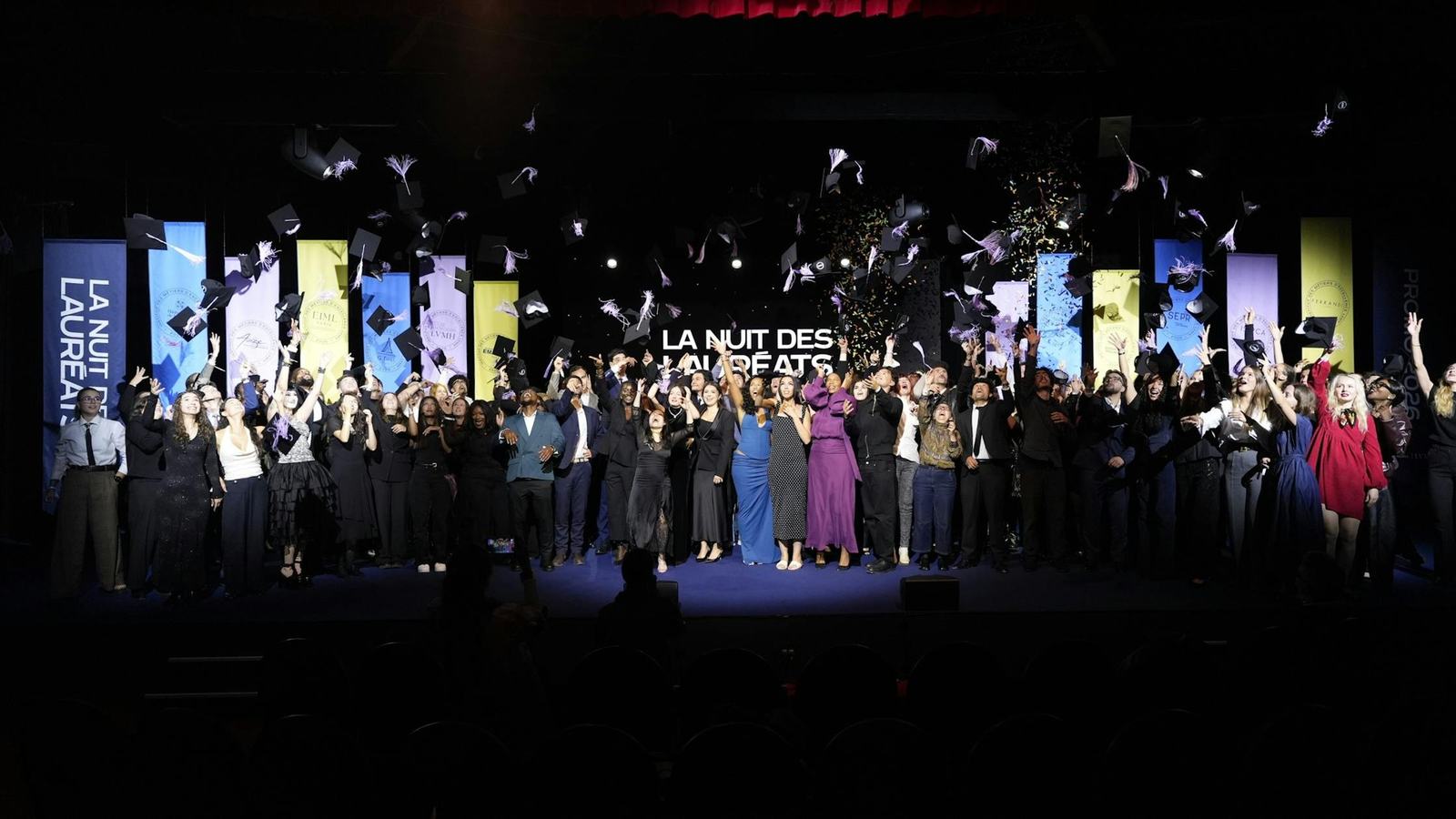
LVMH celebrates its 2026 Institut des Métiers d’Excellence graduates, highlighting the transmission of specialist skills through its international apprenticeship programme.
LVMH has celebrated the 2026 graduating class of its Institut des Métiers d’Excellence at an October ceremony in Paris. The group published details of the event on 5 November 2026, describing a gathering at the Jardin d’Acclimatation that recognised apprentices completing qualifications across creative, craftsmanship and client experience professions. The celebration, known as La Nuit des Lauréats, included a ceremony at the Théâtre Rouge and activities within the Jardin connected to LVMH's Journées Particulières.
The group reports that the institute has trained 4,300 apprentices since its establishment in 2014 and that the 2026 class achieved a graduation rate of 91 percent. It identifies 40 partner schools and universities in six countries, 66 training programmes and 38 specialist professions within the scope of the initiative. These are the group's published training figures, rather than independent measurements of the future employment, income or long-term career progression of its graduates. Nevertheless, the figures provide an indication of the scale of an effort to transmit the skills upon which a broad segment of the luxury industry depends.
The work behind a bespoke commission
The purchaser commissioning an individual object from a luxury house often encounters a small number of people directly. A designer, private client adviser or specialist responsible for coordinating production may interpret the brief and present material samples. Behind that relationship, a much larger community of practitioners may be responsible for developing the individual components and assembling them into the finished object.
The sophistication of the result is sometimes most apparent in details that do not initially draw attention to themselves. A well-judged seam, cleanly resolved transition between materials or sensitively proportioned decorative element may give the impression that the object was straightforward to produce. In reality, such apparently unforced qualities can be achieved only through careful preparation and familiarity with tools and materials. The apprenticeship system described by LVMH is intended to develop capabilities across several stages of this process rather than concentrate solely on the public-facing identity of a particular brand.
How experience passes between generations
Written specifications and technical manuals are important in a workshop, but the transmission of practical expertise can involve forms of knowledge that are difficult to communicate through text alone. A practitioner working with leather, fabric, jewellery or another specialist medium may make frequent small adjustments in response to the material's characteristics. The decisions depend on touch, sound, visual observation and familiarity with how previous work has behaved.
An apprentice can develop such judgement by observing an experienced practitioner, undertaking progressively demanding tasks and receiving feedback about the result. The instructor must distinguish deviations that compromise the object's function from variations that may be acceptable or even desirable within a particular type of production. This requires time and access to skilled practitioners. A qualification can provide evidence that particular educational requirements have been met, but it cannot replace the continued development of experience that follows graduation. That distinction is important for interpreting the institute's reported completion rate.
The ceremony recognises more than the finished product
The graduation was attended by Maud Alvarez-Pereyre, chief human resources officer of LVMH. According to the group's announcement, she addressed the importance of passing on professional expertise. Each class took part in the ceremony before celebrations continued within the Jardin d’Acclimatation. The event recognised apprentices earning their diplomas and the Brevet d’Excellence, bringing the educational process into a setting where the people involved could be acknowledged individually.
For the luxury sector, this is a different perspective from an exhibition devoted exclusively to finished objects. The ceremony places attention on the practitioners whose labour will contribute to the design, manufacture and service associated with future commissions. Recognition can reinforce a sense of the profession as a long-term career rather than a temporary route into a company with a prominent public profile. The official account does not give the individual destinations or appointments of every graduate, and attendance at the event should not be interpreted as confirmation of permanent employment for each participant.
Maintaining specialist capabilities as demand changes
Luxury houses face the practical question of how to maintain a pool of experienced practitioners while demand for particular products and services changes. A skill that is necessary for an infrequently commissioned object may take years to develop. If the workshop loses the people who understand the process, restarting production when a new order arrives can be considerably more difficult than retaining written specifications for the object.
Training programmes can help address that continuity problem by providing routes through which new practitioners become familiar with established methods. The selection of training priorities is important because the skills required are not necessarily distributed evenly across all professions. Some workshops may need expertise in both traditional techniques and contemporary manufacturing technologies. Others may need people able to repair objects initially manufactured decades earlier. The number of professions included in the institute's programme illustrates the range of expertise involved, without establishing that every scarcity of specialist labour has been resolved.
Interpreting the educational figures
The 2026 graduation rate reported by LVMH offers one indication of progress within the educational programme. It describes the proportion of the class completing its qualifications under the institute's own published measure. It should not be confused with an employment rate, a measure of the quality of every apprenticeship or a comparison with other institutions unless the relevant definitions and comparable information are available.
Similarly, the cumulative figure of 4,300 apprentices trained since 2014 indicates the historical scale of the initiative rather than the number of graduates currently employed by the group. The network of partner institutions can provide access to a variety of educational environments, reflecting the differences between professional specialisations. A prospective apprentice or supporter would benefit from obtaining information about the particular training pathway, its admission requirements and the nature of the qualification offered. The announcement concerns the accomplishments of a graduating class and the overall initiative, not the application process for a specific course.
Service expertise and private client relationships
The inclusion of client experience professions alongside creative and craft disciplines is noteworthy. A successful bespoke relationship depends in part on how accurately the client's requirements are interpreted and communicated to the people making the object. That can involve decisions about intended use, comfort, aesthetic preferences, maintenance requirements and the distinction between an achievable modification and one that might compromise the design.
Client-facing expertise is especially useful when an order involves a number of stages or when several specialists are responsible for different elements. Accurate information about lead times, limitations and the documentation accompanying the finished object can enable the purchaser to make informed decisions. Private clients should feel able to ask detailed questions without expecting that every wish can be resolved instantly. An adviser with appropriate training can help distinguish what is available within an established range from a genuinely bespoke commission requiring its own research and development.
Implications for yacht owners and long-term collecting
Superyacht owners regularly encounter comparable requirements when commissioning interior finishes, decorative objects and furnishings. A specialist producing a single item for a yacht may need to coordinate the work with an interior designer, shipyard or other suppliers, taking account of site-specific constraints. Subsequent maintenance may depend on the availability of practitioners who understand the particular construction method and are able to produce an appropriate repair or replacement.
Owners interested in the continuing value of bespoke work should establish how the object or installation is documented, which materials and treatments have been used and what support is available after delivery. A design selected for a yacht should also be assessed for the technical conditions and regulatory requirements relevant to its intended location. The institute's activities are not specifically a yachting training programme, but the continued transmission of specialist craft expertise matters to clients who rely on such capabilities across several industries.
The next stage of a professional career
LVMH presents the ceremony as a celebration of achievements and a means of encouraging the next generation of specialists. The announcement does not specify the individual contributions that the graduates will make to future collections or establish their professional outcomes in subsequent years. Those developments will depend on further training, work experience and the opportunities available to each individual.
For collectors, patrons and clients, the event provides a useful opportunity to consider the human infrastructure behind luxury manufacture. An enduring creative tradition depends not only on the objects that remain in collections but also on people who retain the capabilities required to make, evaluate and care for new work. The 2026 ceremony represents a documented educational milestone for the graduating apprentices. The more demanding measure of the programme's contribution will be the extent to which those practitioners are able to sustain and develop their skills throughout their professional lives.
Primary source: LVMH official announcement, 5 November 2026.
Institut des Métiers d’Excellence graduation ceremony 2026 — official press photograph. Official source.
