Four Seasons Hotel Tokyo at Marunouchi has announced a December afternoon tea blending French festive pâtisserie with Japanese seafood and a local fried-chicken tradition.
A winter table above Tokyo Station
Tokyo's Marunouchi district becomes a useful base for visitors moving between the capital's business, design and cultural neighbourhoods. This December, Four Seasons Hotel Tokyo at Marunouchi is giving travellers another reason to linger with a festive afternoon tea at MAISON MARUNOUCHI. Running from 1 to 30 December 2026, the experience looks towards Tokyo Station, bringing a pause to a district usually associated with purposeful movement.
The hotel's new menu has been developed by French-born Executive Pastry Chef Nicolas Maugard. Rather than approaching the season entirely through European Christmas imagery, he combines French techniques with references to the way Japan celebrates December. The resulting selection includes ornament-inspired cakes, a ruby-red welcome drink, winter seafood and a playful version of the country's festive fried-chicken tradition. The location makes this more than a seasonal pastry collection. Tokyo Station connects long-distance rail services and local routes, so the surrounding streets bring together residents, office workers and visitors with different schedules. A deliberately paced tea creates an opportunity to experience the neighbourhood from a calmer vantage point.
An ornament made from fruit and nuts
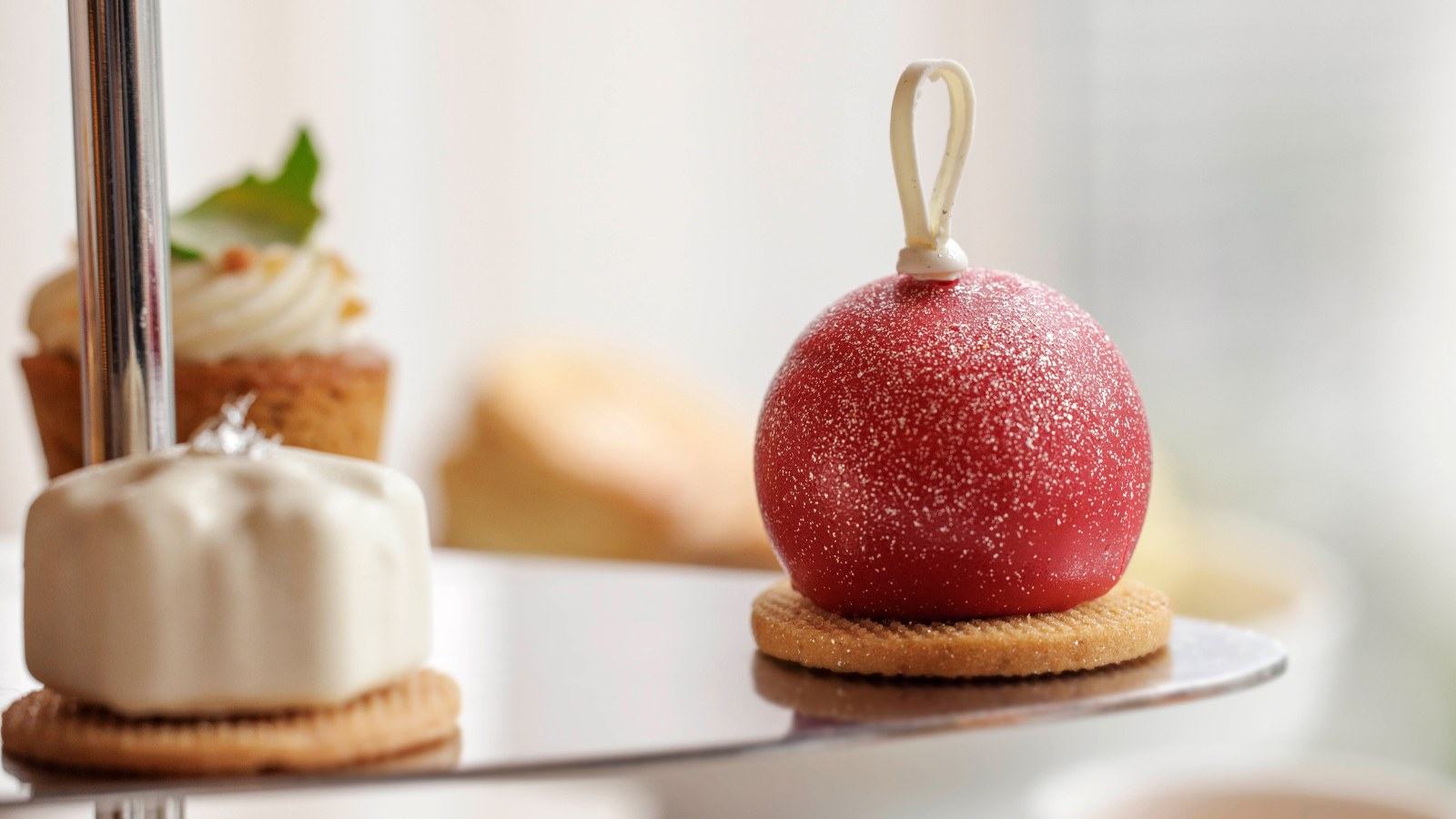
One of the centrepieces, L'obscur, is conceived as a miniature Christmas bauble. The cake has a glossy red finish and uses strawberry and pistachio mousses around a raspberry centre. Its appearance is theatrical, but the more important issue for guests is the balance between sweetness, berry acidity and nutty richness. That contrast helps make a decorated miniature feel like a composed dessert rather than an edible ornament alone.
Maugard also draws upon familiar winter colours through small decorative details and carefully arranged courses. Snowflake and Christmas-tree motifs create a recognisable seasonal setting, while bright fruit prevents the tea from relying solely on heavy chocolate and spice. Guests who enjoy the detail of contemporary pâtisserie can appreciate both the visual craft and the sequence of flavours through the afternoon. The ornament shape also illustrates the technical demands of modern miniature desserts. A pastry must retain its form, survive service and still have proportions that feel balanced when eaten. It is worth judging the piece for the relationship between its textures and flavours, rather than treating the glaze as proof of culinary excellence.
Chestnut and chocolate in two registers
L'hiver, a Mont-Blanc tartlet, offers a more classical French expression of winter. It layers chestnut compote and cream over a tart shell and toasted almond dacquoise, with vanilla Chantilly and a star-shaped finish. Chestnut's gentle sweetness is particularly suited to small desserts, where texture and proportion determine whether the result feels delicate or overly rich. The pastry also offers a quieter counterpoint to the fruit-coloured ornament.
The chocolate option takes the form of Intensité, a dark-chocolate financier with chocolate cream and whipped ganache. Using cocoa in several textures allows a compact pastry to have depth without requiring an outsized serving. Spiced carrot cake and fresh scones broaden the selection further, giving diners familiar baked elements alongside the more elaborate creations. That alternation is essential to the rhythm of a well-constructed afternoon tea. Chocolate and chestnut can easily make a winter menu feel excessively rich, which is why the inclusion of fruit, baked elements and savouries is important. The announcement suggests a varied composition, but it does not specify a fixed serving sequence. Guests should not assume that the different pastries will arrive in any particular order.
Japan's festive fried-chicken reference
The savoury selection is where the Tokyo location becomes most distinctive. Instead of filling the tiered experience only with conventional sandwiches, the hotel includes a bite-sized Marunouchi Festive Fried Chicken accompanied by house pickles. Fried chicken occupies a particular place in Japan's Christmas dining customs, and the kitchen has adapted the familiar combination for a more formal tea presentation without losing its recognisable character.
The pickles add acidity to a dish that might otherwise feel too rich among the pastries. This small detail matters because a tasting format needs shifts in texture and flavour throughout the meal. Rather than presenting Japanese ingredients as decoration, the course acknowledges a real popular tradition. International visitors receive a clear point of cultural interest without being asked to treat every savoury bite as an elaborate experiment. Local references can sometimes feel superficial in international hotel dining. Here the fried-chicken course has a recognisable connection to how Christmas is celebrated in Japan, and the format makes that custom understandable to visitors. It offers a point of difference without implying that the whole country's holiday cuisine is represented by one food.
A winter seafood interlude
Another savoury offering combines smoked salmon and cream cheese between thin layers of crêpe, finishing the arrangement with salmon roe. The result uses a technique familiar from mille-crêpe desserts to present a distinctly savoury composition. Richness from the cheese is balanced by the fish, while the roe adds a different texture. The plate also demonstrates how small courses can be designed with the same attention as larger restaurant dishes.
Hairy crab, known as kegani in Japan, appears in a creamy bisque finished with prawn oil. It introduces a warm element to an otherwise pastry-led occasion and draws on seafood associated with the colder months. The announcement describes the soup as concentrated and rich in umami, although the experience in the bowl will ultimately depend on execution. Its inclusion makes the menu more substantial than a simple succession of sweet cakes. Warm soup can also alter the experience of a long afternoon tea by creating a pause between chilled pastries and other small plates. The use of crab and prawn oil gives the menu another sensory direction, although guests with shellfish allergies must be particularly careful. Ingredient confirmations should come directly from the hotel.
What the price includes and what it does not
Four Seasons has announced a price of JPY 12,000 for the festive afternoon tea, available from 1 to 30 December. Reservations can be arranged through the hotel's official website or by contacting the property directly. Guests should confirm seating times, taxes, service charges and any applicable conditions before committing to a particular day. The published menu may also be adjusted as the season progresses or ingredients change.
The offering is an afternoon tea rather than a full hotel accommodation package, and the announced price should not be interpreted as including rooms or transport. Anyone travelling with dietary requirements should raise them when reserving, particularly because the menu includes seafood, nuts and dairy. Clear expectations help make the occasion more enjoyable and avoid last-minute disappointment during a busy travel period. Published prices can be misleading when different markets handle taxes and service charges differently. The announced figure should therefore be treated as the starting point for planning, with current inclusions and any supplements confirmed when reserving. This is particularly worthwhile for visitors booking multiple dining experiences during a short stay.
A useful contrast with Tokyo's pace
Marunouchi is a natural meeting point for people combining shopping, architecture, galleries and rail journeys across Tokyo. The view over the station gives the hotel a sense of place that cannot be replicated by a generic themed tea. For travellers who enjoy watching a city move while taking time over a meal, the setting may be as important as the individual desserts and savouries on the table.
A short visit can also be built around the district rather than the hotel alone. Nearby streets offer examples of contemporary Japanese retail design and preserved urban architecture, while the station provides onward connections. Afternoon tea is best treated as a deliberate break within that itinerary, with sufficient time allowed to appreciate the courses. The experience is seasonal, so it should not be assumed to remain available after December. Visitors unfamiliar with Tokyo should leave enough time between trains, shopping and the reservation to enjoy the experience unhurriedly. The proximity of transport is a convenience, but moving through a major station can take longer than expected. The hotel setting rewards arriving with time to settle rather than rushing from an onward connection.
Why the idea works editorially
Luxury hospitality increasingly seeks to make familiar formats distinct through local context. This tea does so through the contrast between French pâtisserie and recognisably Japanese winter dishes, rather than relying only on decorative Christmas imagery. The contrast is especially apparent in the shift from glossy strawberry mousse to fried chicken and crab bisque, a progression that might feel improbable but is thoughtfully framed.
Whether every course succeeds will be a matter for diners, but the announcement contains enough practical detail to assess the concept. It gives clear dates, a stated price and named dishes rather than promising a vague festive atmosphere. For a yacht traveller combining a wider Asia itinerary with a stop in Tokyo, the experience offers an accessible way to explore the city's seasonal hospitality ashore. The concept reflects a broader preference among high-end travellers for experiences that connect to a particular place. A pastry display that looks festive could be reproduced almost anywhere; the Japanese savouries and view of Tokyo Station make this offer more specific. Those details give the event relevance beyond its seasonal decoration.
Editorial source: Four Seasons Hotel Tokyo at Marunouchi. This original lifestyle feature is based on information from the named source; check current local navigation requirements and the equipment manufacturer before departure.