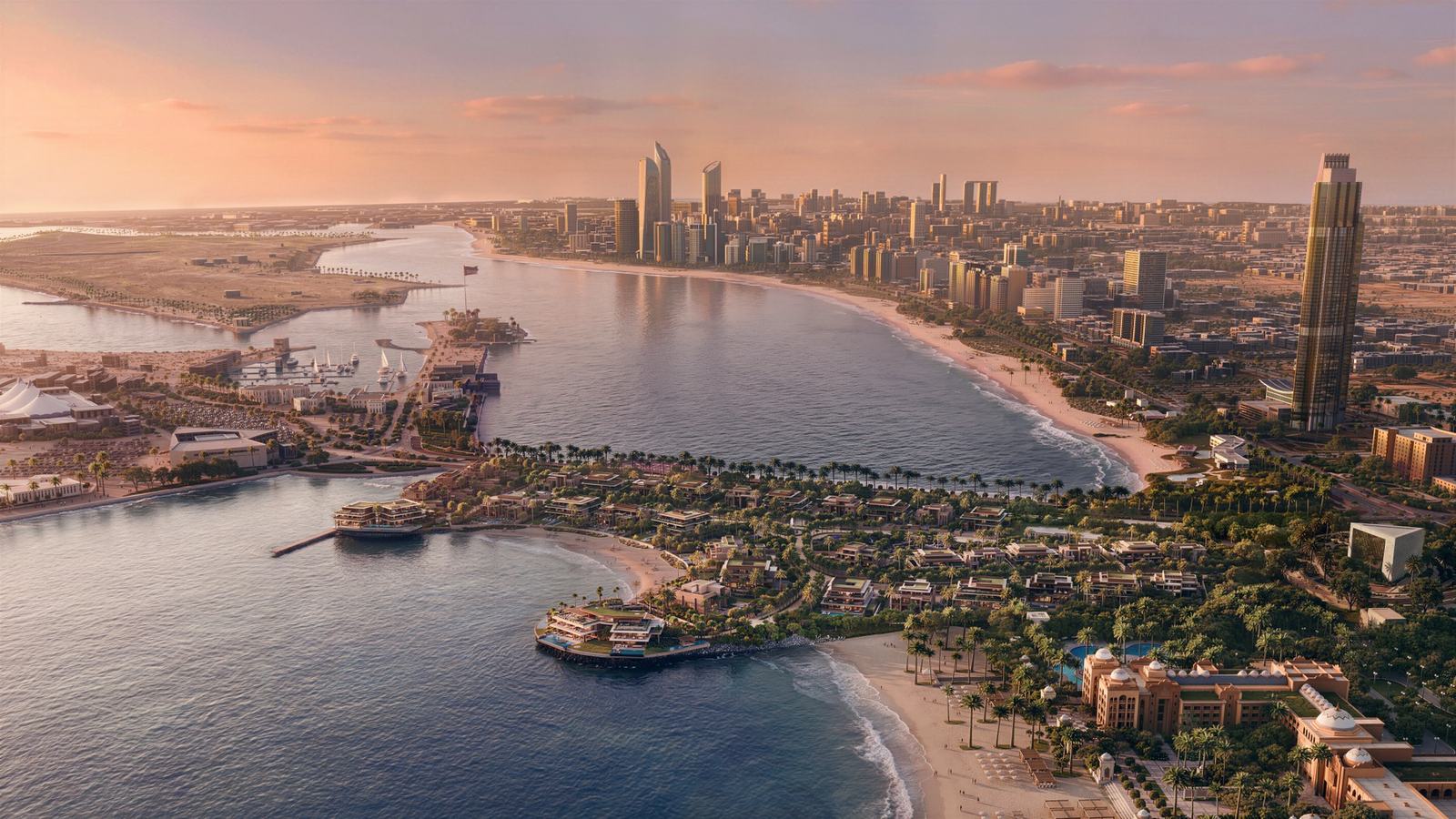
An exclusive residential project within the grounds of Emirates Palace is planned to deliver 35 serviced mansions, private seaside amenities and handover in 2029.
An exceptionally small residential offering
Mandarin Oriental has outlined plans for 35 private mansions within the grounds of Emirates Palace in Abu Dhabi, with handover anticipated in 2029. The project is owned by Emirates Palace Company and developed with LEAD Development, while Mandarin Oriental will provide hospitality-inspired residential services. The small number of homes is significant in a region where many branded residential schemes involve large apartment towers.
The idea is to combine the spatial freedom of a substantial private house with the convenience of a hotel service structure. For an owner moving between homes and superyachts, such a combination can be attractive, but brand association is not a substitute for examining the contracts. The developer, landowner, management operator and purchaser have different obligations that should be identified clearly.
Courtyards and gardens create physical privacy
The developer says the architecture takes inspiration from Abu Dhabi's coastal heritage, arranging homes around courtyards, gardens and views of the sea. Such spaces can help create quiet internal environments while retaining connections to daylight and exterior landscaping. Large glazing areas and sheltered terraces may be particularly important in a climate where seasonal heat affects how and when outdoor spaces can be used.
Prospective buyers should request plot-specific information rather than assume that every mansion will have identical privacy or views. Orientation, neighbouring buildings, landscape maturity and the distance between terraces can all change the lived experience. The security arrangements and routes used by maintenance personnel should be part of the review, particularly where owners intend to host private events or visiting staff.
Residents-only amenities sit at the water's edge
Plans include a lounge with a Mandarin Oriental tea library, private rooms for meetings and quiet work, and a residential bar. A separate residents-only beach club is expected to offer private cabanas, a children's room, a golf simulator and a chef's table. These facilities suggest a community designed for both private family life and occasional entertaining, rather than purely seasonal occupation.
Amenities of this kind require an operating budget and a clear reservation policy. Owners should establish who can invite guests, whether there are limits on private dining and which services involve additional charges. Beach club access does not automatically imply private berthing or legal rights to land a yacht tender, and marine logistics must be considered independently.
Hospitality services need governance
Mandarin Oriental's role is described as the provision of bespoke residential services on behalf of the owner. Potential benefits include support for entertaining, guest arrival arrangements, housekeeping and the coordination of special requests, but the exact contractual schedule is what matters. An owner purchasing for infrequent use may have different requirements from a household living in Abu Dhabi throughout the year.
Long-term service quality depends on agreed staffing, maintenance reserves, management authority and mechanisms for resolving disputes. Buyers should read the full governance documents, including provisions for changing the manager or altering service charges. A respected hotel name can influence expectations, but clear legal rights and competent day-to-day administration determine whether those expectations are met.
A 2029 target requires patience
The announcement, made in May 2026, places the development several years ahead of anticipated handover. That makes this a planned residential offering rather than an address available for immediate occupation. At the time of the release the developers had not published complete buyer-specific prices, standardised room inventories or a guarantee of completion by a particular day.
International purchasers should obtain independent advice on ownership structures, deposits, permitted use and local property rules before committing. If a mansion will serve as a base for an extensive yacht or aviation programme, the owner should also examine airport access, security and alternative accommodation during construction delays. The appeal of a small, high-service residential community is clear, but the finished physical and operational product will determine its value.