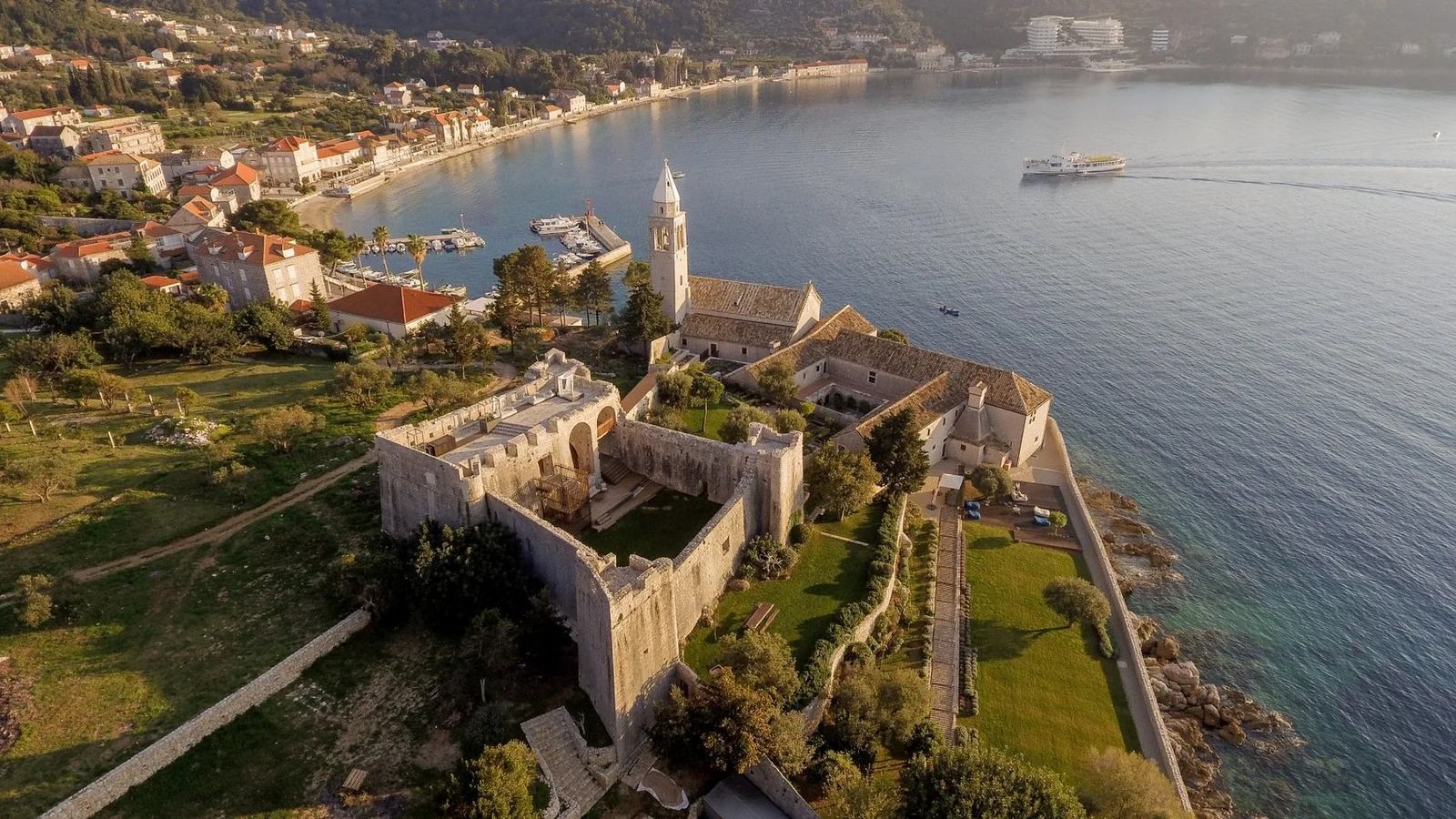
Mandarin Oriental has added twelve homes to its serviced private-villa portfolio, including a restored monastery on Croatia's Lopud island with rates from €105,000 per week.
A larger private-residence portfolio
Mandarin Oriental has added twelve properties to its Exceptional Homes collection, bringing the private-holiday portfolio to 43 homes across eighteen destinations. The 9 October announcement introduces new locations including Lopud in Croatia, Porto Heli in Greece, Florence, Chianti, Sardinia and Marbella, alongside more properties in established French and Italian markets.
For households accustomed to securing an entire estate rather than a collection of hotel suites, the attraction is control over space and service. The group's model combines individually distinctive buildings with coordinated concierge arrangements, on-demand private chefs and housekeeping, without implying that every residence has an identical staff complement or amenity list.
A monastery above the Adriatic
The most unusual addition is Lopud 1483, a restored fifteenth-century Franciscan monastery overlooking the Elaphiti Islands near Dubrovnik. Its position above the sea and its architectural history distinguish it from newly constructed villas, while a quoted capacity of ten guests makes it suited to a smaller private party. Mandarin Oriental lists prices from €105,000 per week.
A historic building of this kind presents questions that a conventional resort does not: protected architecture, room variations, access through an island community and the limitations of transporting large quantities of luggage or specialist equipment. Travellers arriving by yacht should confirm permitted tender landings, island transport and the handling of late-night transfers before assuming a berth or anchorage guarantees simple access.
Porto Heli opens a second new direction
In the Peloponnese, Vanikiba introduces the group to the established yacht-oriented district of Porto Heli. The contemporary hillside home is advertised for up to nineteen guests, with private swimming and open-air entertaining spaces overlooking the Argolic Gulf; introductory rates are quoted from €49,084 per week. Its scale suits extended families or carefully planned gatherings more readily than an intimate couple's escape.
That capacity demands detailed planning of bedroom configurations, children's accommodation, live-in staff and dining arrangements. A quoted guest number is not the same as a guarantee that nineteen adults enjoy equivalent suites, and a hillside location should be assessed for accessibility as well as views. At this level, good itinerary design is measured as much by effortless movements as architectural spectacle.
Florence and the Riviera remain relevant
The expanded portfolio also reaches Florence through Villa Petrucci and Dimora Ghirlandaio, giving travellers a base for private museum visits and specialist collecting appointments. In France, the company describes Villa Riviera at Saint-Paul-de-Vence, with five bedrooms and a quoted starting price of €31,944 per week. These are quite different propositions: urban art immersion on one side, secluded Provençal living on the other.
An important benefit of a professionally serviced residence is the ability to make a programme around guests' interests rather than around fixed hotel meal hours. Arranging conservation studio visits, museum access, chefs and drivers remains subject to availability and local restrictions, however. Concierge provision supports requests; it does not automatically grant private access to every cultural institution.
What a private-home quote actually includes
At headline prices that reach six figures a week, transparent contracting matters more than the glamour of the marketing photography. A prospective guest should request a precise inventory of included chef hours, housekeeping, security provisions, transport, food costs and local taxes, followed by the cancellation conditions and damage-deposit arrangements. Seasonal demand can change both prices and minimum stays.
The portfolio's significance is less that Mandarin Oriental has invented private-villa travel than that it is extending a managed hospitality standard across buildings with very different histories and service requirements. For superyacht families combining time aboard with a land-based retreat, that integration can be valuable when the timetable, privacy expectations and party size have been agreed well in advance.