MAXXI, Rome's national museum of twenty-first-century arts, opened the MAXXI BVLGARI PRIZE 2026 exhibition on 6 November. Running until 7 March 2027, the fifth edition brings three site-specific projects together in the museum's Spazio Ghella and is curated by Giulia Ferracci. The museum identifies the participating artists as Chiara Bersani, Adji Dieye and Margherita Moscardini. It also notes that this is the first edition with an entirely female trio of finalists. The prize is organised in collaboration with Fondazione Bvlgari to support contemporary artistic talent.
A new contemporary-art prize exhibition in Rome
MAXXI, Rome's national museum of twenty-first-century arts, opened the MAXXI BVLGARI PRIZE 2026 exhibition on 6 November. Running until 7 March 2027, the fifth edition brings three site-specific projects together in the museum's Spazio Ghella and is curated by Giulia Ferracci. The museum identifies the participating artists as Chiara Bersani, Adji Dieye and Margherita Moscardini. It also notes that this is the first edition with an entirely female trio of finalists. The prize is organised in collaboration with Fondazione Bvlgari to support contemporary artistic talent.
The exhibition matters to art collectors because it concentrates attention on works made specifically for a museum setting, not simply objects transferred from an existing gallery display. MAXXI says that a winner will be announced at the end of the project and that the selected work will join the museum's collection. This is a future decision, not an award that has already been made. The three installations explore different questions about cultural memory, public space and whose experiences become visible, requiring careful looking rather than a single aesthetic label.
An exhibition about forms of public memory
The three artists work with different materials and approaches, yet their pieces share an interest in what societies choose to remember and recognise. A structure may carry the legacy of an international exposition; a fragment of pavement can become an object of legal and philosophical inquiry; a compact instrument and sculpture can respond to a life experience that has not always been recognised. These are themes described by the museum, not evidence that the artists have jointly designed one installation. Their proximity in the galleries is an invitation to compare distinct ways of posing questions.
Contemporary-art collecting benefits from context of this kind. A work's material presence is only one part of its significance; the artist's method, the conditions of its presentation and the documents surrounding it may be equally important. The MAXXI programme is especially clear that the projects engage with public institutions and social questions. The prize's association with Bvlgari brings a name familiar to luxury audiences, but the museum's announcement does not present the exhibition as a jewellery show. It is a contemporary-art programme supported by a foundation, and it should be understood on those terms.
Adji Dieye and the inverted exhibition tower
Adji Dieye's installation Una Resa senza Caduta uses iron tubing wrapped in sheer rayon fabric to reconstruct the outline of a historic architectural structure. The reference is the tower of the French West Africa pavilion at the 1931 Paris International Colonial Exhibition, a building originally used to project an image of the colonial territories to European viewers. The work turns that outline upside down and places it in a precarious relationship to the exhibition space. MAXXI presents the inversion as a challenge to the persistence of images produced under colonial systems of representation.
The installation's interest lies partly in the contrast between strong structural tubing and a fragile-looking textile surface. That material tension gives a physical form to an argument about history and the authority of images. It would be misleading to describe the work as an actual salvaged section of the 1931 pavilion; the museum calls it a recreation of the tower's outline. The distinction between historical reference and present-day construction is essential to appreciating how the artist works. Its meaning also resists the assumption that dramatic scale exists only to decorate a grand room.
Margherita Moscardini turns a pavement into sculpture
Margherita Moscardini's Una strada reproduces a section of pavement from Via Guido Reni, the street on which MAXXI stands. The artist casts it in bronze and displays the form vertically alongside rubber and plaster moulds. According to the museum, the project draws upon Roman-law ideas about things that are not part of any person's property, and it is connected to a proposal concerning collective-use assets within Italian cultural heritage law. That legal discussion is part of the work's artistic premise; it does not mean a change to national law has already been enacted.
MAXXI explains that, should this particular project win the prize, the sculpture is intended to replace the original pavement section as a test of the proposal. That condition must be retained when describing the installation. The piece is engaging because it uses a familiar urban surface to ask what belongs to everyone and what it means for something to become a museum object. The museum is not reporting a new public-road construction programme or a completed legislative reform. Its account shows how artistic research can extend into the language of civic responsibility and ownership.
Chiara Bersani's small object and intimate performance
Chiara Bersani presents Blanche. Si fece un giaciglio nel mio udito, a small wooden box covered in stucco and plaster and connected to a playable lyre. MAXXI says the artist began from an Egyptian mummy in the British Museum's collection that shows signs of osteogenesis imperfecta, a condition with which Bersani herself lives. The work responds through the form of a sarcophagus and occasional performances involving the artist's voice and the instrument. These descriptions are supplied by the institution; the object should not be mistaken for the mummy or presented as a museum loan from London.
The piece approaches visibility and recognition through a quieter scale than Dieye's large structure. It asks an audience to consider what kinds of bodies and experiences have historically been represented, ignored or misinterpreted. The integration of voice means that seeing the box may be only one part of its full artistic life. A visitor interested in a live activation should check the museum's programme rather than assume that performances take place continuously. The artist's personal relationship to the subject is part of the published context, but no further medical or biographical conclusions should be invented.
Why site-specific work challenges conventional collecting
All three projects were conceived for the exhibition, according to MAXXI. Site-specific art can challenge the habits of private collecting because the relationship between an object and its location may be fundamental to its meaning. A bronze pavement section, an inverted historical tower and an instrument intended for occasional activation are not interchangeable with framed works designed for any wall. Conservation, installation instructions and records of performance may become part of the work's future identity. The prize's plan to acquire the winner for the museum collection reinforces that institutional dimension.
For a collector commissioning bespoke art or interiors, the exhibition provides a reminder to discuss context at the beginning of a project. Materials and scale matter, but so do access, use and the long-term interpretation of a commission. An installation responding to a public street or a historical injustice should not be detached from those meanings to serve only as decoration. The museum's public material does not offer private-commissioning advice, and this connection is an editorial reflection for readers who value originality and lasting artistic integrity.
Bvlgari's role and the value of institutional support
The MAXXI BVLGARI PRIZE programme represents a partnership between a major contemporary-art institution and Fondazione Bvlgari. The museum says the initiative supports artistic talent and that the winning work will enter its collection. For luxury-sector observers, the collaboration illustrates how established names can support practices far removed from their ordinary commercial products. It would be inaccurate to infer that any of the finalists designed jewellery for Bvlgari or that the installations constitute a product launch. Their public significance is artistic and institutional rather than retail.
The museum's selection of three women artists for the fifth edition is a distinct curatorial fact, but no financial valuations or future market predictions are provided. A collector interested in the artists' work should treat the exhibition and its catalogue as avenues for learning, not substitutes for independent provenance and condition research. The strongest reason to visit may be the possibility of seeing fresh projects at a moment when their presentation, interpretation and public reception are still unfolding. A prize exhibition has an unusual openness because its final institutional decision remains pending.
Planning a visit to MAXXI
The exhibition runs from 6 November 2026 to 7 March 2027 in Spazio Ghella at MAXXI, Via Guido Reni 4A, Rome. The museum lists regular opening hours as Tuesday to Sunday from 11am to 7pm, with Mondays closed. Its ticket information includes special and reduced prices subject to dates and eligibility; visitors should consult the current official admission page rather than depend on a single general figure. That is particularly sensible when travelling from another country or arranging a visit around other appointments in Rome.
A thoughtful route through the exhibition is to approach each installation on its own terms before comparing them. Consider how the materials and physical orientation make the historical references visible, where a legal or social argument enters the work and how the visitor's body is involved. The artworks may invite very different emotional responses. This is not an exhibition promising a unified decorative style, and there is no need to force a yacht-interior analogy onto every piece. Its value is the chance to encounter living art-making within a serious institutional setting.
Three projects, one unfinished decision
MAXXI's November opening offers a timely destination for international art enthusiasts, designers and collectors visiting Rome. The confirmed programme consists of three named finalists, three site-specific projects, a curatorial framework and a prize that will ultimately result in a work entering the museum collection. Nothing in the organiser's announcement establishes a winner yet. Coverage should respect that uncertainty while recognising the significance of giving experimental work the scale, visibility and sustained period of display that a museum can provide.
For the Superyacht Guide lifestyle audience, the exhibition belongs to a wider world of ambitious commissions, contemporary collecting and travel informed by culture. The immediate attraction is not a famous luxury-house name but the opportunity to see how three artists use sculpture, textile, architecture, law and performance to question familiar ideas about public life. The opening date and detailed institutional descriptions come from MAXXI's official release. The observations about collecting and bespoke artistic decisions are editorial interpretation, offered without implying that any artwork is for sale or that its future value can be predicted.
Primary source: original announcement; corroborating source: additional first-party or industry material. Report dated 7 November 2026. Announcements and operating plans may change; editorial interpretations are distinguished from confirmed facts.
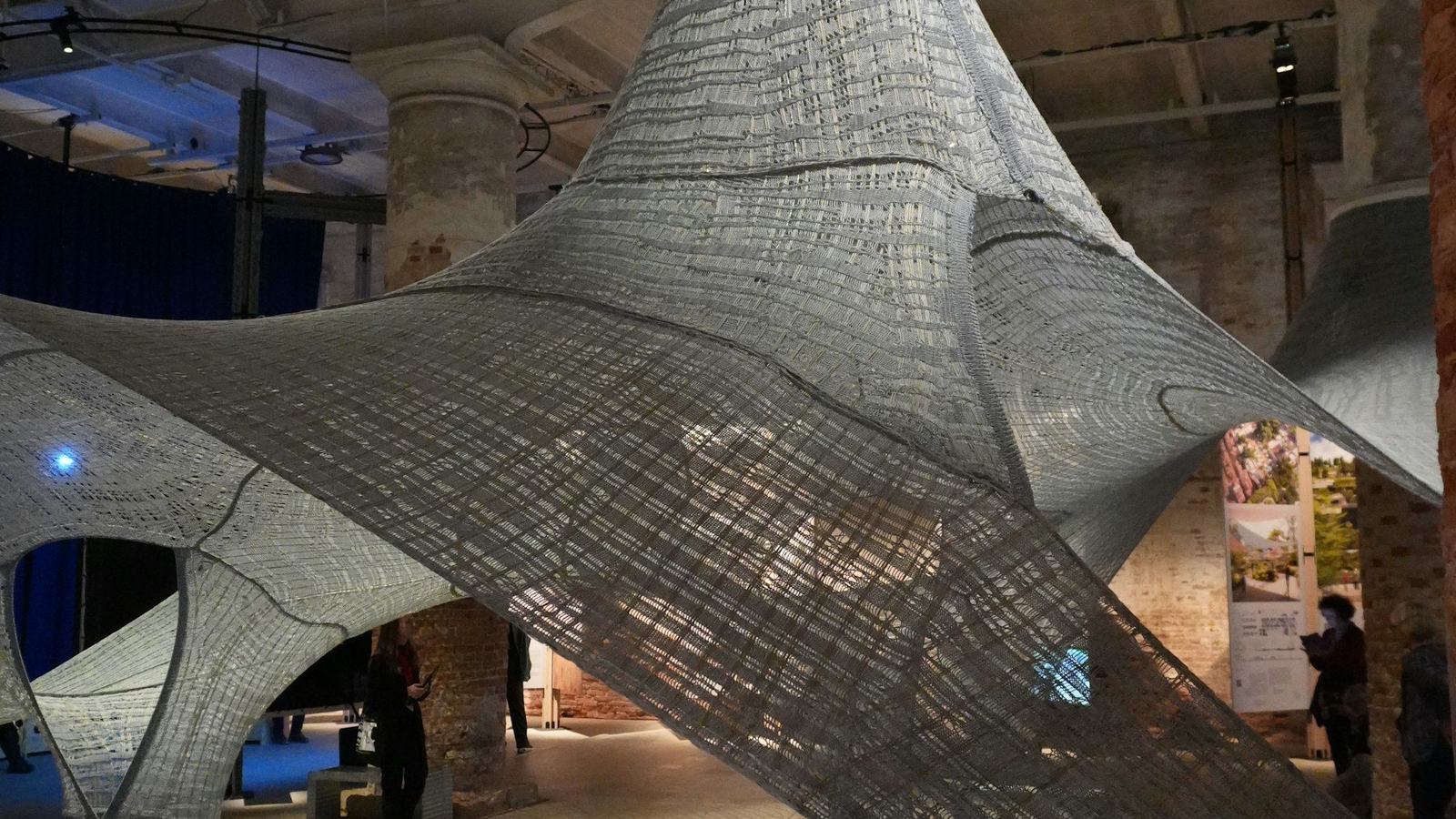
Editorial photograph: photographer and original image — alan boyce / Unsplash License; illustrative contemporary art textile sculpture in a museum, not any installation in the MAXXI Bvlgari Prize 2026 exhibition. Cropped and resized under the Unsplash License. Illustrative photograph only; it does not show the 2026 event or named product.
Source
www.maxxi.art