Opening 27 November, Alien Earth explores surprising Maltese wildlife in Mdina’s natural history museum. Here is how a visiting superyacht party can plan a day ashore.
Upcoming cultural experience, 10 November 2026. Heritage Malta schedules Alien Earth for 27 November 2026 through 30 June 2027; the exhibition is not open as of this article date. Practical arrangements and interpretation are independently prepared by Superyacht Guide.
An exhibition announced ahead of its opening
Heritage Malta has announced Alien Earth, a new exhibition at the National Museum of Natural History in Mdina that is scheduled to open on 27 November 2026 and run until 30 June 2027. Its subject is the remarkable adaptations of animals living in or around the Maltese Islands. The museum promises a look at familiar creatures whose abilities can seem like science fiction, from an octopus that changes appearance to a scorpion visible under ultraviolet light. This is a forthcoming show, not an exhibition that guests can walk into today, 10 November.
For superyacht owners spending a few days in Malta, it offers a reason to look beyond the immediate waterfront. The fortified city of Mdina is inland, and a visit requires a planned shore transfer from whichever berth the yacht is using. That extra movement is justified for guests interested in local ecology, history or simply an unusual cultural experience. The excursion works best as a considered half-day or longer, rather than a hurried stop between the yacht and the airport.
What visitors are promised inside Alien Earth
The organiser says the exhibition will introduce eight animals and their unusual features through preserved specimens, photographs and diagrams. Among the examples explicitly named are the octopus, scorpion, praying mantis, chameleon and moray eel. The announcement highlights the mantis’s visual abilities, the chameleon’s independently moving eyes and the moray’s additional set of jaws within its throat. Those are described as biological adaptations for survival and feeding, not the imaginary superpowers of a fictional display.
It would be premature to describe the room layout, the precise specimen list or an interactive experience the organiser has not promised. Heritage Malta says that the exhibition is intended for curious visitors of different ages and that it is included in the ordinary museum admission ticket. Families who sail together can therefore treat the visit as an educational change of pace, provided they check any age-specific guidance and accessibility requirements before travelling. A museum preview can be interesting without pretending that a reviewer has already walked through an exhibition which is not yet open.
The marine biology that connects back to the yacht
Two of the named animals make a natural link with the day-to-day experience of cruising. Octopuses and moray eels are part of the underwater world that guests might encounter when swimming or diving in the Mediterranean. Their specialised behaviour is a reminder that the sea is not merely a scenic setting for a vessel. It is a habitat occupied by organisms with feeding strategies, ways of hiding and sensory abilities quite unlike those of their human visitors. Understanding them can change how somebody views a dive or a rocky anchorage.
The sensible extension of that interest is respect for wildlife. A museum visit is not permission to touch, feed or disturb creatures at anchor, nor does a short exhibition confer expertise in their identification. Guests who want to explore Malta’s marine life can speak to properly qualified local guides and follow the rules that apply to the chosen activity and location. On a superyacht, where tenders and water toys allow very easy access to the sea, a little knowledge about animal behaviour is a worthwhile companion to good operational discipline.
The palace is part of the experience
The National Museum of Natural History occupies Palazzo Vilhena, an eighteenth-century building near Mdina’s entrance. According to Heritage Malta, Grand Master Antonio Manoel de Vilhena commissioned the palace in 1724 and Charles François de Mondion designed it in a Parisian Baroque manner. The building later served several very different uses, including medical roles, before the museum opened in 1973. That succession of purposes makes it more interesting than a neutral container for exhibitions: the architecture itself introduces visitors to Malta’s changing history.
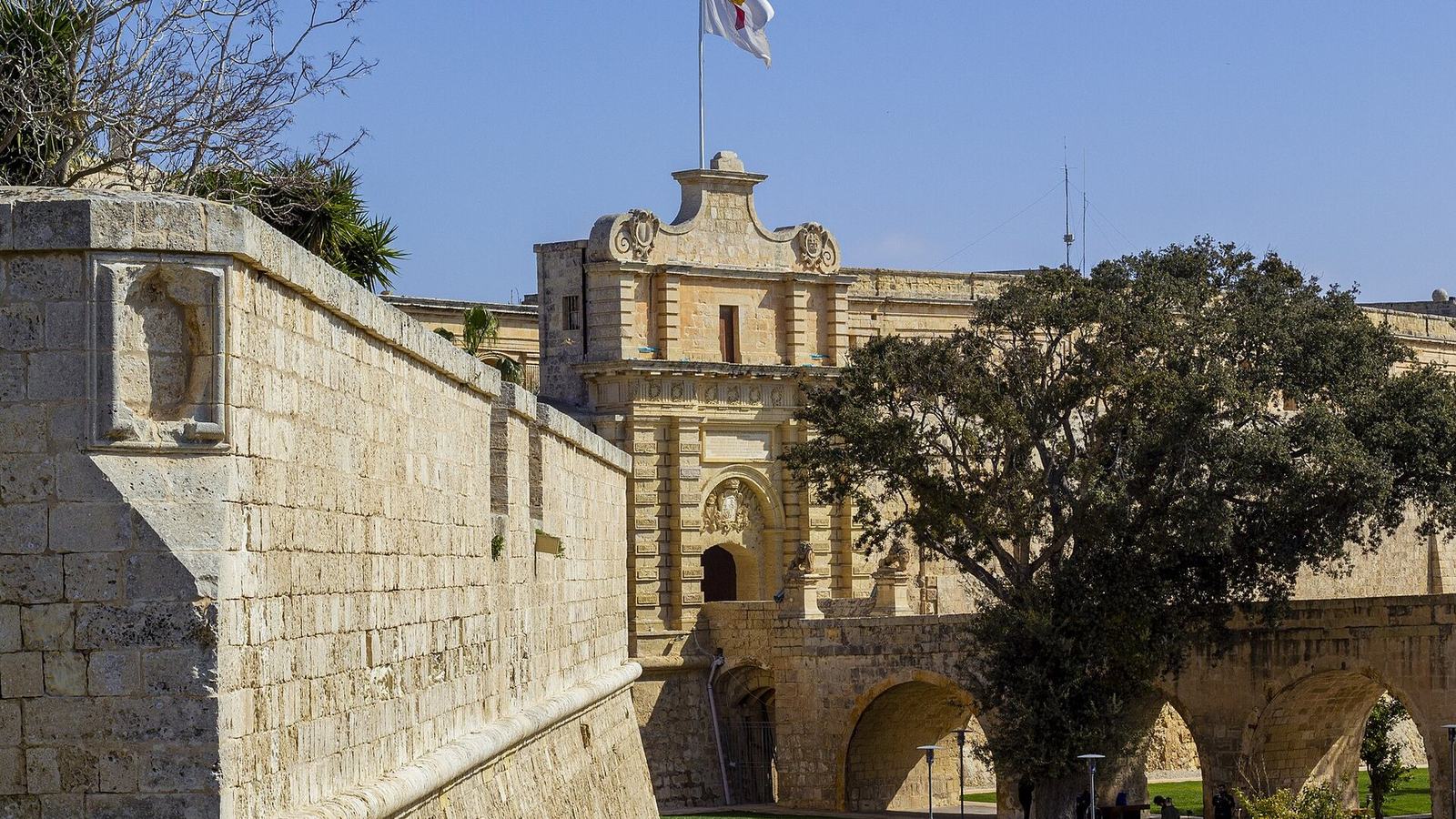
The surrounding fortified streets are equally important to the visit. A short walk through Mdina has a markedly different rhythm from a marina promenade, with stone façades, old gateways and an enclosed urban setting. The lead photograph accompanying this article shows the bastion and main gate, not an image from the forthcoming exhibition. This distinction is deliberate. The public-domain-or-licensed image should help readers recognise the destination without presenting an unrelated museum display as if it were an official preview photograph.
More than one temporary exhibition
Heritage Malta says the museum maintains extensive natural history collections, including geological material, birds, mammals, molluscs, insects and fossils. Displays cover subjects such as palaeontology, marine biology and the ecology of smaller Maltese islands. The institution also supports research, publishing and public education. Those permanent collections mean that an owner party need not make the trip solely for Alien Earth; the museum has a broader local scientific story that can interest adults and younger visitors in different ways.
The museum’s own description notes collections associated with Filfla, Fungus Rock, St Paul’s Islands and Comino. For yacht guests who have sailed past some of those places, labels in a gallery can give familiar coastlines a different meaning. A location seen from the aft deck as a dramatic rock or a swimming stop can also be part of a specialised ecological system. It is an instructive contrast with the tendency to describe every island only in terms of beaches, restaurants and berthing opportunities.
Planning the journey from a superyacht berth
Mdina is not a waterside arrival point. Guests travelling from a berth in Valletta, Vittoriosa or another Maltese marina should book an appropriate road transfer and agree a pickup location, return time and contingency with the yacht’s concierge or agent. The best choice will depend on the vessel’s actual berth, the number of passengers, mobility requirements and the time of day. It is easy to underestimate a shore excursion when a country looks small on a chart, yet city traffic and the time spent moving through a historic pedestrian area can affect the schedule.
A well-planned programme might allow a measured museum visit followed by a walk through Mdina and lunch, rather than attempting to combine every nearby museum in one morning. Captains should also confirm which guests are joining, whether children need car seats and whether anyone requires a vehicle able to handle reduced mobility. A shore excursion should not create pressure for the yacht’s department heads or drivers to improvise a new arrangement while the rest of the party waits.
Accessibility and a quieter visit
Heritage Malta lists partial accessibility for the National Museum of Natural History and provides a site-specific access statement. That is important information for an owner hosting elderly relatives or anybody with mobility limitations. Historic buildings have constraints that do not vanish because an experience is marketed as cultural tourism. The museum also publishes sensory information and describes designated quiet spaces. A party whose members have different needs may appreciate planning separate routes or a shorter museum visit rather than insisting that everyone follows precisely the same itinerary.
The organiser’s stated opening pattern for Alien Earth is linked to the museum timetable and changes during the exhibition period. The announced run begins 27 November and continues into summer 2027, but the official exhibition page distinguishes schedules around the January and February period. Because the owner’s travel plans may change, avoid publishing a fixed timetable on an onboard guest card months in advance. Ask the concierge to confirm live opening hours, admission arrangements and any special closures close to the chosen day.
Rabat adds a second chapter
Immediately outside the walls of Mdina, Rabat offers historic sites with a different focus. Heritage Malta’s Domvs Romana presents the remains and material culture of a Roman elite household, including the way domestic spaces, family roles and everyday life were organised. The archaeological collection makes an interesting contrast with the natural history museum: one explores the living world, while the other examines how people lived in the same island landscape at an earlier period. Heritage Malta lists full accessibility for the Domvs Romana, though details should still be checked for the individual visitor.
St Paul’s Catacombs provide another option for guests interested in archaeology and the early history of Christianity in Malta. Heritage Malta describes a network of underground burial spaces with Roman-era and later use. It recommends around one to two hours for a visit and lists partial accessibility. This is not an appropriate add-on for every guest, particularly anyone uncomfortable with confined or underground spaces. A curator-led or guided visit might be valuable, but arrangements and availability should be discussed with the site rather than assumed.
A programme that works for families and curious adults
The attraction of Alien Earth is that its subjects can be discussed at more than one level. A child may be captivated by the appearance of a chameleon or the unusual jaws of a moray eel; an adult may be interested in the evolutionary reasons for those adaptations and in how a museum preserves specimens. Neither kind of interest requires presenting the exhibition as a thrill attraction. A thoughtful guide can help guests move from surprise to explanation, keeping the experience grounded in science rather than in exaggerated claims.
Families aboard a yacht often have very different expectations about a day ashore. Some want museums; others want to walk and enjoy the city; a few may prefer to stay aboard. There is nothing wrong with splitting the group and agreeing a simple rendezvous, provided the transport and guest-care arrangements are clear. The measure of a successful excursion is not the number of admission tickets bought but whether people return having discovered something meaningful about the island they are visiting.
Why the opening date matters
For arrivals before 27 November, Alien Earth should be described as forthcoming. The museum itself may be open under its usual timetable, but the new exhibition is not advertised as beginning until that later date. Guests visiting in the first half of November can still explore Palazzo Vilhena and other Heritage Malta sites. Those arriving after opening should verify the final date, timetable and any late changes directly with the organiser. A newsroom has a responsibility to separate an announced future programme from an event that has already occurred.
The official information says Alien Earth is due to continue until 30 June 2027 and is included in general museum admission. That gives yacht parties wintering in Malta or beginning an early Mediterranean season a broad window in which to visit. It may also make the exhibition relevant to crew who are based locally between guest programmes. For an owner who values experiences beyond traditional luxury retail or hospitality, a natural history museum in a historic palace offers a strikingly different expression of what a Mediterranean yacht journey can include.
Photo licence and source
The bastions and main entrance of Mdina photographed by Kikku33, published under CC BY-SA 4.0 on Wikimedia Commons. Resized for web display. This is a destination photograph, not a photograph of the forthcoming Alien Earth exhibition.

Primary information: Exhibition – Heritage Malta or Visit Malta; Museum – Heritage Malta or Visit Malta; Domvs – Heritage Malta or Visit Malta; Catacombs – Heritage Malta or Visit Malta; Garden – Heritage Malta or Visit Malta. Opening dates, accessibility arrangements and ticket rules should be verified with the relevant heritage operator before arrival.
Source
Heritage Malta