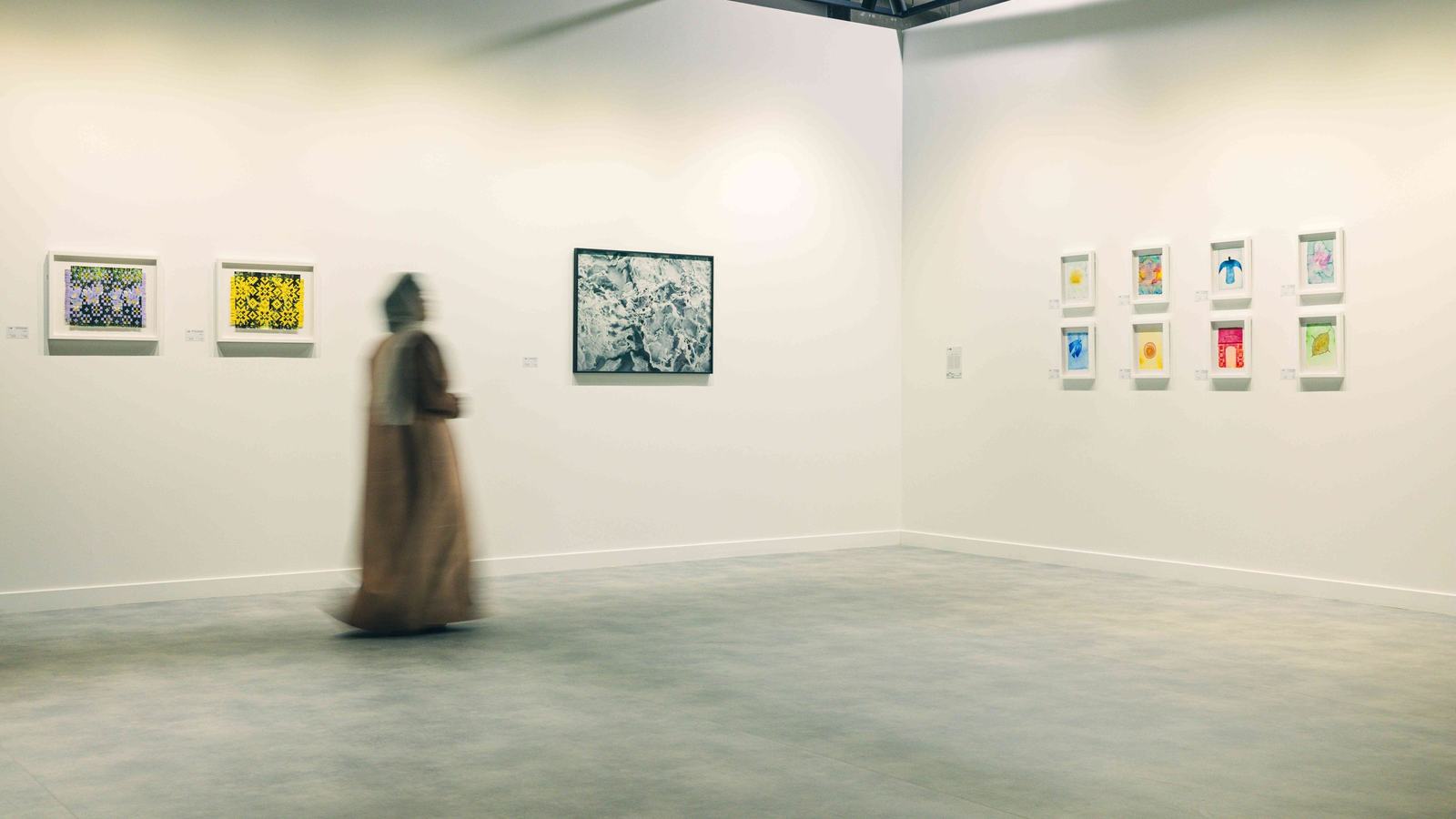
MIHAD opens in Doha Design District with three exhibitions, collectible contemporary design, a culinary residency and opportunities for private commissions.
Collectors visiting Doha have a new venue in which to examine works of contemporary design, discover artists and discuss individual commissions. QC+ opened MIHAD in Doha Design District on 5 November 2026, bringing exhibitions, a commercial gallery and a café together around the relationship between art and ordinary living. Its inaugural programme continues through 31 December and includes three exhibitions addressing landscape, the expressive possibilities of script, and knowledge embodied in handmade objects. The opening is of particular interest to private collectors and yacht owners planning interiors around individual commissions rather than conventional luxury retail selections. At MIHAD, the possibility of acquiring a work is part of the gallery's stated purpose, alongside the opportunity to understand the context in which it was made.
A commercial gallery within a wider cultural setting
The opening announcement, published by Qatar Museums, establishes that MIHAD operates as a commercial art and design gallery rather than as another public museum collection. Its intention is to connect private and corporate collectors with artists and designers, including through opportunities to purchase works and discuss commissions. Those distinctions matter for visitors considering acquisitions. A work presented within a curated exhibition may have a price, an available edition or a possible commissioning arrangement, but a prospective buyer needs to understand the terms attached to the particular object.
The gallery also plans talks, workshops and other activities. Its operating concept brings the interpretation of the objects into contact with commercial activity without treating these as necessarily separate experiences. A visitor can spend time examining an exhibition before discussing a particular acquisition. For households maintaining residences in different countries, the opportunity to meet a local gallery team can be valuable when a work requires specialist handling, installation or subsequent dialogue with its maker. The appropriate details should be obtained directly from the gallery rather than inferred from an exhibition label.
Three exhibitions introduce the collecting proposition
MIHAD's opening programme consists of rooted/ elsewhere, Beyond the Letters and Traces of the Desert Light by SANAE. All three were announced for the period from 5 November to 31 December. The exhibitions differ in the subjects they address and the kinds of object they present. Together they establish a scope extending from photography and mixed media to textiles, sculpture, ceramics and designed furniture.
An owner exploring the gallery for possible acquisitions may consequently find it useful to distinguish between an interest in contemporary artworks and an interest in the ways designed objects can be incorporated into interiors. The categories are not necessarily mutually exclusive. A distinctive object made for a practical purpose may carry qualities that place it within a serious design collection. The experience of examining such works within an exhibition can encourage a purchaser to consider their particular materials and meanings rather than judge them entirely through the relationship they might have to a pre-existing decorative scheme.
Landscapes, separation and the concept of home
The exhibition rooted/ elsewhere has been curated by Claire Kyle, QC+'s Director of Commercial Art and Design, in connection with the Qatar, Canada and Mexico 2026 Year of Culture. Its participants include Wadha Alathba, Amna Al Baker, Hamad AlFayhani, Joanna Johnston, Tessar Lo and Karl Mata Hipol. Photography, textiles and mixed-media works offer perspectives on environments ranging from Qatar's natural landscapes to the Canadian Prairies and on experiences associated with migration.
The subject offers particular resonance for people whose lives are divided between several residences and whose sense of home is not confined to one national context. A work responding to migration or remembered landscape need not depict a place in a straightforward illustrative manner. The relationship between the treatment of a material and the lived experience to which it refers may be central to the artist's intention. Collectors should therefore take an interest in the artist's account of the work before interpreting it solely through their own travel experiences. Where an acquisition is contemplated, the gallery can be asked to explain the medium, edition if one exists, and the documentation accompanying the specific work.
Beyond the Letters examines script as a cultural form
Curated by Ali Asali and Basma Hamdy with VCUarts Qatar, Beyond the Letters has been developed in collaboration with Design Doha Biennial 2026. Its subject is the expressive and cultural significance of Arabic and Persian script beyond conventional printing. The programme includes audiovisual installation, performance, textiles, sculpture, jewellery and publications. The aim is to examine the contexts in which written forms carry meaning, including traditions that may have received comparatively little attention within approaches centred principally on European design history.
For a collector considering the incorporation of script into a private interior, the exhibition offers an important reason to explore its context rather than treat letterforms purely as decorative elements. Works using writing may carry linguistic, historical or spiritual meanings that deserve to be understood before they are placed in a new environment. Commissioning a piece directly from an artist can enable a conversation about that meaning and its relationship to the intended location. Such discussions can be particularly valuable for yacht owners whose interior teams work with international artisans and materials drawn from several cultural traditions.
Materials and memory in Traces of the Desert Light
The third exhibition, Traces of the Desert Light by SANAE, has been curated by Tine De Beck, also in collaboration with the design biennial. Its works include ceramics, textiles, wooden forms and sculptural seating. The announced participants include Morevi with Majdulin Nasrallah, Shaikha Al Sulaiti with Ángela Ramos Garcés, Noro Khachatryan, Ayşe Habibe Küçük and Moss Studio. Its thematic interest is the relationship between material, light, craftsmanship and cultural memory.
For buyers commissioning a yacht or residence, these subjects can be considered from a particularly practical perspective. The appearance of a material often reflects the way it has been worked and treated, and an apparently simple object may depend upon considerable specialised knowledge. A collector viewing an object as a potential functional component should ask whether it is intended to be used in that way. Sculptural seating, for example, may differ from furniture engineered specifically to withstand frequent use and movement aboard a vessel. Its suitability should be assessed with the maker and the yacht's design team rather than inferred from its shape or the terminology used to describe it.
The crossover between hospitality and collectible ceramics
The café component of MIHAD's programme has begun with a residency by Mexican chef Elena Reygadas through 15 November. Reygadas, known for Rosetta in Mexico City, has brought selections from Panadería Rosetta to the Doha venue. The residency connects her food with ceramics made by Mexican designer Perla Valtierra. According to the announcement, part of the ceramic collection presented through the collaboration is available exclusively at the café.
This combination brings the gallery's overarching concept into a familiar activity. The characteristics of a plate, bowl or cup can be examined through the way it is handled, the relationship between its form and contents, and the character of its surface. Collectors acquiring handmade objects for everyday use should discuss their care and appropriate cleaning methods. Those intended for a yacht may require particular considerations concerning safe storage and securing the objects when the vessel is under way. An object that has been chosen after encountering it in the context of actual hospitality may ultimately become a more meaningful part of a collection than one selected entirely from a catalogue photograph.
Commissioning work with a clear understanding of its destination
The gallery's invitation to discuss individual commissions is one of the most useful aspects for private clients. A collector can bring an artist or designer into a conversation about a proposed work during the preliminary phase rather than seek to alter an existing piece to meet requirements for which it was not designed. The commissioning process should establish the scope, materials, intended location, schedule, responsibility for installation and terms governing later alterations.
For a yacht interior, several additional participants may need to be involved. A specialist engineer can advise on the conditions affecting installation, while the interior designer can coordinate the object with its surrounding materials and lighting. A conservator may be required if an unusual surface or a sensitive component will be exposed to environmental conditions significantly different from those of a conventional building. The most successful arrangement allows the artist to appreciate the functional limits without reducing the commission to a generic decorative requirement. Establishing how the work will be documented and maintained is a valuable part of that process, particularly when the yacht may eventually change ownership.
Visiting the gallery as the programme develops
MIHAD is located on the first floor of Doha Design District. The opening announcement lists its gallery and café hours as 11am to 7pm on Saturday through Thursday and 3pm to 9pm on Friday. The three inaugural exhibitions run through 31 December, while the wider Design Doha Biennial has a programme extending into January 2027. Visitors should consult the gallery's current information to confirm opening arrangements and any associated events before travelling.
For a collector, the opening should be understood as an introduction to a developing commercial and cultural platform rather than a single temporary sales event. Its particular attraction lies in the possibility of following the work of artists and designers over time, including through conversations about their materials, techniques and original intentions. Private acquisition can then become part of a sustained relationship with creative practice. For yacht owners and their advisers, MIHAD offers a new setting in which to develop that relationship while exploring the distinctive contributions of contemporary design in Qatar and beyond.
Primary source: Qatar Museums official QC+ MIHAD opening press release, 5 November 2026.
Courtesy of QC+ / Qatar Museums official MIHAD press pack. Installation of works by Karl Mata Hipol, Hamad AlFayhani and Amna Al Baker, as identified in the supplied press asset filename. Official source.