An informed Monterey Bay superyacht itinerary balances extraordinary Pacific marine wildlife with stringent sanctuary regulations and the practical harbour limits facing vessels over 24 metres.
Monterey Bay makes an unusually rewarding stop for a superyacht cruising the California coast. The attraction is not a conventional line of waterfront nightclubs but a protected Pacific seascape, where kelp forests, deep submarine canyons and seasonal concentrations of marine life can create extraordinary encounters within sight of shore. For owners who value a naturalist-led expedition as much as a polished dinner, the bay offers a rare combination of scientific significance and sophisticated land-based culture.
An October or early November call deserves particularly careful planning because wildlife sightings, northwest winds, exposed anchorages and shoreside berth limitations must all be considered together. Monterey Bay National Marine Sanctuary extends well beyond the city waterfront and is subject to federal conservation rules, while the marina facilities in Monterey are configured primarily for considerably smaller craft. Captains bringing a yacht longer than 24 metres should start with a berth and anchorage feasibility review, not with a restaurant reservation.
Why this coast feels different
The National Oceanic and Atmospheric Administration established the Monterey Bay sanctuary in 1992, and its protected boundary stretches along a large section of central California from near Marin toward Cambria. NOAA describes an environment of coastal habitats, offshore waters, kelp forests and deep ocean topography that supports a substantial range of marine mammals and seabirds. The dramatic contrast between shoreline and deep water is one reason guests can experience such a variety of coastal scenery over a relatively short cruising distance.
A private naturalist can help transform a day on the water from passive sightseeing into a coherent interpretation of the landscape. Guests might learn why nutrient-rich waters support dense food webs, how sea otters interact with urchins and kelp, and why whales use different parts of the coast at different times of year. These encounters are inherently unpredictable, however, and a well-designed itinerary leaves room for weather, visibility and the animals' own movements.
Wildlife in the autumn transition
NOAA's seasonal guide says humpback whales can feed in sanctuary waters from spring into November, depending on food availability, while the local population of California sea lions is often conspicuous in autumn. Some dolphins and migratory seabirds are more numerous in late summer and early fall, and shorebird movement becomes important as the season advances. No responsible operator can promise a whale or specific species on a fixed date; the pleasure is in observing wild animals without interfering with them.
Sea otters are among the region's most charismatic residents, frequently resting within kelp beds and sometimes carrying young pups. For a family group, an experienced guide can explain the relationship between otters, kelp and the rocky coast while maintaining a respectful viewing distance. Binoculars, a quiet observation position and patient guests often give a better experience than repeated close approaches by tender.
A strict approach to whale watching
NOAA's Monterey Bay whale-watching guidance advises observing larger whales from at least 300 feet, or 100 yards, and stopping a vessel immediately if it is within that distance. The guidance also warns against chasing whales or approaching directly in their path, and urges boaters to keep alert because animals can surface with little warning. These are practical operating principles for both the mothership and any tender carrying guests.
A superyacht with multiple tenders should set one clear protocol for speed, separation and radio communication during wildlife excursions. Repeatedly repositioning boats around a group of whales can turn a supposedly exclusive experience into a stressful disturbance for the animals. Captains can brief guests that a respectful long-range view, or an encounter that ends without a photograph, is part of the conservation standard of a first-class expedition.
The harbour reality for larger yachts
Monterey Municipal Marina advertises transient accommodation on a first-come, first-served basis, with no advance reservations and slip assignments made when a vessel is close enough to communicate with marina staff. The city's published materials describe small-boat slips and limited larger end-ties, not a guaranteed berth for a 30-, 50- or 80-metre superyacht. This makes Monterey very different from Mediterranean superyacht hubs where booking a deep-water quay may be the first step in a trip.
For a large yacht, the shoreside plan must be built around accurate length, beam, draft, weather exposure and the harbour's current acceptance policy. An offshore position may be technically possible in suitable conditions, but the captain must evaluate charts, holding ground, swinging room, protected habitats, nearby traffic, local restrictions and safe tender routes before assuming anchoring is appropriate. The published marina page alone cannot establish a safe or lawful position for an individual vessel.
Sanctuary rules belong in the passage plan
The sanctuary's regulations control discharges and disturbance of protected resources, while specific marine sanitation provisions depend in part on vessel characteristics and equipment. Masters should not generalise that ordinary yacht operations are exempt from all restrictions simply because commercial vessels use the surrounding waters. The practical approach is to review NOAA's current regulations, the yacht's own waste-management capabilities and applicable navigation notices as a single operating package.
Motorised personal watercraft are subject to particularly specific sanctuary zones and access routes, rather than being free to range across all protected waters. That detail matters for yachts travelling with jet skis or similar toys and for crew who might otherwise plan a spontaneous shoreline outing. A premium service programme can still include swimming, kayaking and exploration in suitable permitted areas, but activities should follow actual site rules rather than assumptions based on what was permitted at a previous destination.
A refined shore day without overcomplication
Monterey's historic waterfront, marine interpretation facilities and coastal streets provide a natural contrast to a morning on the water. A knowledgeable shore host can arrange a visit focused on regional food, art, marine science or a quieter drive to coastal viewpoints, according to the owner's interests. The most memorable luxury is often a private, unhurried programme that respects the place rather than a collection of hurried reservations.
Point Lobos and the broader Big Sur coastline reward careful land-based exploration, but guests should use authorised routes and observe any current park access requirements. The headlands can provide superb perspectives on the Pacific while illustrating how closely Monterey's marine and terrestrial ecosystems connect. It is worth leaving enough daylight for photography and a comfortable return, especially when tender arrangements or an offshore yacht require additional transfer time.
Designing the itinerary for real conditions
For a short call, the best sequence is to confirm a practical yacht position, then decide which wildlife outing and shore visit can be delivered without putting pressure on tide and weather margins. The crew should arrange local pilotage advice where appropriate, check current NOAA charts and forecast conditions, and plan a fallback should wind or swell make a transfer undesirable. A sheltered harbour for a small excursion vessel does not automatically mean an exposed superyacht anchorage nearby is satisfactory.
October creates possibilities for an atmospheric coastal voyage, but the Pacific will not always cooperate with a prewritten programme. Keep the wildlife day flexible, brief guests on conservation etiquette, and resist the temptation to fill every gap with another motorised activity. When the marine environment is treated as the principal guest, the result can feel genuinely rare and personal.
Official planning resources
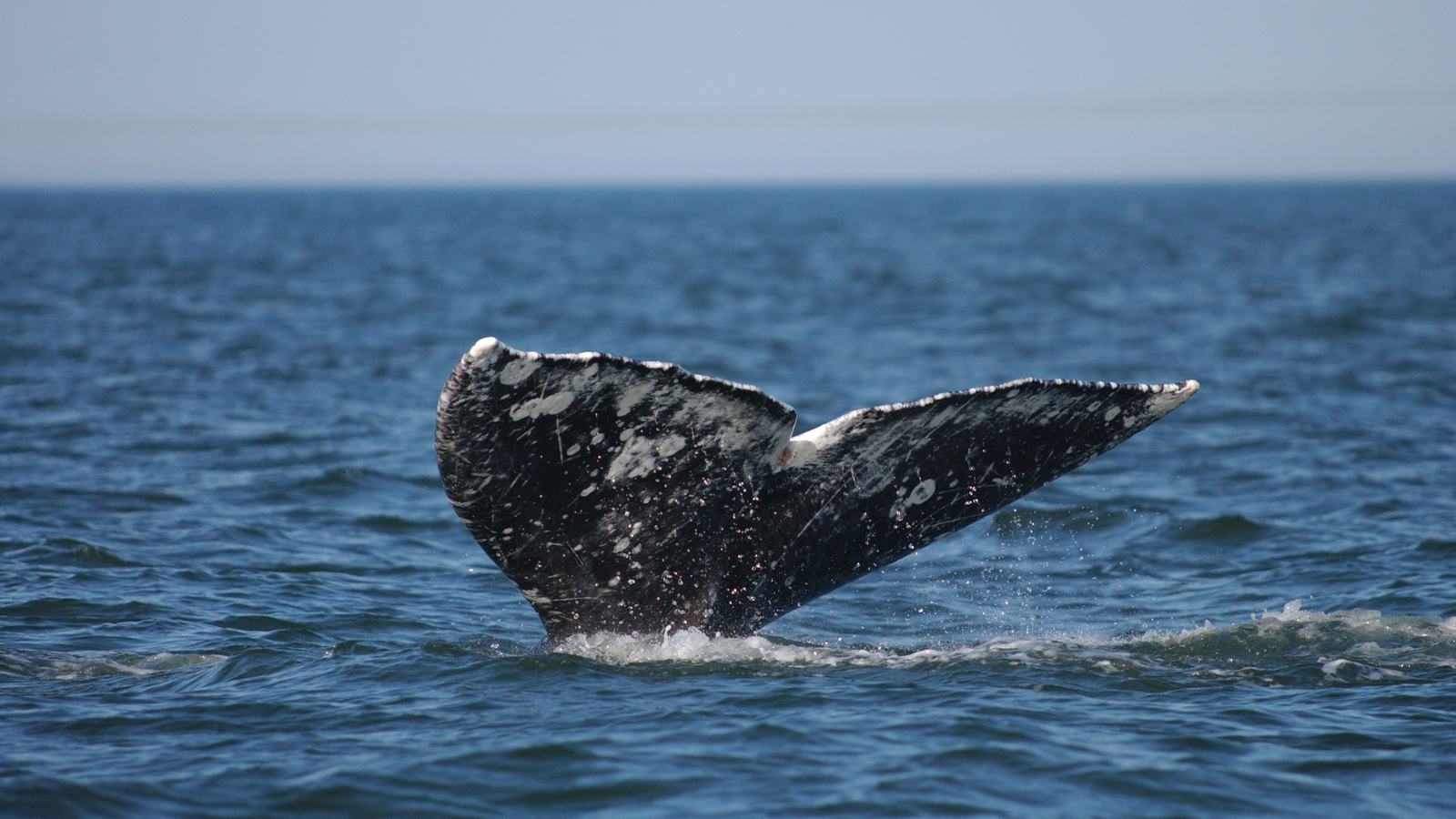
Start with NOAA's seasonal wildlife guide and its whale-watching guidance, then examine sanctuary regulations and boundaries. For shoreside arrival, consult the City of Monterey's Municipal Marina information, which clearly states that transient assignments are first come, first served. The accompanying official photograph is a NOAA image of a gray whale's tail credited to David Weller/NOAA, not a claim that whales will be visible during a particular charter.
Monterey Bay is a destination for people who appreciate expertise, conservation and the immediacy of a living ocean. With a realistic large-yacht access plan, an excellent naturalist and the patience to follow the weather, it offers a type of West Coast luxury no waterside resort can manufacture. That combination makes it worth considering for a carefully managed Pacific cruising itinerary rather than as a casual marina stop.