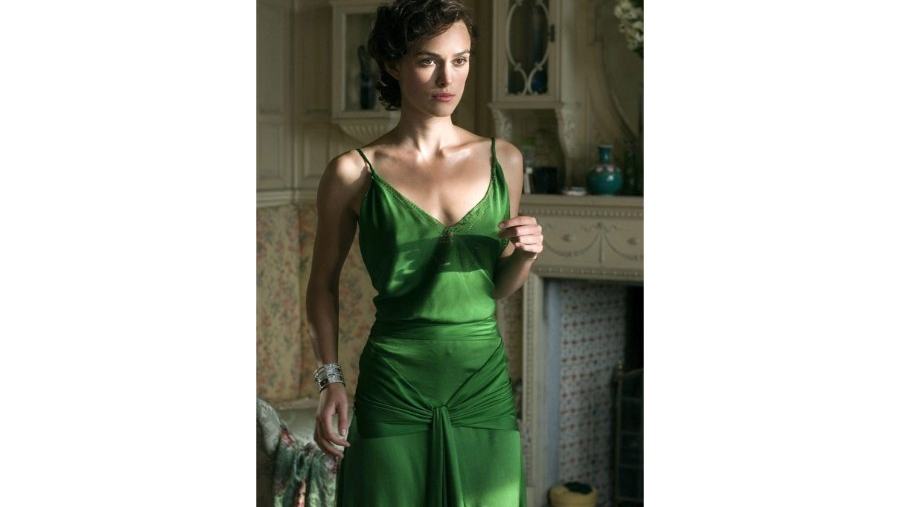
Christie's London will offer rare Admiral Nelson letters to Emma Hamilton, film-poster artworks and the emerald gown from Atonement in a 9 December literature and cinema auction.
Literary and maritime collecting, 12 November 2026. Christie’s will offer rare Nelson-to-Hamilton letters and cinema-related objects on 9 December; the stated prices are estimates for an upcoming sale, not results.
An unusual London auction links literature and personal history Christie's has announced Love & Lust: A Literary Guide, a London auction scheduled for 9 December 2026 that will bring together approximately thirty books, manuscripts, autograph letters, cinematic artefacts and other objects associated with celebrated stories. Its eclectic selection spans centuries of cultural history, from Admiral Lord Nelson's private correspondence with Emma, Lady Hamilton, to the emerald dress worn in the 2007 film Atonement. The auction house presented the sale on 11 November, making this a preview rather than a completed transaction. No buyer identities or realised totals can yet be reported. The shared theme is the personal emotion attached to objects that have survived in public memory: a handwritten letter, a costume central to a film or an early image made to persuade an audience to watch a story. Their significance as collectible material depends on authenticity and context, not just recognition.
Nelson's letters bring a rare maritime dimension Three letters from Horatio Nelson to Emma, Lady Hamilton, will be offered as separate lots with estimates of £6,000–£9,000, £5,000–£8,000 and £5,000–£7,000. Their appearance has special interest for naval historians, as Nelson's relationship with Emma Hamilton is intertwined with the public duties and private life of one of Britain's best-known admirals. The auction describes a farewell letter dated 20 May 1803, the day Nelson left Portsmouth aboard HMS Victory. Another letter, written from Victory in June 1804, contains reflections on his health and the blockade of Toulon. These are personal communications made in the context of active naval service, not retrospective memoirs. Their importance arises partly from the tension between public command and private affection. A collector considering one should study the full text and provenance rather than judge it only by a famous name in the catalogue.
A letter can illuminate command without being an official order Naval correspondence can take many forms: operational dispatches, letters to Admiralty officials, accounts to family or deeply private messages to those closest to an officer. Nelson's letters to Emma belong to the last category, although they were written during periods of considerable military responsibility. It would be a mistake to use them as if they were official instructions describing every detail of the Mediterranean campaign. Their value to historical understanding lies in revealing something of the emotional and personal circumstances of an officer whose public actions are documented in other sources. As with any private document, references to events may reflect a particular viewpoint or moment rather than a complete account. An academic or collector seeking to interpret the letters should compare them with ship logs, official correspondence and established scholarship. The intimacy of the record enhances its human significance; it does not make independent historical scrutiny unnecessary.
Provenance matters intensely with autographs Autograph letters attract interest because the handwriting and paper provide a direct physical link to a historical person. They also require expert examination. A serious purchaser needs confidence that the document is genuine, complete as described, accurately dated and accompanied by a credible history of ownership. Paper, ink, seals, folds and evidence of conservation can all affect condition and value. Some letters have been separated from related correspondence, and an individual item may reveal only part of a longer exchange. Catalogue photographs cannot convey every feature relevant to authentication. High-value buyers should examine specialist descriptions and, where appropriate, the document itself. A letter can be historically important even when its monetary estimate is modest compared with a celebrity costume. The different prices reflect the auction market's preferences, not a universal ranking of cultural significance.
Atonement's green gown is central to the film selection The famous emerald gown designed by Jacqueline Durran for the 2007 film Atonement is among the sale's most immediately recognisable objects, with an estimate of £100,000–£120,000. Worn by Keira Knightley as Cecilia Tallis, the costume became closely associated with the film's visual style and the emotional intensity of its story. For cinema collectors, such an object has several kinds of significance. It is a surviving piece of production design, a reference to a particular performance and an example of fashion created to serve a dramatic narrative. Its value also depends on whether the costume can be convincingly identified as the screen-used example described, rather than a reproduction or later promotional garment. The Christie’s announcement supplies the attribution, but buyers should still seek condition and provenance records appropriate to a six-figure acquisition.
Metropolis and Dracula connect illustration with film history Christie's also announces an original artwork for the premiere of Metropolis, created in 1926 ahead of the 1927 film, estimated at £100,000–£130,000. Another work connected to the 1931 Dracula release carries an estimate of £80,000–£120,000. These are not conventional mass-produced cinema posters bought at a modern memorabilia fair. Original release artwork can be particularly significant because it documents the creative process behind the imagery that shaped a film's public identity. Its historical importance depends on the specific circumstances of production, attribution and survival. The upcoming centenary of Metropolis in 2027 adds timely interest, but anniversary attention is not a guarantee of value. An informed collector should distinguish an original design from a later printed poster, and should examine any restoration or provenance questions before placing a substantial bid.
Jilly Cooper's typewriter offers a different intimacy The auction includes Jilly Cooper's Olivetti Lettera 32 typewriter, known as Monica 2, with an estimate of £5,000–£8,000. Christie’s connects the machine with her working life and the manuscripts created at her Gloucestershire home. The idea of acquiring a writer's actual tool can appeal to collectors more than a first edition because it suggests direct proximity to the act of creation. Yet an object of this sort needs a careful account of its relationship to the author. A typewriter model is not scarce merely because a famous writer used a machine of the same type; the provenance of this specific example is the essential point. Collectors may also be interested in the traces of practical use, repairs and modifications. Excessive restoration could remove precisely the evidence that makes it personal. Its monetary estimate is modest compared with the cinematic works, but its significance for admirers can be considerable.
Ballet and original illustration widen the selection A costume worn by Dame Margot Fonteyn as Princess Aurora in the 1960 production of The Sleeping Beauty is also included, estimated at £8,000–£10,000. The design was associated with Oliver Messel's Royal Opera House production and represents a chapter of British ballet history. Christie’s further highlights original sketches by Chris Foss for the 1972 publication The Joy of Sex, estimated at £6,000–£8,000. These objects illustrate the auction's broad concept of literature and desire: the written word is connected to performance, costume, illustration and the interpretation of stories across different media. Collectors may value them for distinctive reasons. A ballet costume has material and performance history; an original sketch has an artist's hand and a publication history. Neither should be assessed simply by comparing prices across unrelated categories.
Private libraries and collections need careful conservation Manuscripts, original artwork and historic costume materials impose very different preservation demands. Paper may require carefully controlled humidity, protection from light and appropriate mounting. A textile can deteriorate through repeated display or unsuitable support. Film artwork may have different chemical properties from an autograph letter, and an antique typewriter may combine metal, rubber and paper components with conflicting conservation needs. An owner acquiring several objects from the same auction cannot assume one display solution suits all. Insurance records should make clear exactly what has been acquired, and the identity of an individual object should be linked to condition reports and provenance. Where a collection travels between residences, specialist transport planning is especially important. Preserving the emotional meaning of an object includes preserving its physical integrity for the people who encounter it in future.
The auction remains a future event The sale is scheduled at Christie's King Street in London on 9 December 2026 at 4pm GMT, with exhibition dates announced for 4–9 December. It forms part of the auction house's Classic Week programme. The dates are significant because potential buyers may need time to examine the lots and obtain independent advice before bidding. The auction house has published estimates, but none should be mistaken for a sale result. A rare object may fail to sell, attract strong competition or achieve a figure outside the estimate range. The final outcome will depend on the bidding conditions and the requirements of individual clients. Readers interested in the Nelson letters or the Atonement costume should use the specific lot descriptions to establish what documentation is available, and then review premiums, tax and delivery obligations before participating.
What the sale establishes for collectors Christie’s Love & Lust: A Literary Guide will offer approximately thirty culturally significant objects in London on 9 December. Confirmed highlights include three Nelson-to-Emma Hamilton letters, the emerald gown from Atonement, original Metropolis and Dracula film artwork, Jilly Cooper's typewriter, a Margot Fonteyn costume and illustrations by Chris Foss. Published presale estimates range from several thousand pounds for letters and other personal objects to more than £100,000 for certain major cinematic works. No final auction proceeds or buyer details have yet been reported. The deeper appeal lies in the chance to own an authentic physical witness to a story: the intimacy of Nelson's handwriting, the work of a costume designer, or the imagination of an artist whose image became part of cinema history. Knowledgeable collecting begins with that connection and then insists on credible provenance and careful stewardship.
Primary source: Christie's, 11 November 2026, Love & Lust: A Literary Guide London auction announcement.