An enriched cultural guide to New Bedford's maritime quarter, linking whaling history, Herman Melville, architectural heritage and the city's living port.
A port whose streets still tell sea stories
New Bedford, on the southern coast of Massachusetts, offers a maritime heritage journey unusually rich in architecture, commerce and human experience. The city's nineteenth-century prominence came from whaling, an industry that connected crews and merchants to oceans around the world. Today the National Park Service and local partners preserve part of the old port as an urban historical park, giving visitors a chance to explore the relationship between an international fleet and the town that supplied it.
For modern yacht travellers, the appeal is not nostalgia for the hunt itself. It lies in understanding how ships once transformed waterfront fortunes, how an arduous maritime occupation shaped design and culture ashore, and how a working port can retain visible layers of its past. A walk through the old district provides the kind of perspective that a luxury marina alone cannot offer.
Begin by treating the historic district as a place to explore on foot rather than a museum contained in one building. The park spans a downtown neighbourhood of preserved streets and historic structures, with partner sites addressing art, immigration, social history and commerce. Allow space between stops to look at brick facades, stone paving and the street plan that grew around the port's maritime economy.
The harbour that changed Atlantic commerce
Whaling vessels travelled long distances, and the needs of larger ships gradually helped New Bedford overtake rival New England ports. The National Park Service explains that Nantucket's shallow harbour and surrounding shoals became a growing disadvantage as voyages moved farther from home. New Bedford's harbour facilities, commercial connections and access to inland transport eventually supported a rapidly expanding industry.
The scale of that trade reshaped the city. Shipowners and merchants invested in buildings and businesses, while outfitting firms, skilled workers and families became tied to a fleet that might be absent for years at a time. The prosperous streets therefore carry an uneasy double significance: they testify to remarkable commercial organisation, but their wealth also depended on dangerous labour and the killing of whales for products valued in distant markets.
Walking through the district brings those connected worlds into focus. The distance between a merchant's elegant home and the waterfront is often measured in minutes, yet the experiences of those who profited from voyages and those who worked aboard could be starkly different. A thoughtful visit should hold both stories together, avoiding either uncritical celebration or the assumption that maritime history has only one point of view.
Seamen's Bethel and the voice of Melville
One of the district's most evocative landmarks is the Seamen's Bethel on Johnny Cake Hill. The building was dedicated in 1832 as a nondenominational church for mariners, part of a local effort to offer services to men preparing to sail. Its continuing role makes it more than a preserved set piece; the building remains linked to a living community while carrying the memory of a perilous occupation.
The writer Herman Melville visited the Bethel before embarking on a whaling voyage in January 1841. That connection invites literary-minded travellers to consider how actual seafaring experience contributed to one of America's best-known maritime imaginations. The historic site gives a physical setting to the rituals of departure, uncertainty and remembrance that surface so powerfully in writing about the sea.
Do not rush this stop as a photographic checklist. Consider the world a young sailor stepped into when a ship might spend years away, with uncertain pay and real risk of injury or death. A quiet visit to the Bethel can become the emotional centre of the itinerary, placing the lives of individual seamen beside the much larger commercial story told by the city's whaling-era buildings.
Beyond the ships: art, architecture and makers
New Bedford's seagoing identity produced more than a fleet. Sailors made practical objects and personal keepsakes during long periods of waiting at sea, while trade supported decorative arts, furniture, building projects and an urban culture attentive to international influences. The National Park Service connects the city's maritime story with local art and the varied communities that helped define New Bedford over time.
For collectors, the subject of scrimshaw raises especially important questions about provenance and conservation. Historic objects made from whale bone or teeth may have artistic and documentary significance, but modern wildlife laws and ethical concerns demand careful attention. The lesson is to appreciate collections through reputable museums and verified interpretation, not to treat every unusual maritime souvenir as an appropriate acquisition.
Architecture provides another rewarding thread. Merchant residences, civic buildings and commercial streets reveal how money generated at sea was represented on land. Even when individual structures are not open to visitors, walking their exteriors with a historical map offers clues about changing materials, tastes and ambitions. The urban fabric becomes an open-air archive of New Bedford's rise.
A district of many communities
The National Park Service makes clear that New Bedford's history encompasses far more than whale ships. Immigration, cultural exchange, women’s work and the Underground Railroad belong in the interpretation of this port. A city connected to global voyages could be outward-looking and diverse while still reflecting profound inequalities in the society that supported the trade.
Places such as the Nathan and Polly Johnson House deepen that narrative by connecting the district to abolitionist history and the lives of people seeking freedom. Other partner sites illuminate civic activity, art and the changing waterfront. Readers who know New England primarily through grand houses and picturesque harbours will find a more complicated, and ultimately more compelling, story here.
Approach these histories with the same attention given to a ship's technical record. Names, dates and buildings matter, but so do the experiences that seldom appeared in a merchant's ledger. A rewarding maritime visit includes the workers, craftspeople, families and reformers who shaped a port just as decisively as the owners of its fleets.
Working water, not a frozen museum
The harbour is still integral to New Bedford's identity, although fishing rather than whaling now underpins much of its commercial waterfront. The National Park Service notes the city's active port, hurricane barrier and regional ferry connections. That continuity is useful to a visitor: this is not a waterfront emptied of modern purpose in order to serve only as a backdrop for heritage tourism.
Watching an active harbour helps explain the timeless demands of maritime work. Dock access, weather protection, vessel maintenance, cargo and crew organisation remain essential even when the technologies and industries have changed. For a superyacht owner or crew member, the comparison can be instructive without pretending that contemporary luxury cruising and historic whaling share the same human conditions.
Respect the distinction between visitor areas and working docks. Quays, loading areas and vessels may have operational or security restrictions, and commercial crews should never be treated as attractions. Seek designated viewpoints and locally published access information, keeping the itinerary compatible with the real business of the harbour.
Plan a heritage itinerary with room to pause
Start at the National Park Service visitor centre and explore its current guidance for the historic district. The park's Places to Go information points visitors towards the New Bedford Whaling Museum, Seamen's Bethel, notable historic houses, the schooner Ernestina-Morrissey and other nearby destinations. Individual partner attractions operate their own admission policies and hours, so confirm details directly rather than assuming that one park listing covers every site.
A satisfying route could begin with the park orientation, continue to Seamen's Bethel and the streets around Johnny Cake Hill, and then devote substantial time to museum interpretation. Add an architecture-focused walk or a visit to another partner heritage site according to your interests. Leave an unhurried interval to absorb the relationship between the old streets and the nearby water.
For yacht guests making a shoreside excursion from the wider Buzzards Bay region, it is sensible to separate cultural planning from navigation decisions. A heritage article is no substitute for charts, berth availability, harbour notices or the advice of a local marina. Plan the vessel movement independently, then give the land visit enough time to merit the trip.
What New Bedford gives the modern seafarer
The strongest reason to visit may be the way New Bedford resists a single uncomplicated story. Maritime trade brought wealth, international connections and handsome buildings, but it also involved the destructive hunting of whales and arduous voyages by crews whose lives were often far removed from the prosperity of owners ashore. Looking at both sides is essential to an honest encounter with the place.
The park's collaborative model keeps that complexity visible through different institutions and neighbourhood histories. Museums, historic buildings, community organisations and active civic life contribute their own perspectives rather than reducing the port to a uniform attraction. This makes New Bedford rewarding for readers interested in heritage, fine craftsmanship, literature and the social world surrounding ships.
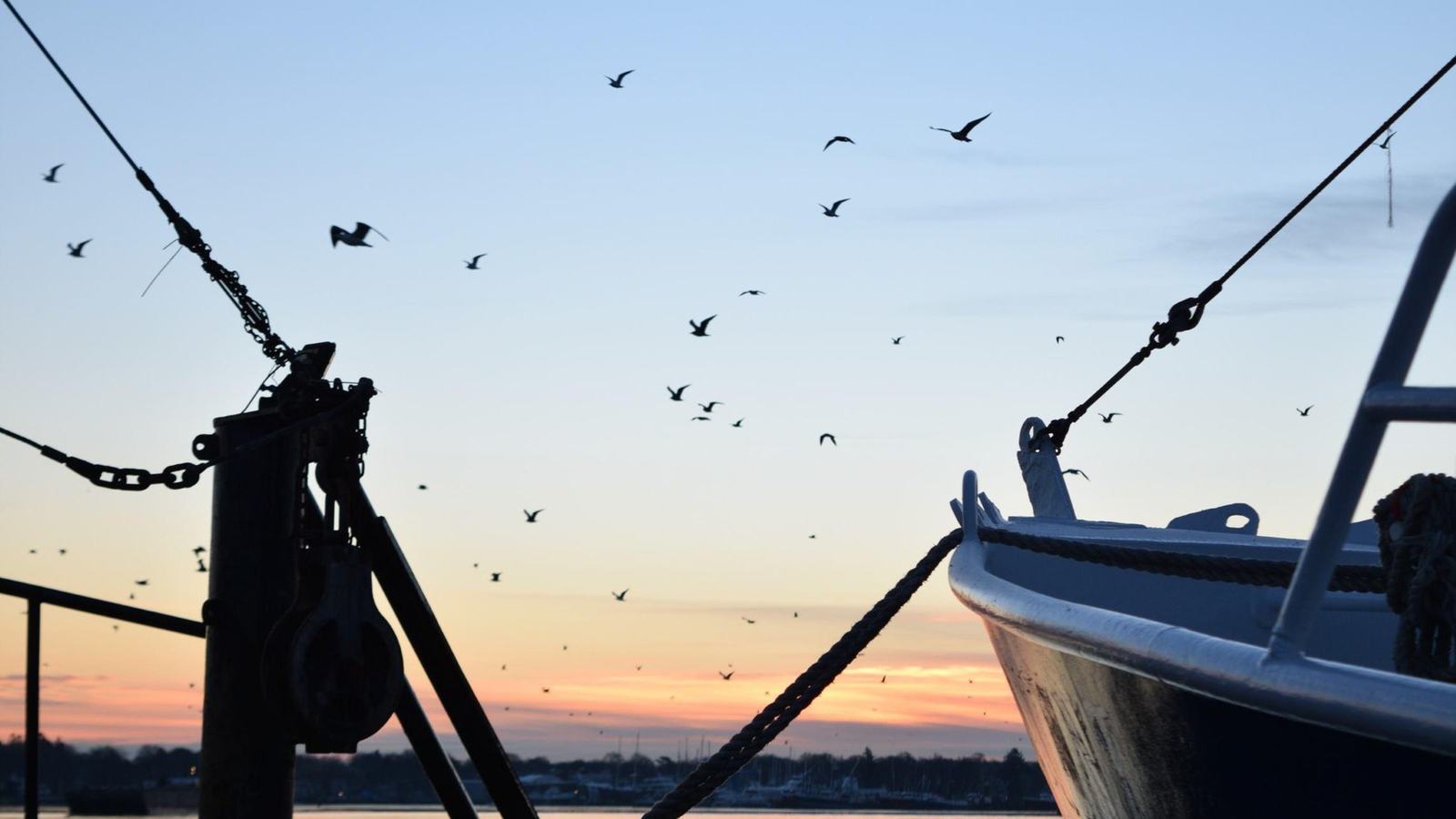
As the light falls over the Acushnet River, the scene offers a final connection between past and present. The National Park Service's photograph of the waterfront at sunset shows a waterway that still shapes the city's mood and activity. A thoughtful day here leaves visitors with an appreciation not only for vessels, but for the people and places that make a maritime city endure.