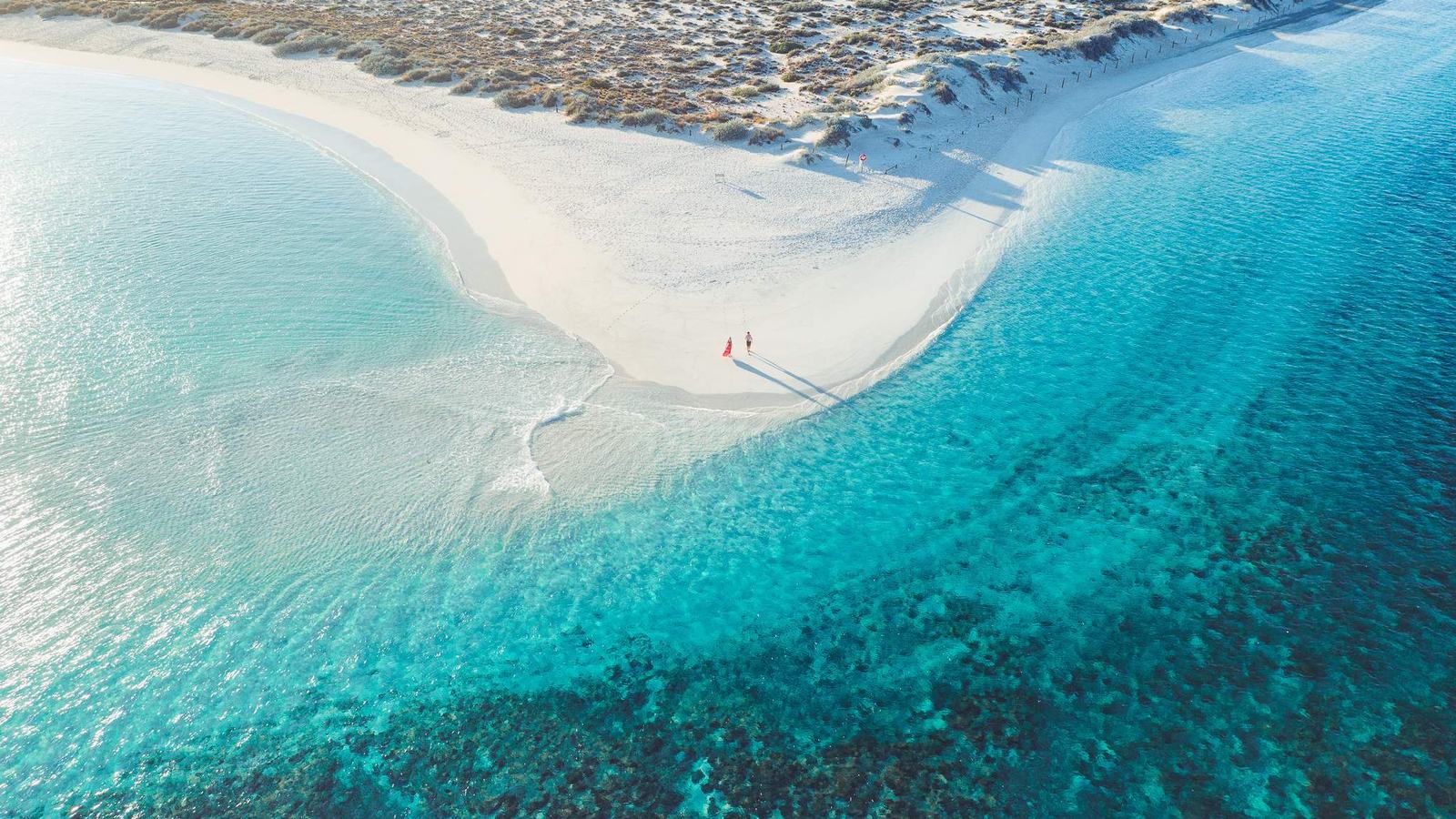
A practical, conservation-led luxury yacht journey to the World Heritage-listed Ningaloo Reef, Exmouth and Cape Range, accounting for cyclone recovery and marine-park rules.
A reef that changes the meaning of distance
Ningaloo is one of those rare marine destinations where world-class reef life lies remarkably close to a remote, arid coastline. On Australia's western shore, pale sand and the rugged landscape of Cape Range meet a fringing reef whose ecological importance reaches far beyond the region. UNESCO recognises the Ningaloo Coast as a World Heritage property, encompassing marine environments and distinctive terrestrial habitats. For superyacht guests, the attraction is not a procession of busy ports but an opportunity to discover an extraordinary natural system through carefully managed excursions.
The distinction between arriving by yacht and exploring the reef is important. A large vessel cannot simply use a pristine reef-edge lagoon as an anchorage, and the presence of shallow coral makes informed passage planning essential. Local marine-park zoning, permitted moorings, navigation guidance, weather and tender operations all require review before a yacht arrives. The reward for doing that preparation is the freedom to give the environment the time it deserves, rather than turning a globally significant reef into a hurried stopover.
Exmouth as the practical gateway
Exmouth is the principal service town associated with the northern Ningaloo experience, with the Gulf of Exmouth on one side of the peninsula and the reef-facing coast on the other. It is a useful base from which guests can arrange specialist marine experiences, land excursions and local support. Australia's Coral Coast identifies Exmouth as a major departure point for whale-shark experiences and a gateway to Cape Range. Logistics still require advance thought: the remoteness that makes the region compelling also means supply arrangements, transfers and weather alternatives should be settled early.
In 2026, a further consideration is recovery from Cyclone Narelle. The regional tourism organisation reported disruption to parts of Exmouth and Coral Bay earlier in the year, while noting that visitor access and many services had reopened by its June update. That is neither a reason to dismiss Ningaloo nor a guarantee that every business or facility is operating normally. Yacht managers should check the latest official notices, confirm berths and service availability directly, and arrange local provisions well ahead of arrival.
Meeting the giants responsibly
The annual presence of whale sharks is a signature Ningaloo experience. These immense filter-feeding fish draw visitors from across the world, yet they remain wild animals and their movements cannot be scheduled to match a charter calendar. Australia's Coral Coast describes regulated commercial tours departing from Exmouth and Coral Bay, commonly operating during the warmer part of the year with seasonal variation. A private yacht can support a very comfortable itinerary, but the wildlife encounter itself is best entrusted to a properly licensed specialist operator following local interaction rules.
That distinction protects both the wildlife and the quality of the experience. Guests should expect briefings, group limits, instructions about distance and a real possibility that conditions or animals will not cooperate. The aim is to observe natural behaviour rather than force an encounter for a photograph. Those who travel outside the best-known season can still enjoy reef scenery and marine diversity, but an itinerary should never promise a whale-shark swim on a particular date. Flexibility is more honest, and ultimately more rewarding.
Turquoise Bay and the nearshore reef
Some of Ningaloo's appeal can be experienced from shore rather than from an elaborate expedition. Turquoise Bay is famous for its clear water, while other locations around Cape Range provide opportunities to discover the reef with appropriate local guidance. Australia's Coral Coast lists Turquoise Bay, Oyster Stacks and Lakeside among well-known snorkelling areas. The apparent simplicity of a beach-based excursion should not obscure the importance of currents, tides, entry points, swimming ability and conditions on the day.
For a yacht party, a well-designed morning may involve a specialist guide, correctly fitted equipment and a short outing chosen to suit the least confident swimmer in the group. The objective is to observe coral and fish without contact, trampling or souvenir collection. Anchoring a tender over reef habitat, feeding fish, or approaching turtles too closely are all inconsistent with that approach. An elegantly managed experience can be quiet and low-impact, with a return aboard for an unhurried lunch rather than an insistence on visiting several reefs in one day.
Cape Range beyond the waterline
The Ningaloo Coast World Heritage landscape extends inland to the Cape Range, where limestone geology, arid ecosystems and a network of caves add an unexpected dimension to the voyage. UNESCO highlights the area's subterranean environments alongside the marine biodiversity. That dual character is one of the region's great strengths: visitors can spend one day exploring life beneath the sea and another discovering the rugged terrestrial setting that frames it. The shift from turquoise shallows to ochre gorges makes a particularly striking contrast.
Shore excursions should be planned with the same care as marine activity. Heat, remote roads, track closures and seasonal access limits can significantly affect what is practical. The regional tourism authority's post-cyclone notices specifically advised visitors to consult parks and wildlife updates before travel, because some areas remained subject to closure or recovery works. Rather than attempt an ambitious drive at the hottest part of the day, guests may prefer an early guided outing followed by a relaxed afternoon aboard, with local expertise shaping the route.
Coral Bay and the slower southern rhythm
Coral Bay offers a smaller-scale counterpoint to Exmouth, with a village atmosphere and strong connection to reef activities. It can be attractive to a charter group seeking nature, informality and time away from a conventional luxury circuit. Even here, the reef is a protected living environment, not a private playground. The best programme uses established local operators for permitted wildlife activities and seeks current guidance about the areas where visitors may swim, snorkel or take a boat.
Following Cyclone Narelle, Australia's Coral Coast reported in its June travel update that Coral Bay businesses had resumed welcoming visitors while the broader region continued recovery work. Conditions can change, and anyone planning a superyacht call should verify current access, available services and any applicable mooring or boating restrictions immediately before the trip. It is better to add an extra day of flexibility than to build a tightly timed itinerary around facilities that may still be recovering.
The discipline of a protected seascape
Few destinations make the relationship between luxury travel and conservation as visible as Ningaloo. A yacht may offer exceptional comfort, but its greatest contribution should be the ability to explore with patience, use knowledgeable guides and choose less intrusive ways to experience a fragile landscape. Western Australia's Department of Biodiversity, Conservation and Attractions explains that authorisation is required for many uses of moorings in marine parks and reserves. Masters must therefore confirm the status of each planned mooring or anchorage with the relevant authorities rather than assume a vacant buoy is available.
Marine-park boundaries and activity zones also mean that fishing, diving, access and tender use may be controlled differently in neighbouring areas. No single itinerary can replace up-to-date official charts, notices and local advice. An environmental briefing for crew and guests is worthwhile before arrival, covering waste management, vessel wash, wildlife distances and practical ways to avoid reef damage. Such measures are not a concession to the destination; they are central to the privilege of visiting it.
Building a memorable Ningaloo passage
A considered stay might open with arrival and a low-key orientation around Exmouth, continue with a licensed marine wildlife excursion, and reserve a separate morning for safe shore-based snorkelling. A land day in Cape Range can follow if routes are open and conditions permit, with time set aside for an easy meal featuring Western Australian produce. For guests who prize photography, the changing light over the dry hills and shallow sea offers more variety than any fixed list of attractions suggests.
The essential ingredient is realistic planning. Ningaloo is remote, ecologically sensitive and subject to both tropical-weather history and seasonal wildlife patterns. Checking the latest recovery advice, protecting reef habitat, booking qualified local operators and allowing the master discretion over weather decisions turns those constraints into a well-run voyage. A superyacht visit succeeds when guests return with a clearer understanding of the place, not merely a collection of dramatic images. Ningaloo has every quality needed to make that slower, more meaningful form of luxury worthwhile.