BLICKFANG Vienna is taking place at the MAK Museum of Applied Arts from 6 to 8 November 2026, bringing independent furniture, fashion and jewellery designers together in one of the city's best-known cultural institutions. The organiser's published material describes a carefully selected international mix, with around 150 labels from more than 15 countries. It is an opportunity to discover contemporary pieces directly from makers rather than another mass-market retail promotion. For collectors and owners who commission distinctive interiors, that direct relationship can be the beginning of a more personal conversation about materials, craft and a designer's working methods.
London opens a wider conversation about design
The Design Museum in Kensington has opened The Nue Black Aesthetic, a major exhibition running from 6 November 2026 to 8 August 2027. Guest curator Charlene Prempeh brings together more than 100 objects across six sections, with work spanning fashion, furniture, architecture, product design and sculpture. For an audience interested in fine art and bespoke interiors, the exhibition offers something more substantial than a seasonal shopping opportunity: it asks whose creative ideas shape the objects, rooms and cultural references that luxury consumers increasingly seek to collect and commission.
The museum's central argument is that Black design cannot be reduced to a single visual language. Some of the artists and designers draw from diasporic experience or longstanding craft traditions, while others work in deliberately experimental forms. The exhibition's title evokes the Black Aesthetic movement of the 1960s and the New Black Aesthetic associated with the 1980s, then proposes a more nuanced present. This framing matters to collectors because provenance is not merely an attribution line: it involves the ideas, techniques and lived histories that give an object its meaning.
An unusually broad creative roster
Among the names on the museum's published exhibition list are Ini Archibong, Simone Brewster, Mac Collins, Nifemi Marcus-Bello, Giles Tettey Nartey, Samuel Ross, Tosin Oshinowo and Bianca Saunders. Their work spans distinct disciplines and commercial contexts, so the exhibition is not a uniform collection of furniture or a single fashion presentation. The museum also identifies work by Taiba Akhuetie, Tejumola Adenuga, Phoebe Collings-James, Foday Dumbuya, Feben, Saul Nash and Rachel Scott. A visitor should expect changing materials, scales and narratives rather than a showroom arranged around one easily recognisable house style.
The breadth is especially relevant to people commissioning homes or yacht interiors, where the best results often come from careful collaboration among architecture, furniture, lighting and art. A sculptural chair might carry a conceptual story as well as a functional purpose; a textile could speak to place and cultural exchange; a spatial installation may challenge the way a room is experienced. Such ideas cannot simply be copied into a yacht scheme. They can, however, help a client develop a more individual brief and ask informed questions about the originality and cultural context of proposed pieces.
Material culture beyond fashionable labels
One of the exhibition's strengths is its refusal to make the phrase Black designer stand in for a particular material or aesthetic. The Design Museum describes practices shaped by different communities and identities, with no claim that they converge into one style. This is a useful corrective for a luxury market that sometimes seeks visual novelty without examining where it comes from. A serious collector should ask how an object was made, what the designer intended and whether the maker has been adequately credited and supported. Those questions are relevant even when a work is offered through an established gallery.
For owners developing a bespoke interior, the distinction between inspiration and appropriation deserves attention. Commissioning an artist or designer to develop work within their own practice is different from borrowing a culturally specific pattern and reducing it to a decorative motif. Discussions about intellectual property, production rights and appropriate acknowledgement should take place early, before sketches become contracts. The exhibition is not a set of purchasing rules, and there is no suggestion that every object displayed is available for sale. It is a place to sharpen the judgment that informs later choices.
Furniture, architecture and the life of a room
The show's inclusion of architecture and furniture gives it particular relevance beyond fashion collecting. In a private residence or a superyacht, space is both a practical constraint and an opportunity for expression. Furniture has to work with circulation, posture, light, acoustic comfort and the behaviour of people using it. A compelling exhibition piece may be visually powerful without being suitable for a marine environment. Yacht designers must consider weight, securing points, movement, maintenance and applicable safety requirements in ways a gallery setting ordinarily does not.
Even so, the exhibition can expand a client's vocabulary. It encourages attention to forms that do not follow the habitual language of pale stone, polished metal and neutral upholstery. The aim is not to import a museum display unchanged, but to recognise that contemporary design includes many voices and approaches. A thoughtful commission might begin with a conversation about an artist's current work, evolve through material testing and end with a site-specific piece developed for the intended environment. That process usually produces greater integrity than choosing an anonymous object solely because it matches a colour palette.
A programme extending beyond the galleries
The museum has scheduled related activities that allow visitors to hear more from the people behind the exhibition. A conversation titled Nue Forms: Reimagining Material Culture is set for 10 November, featuring guest curator Charlene Prempeh with designers Mac Collins and Giles Tettey Nartey, chaired by co-curator Tiya Dahyabhai. A curator tour is listed for 13 November, and a fashion life-drawing session with Feben is scheduled for 23 November. These are separate events with their own booking arrangements, not automatic inclusions with every exhibition ticket.
Such discussions can be more useful to a collector than a hurried circuit of display cases. They make it possible to hear the language designers use when discussing memory, heritage, community and contemporary practice. Buyers and interior teams often encounter a finished object long after its formative decisions have been made. Listening to creators explain their priorities can help a patron understand what could be changed in a commission and what should remain fundamental to the work. Guests should check current availability and event conditions with the museum rather than assuming spaces are open on arrival.
Planning a considered London visit
The Design Museum is on Kensington High Street beside Holland Park, which makes it accessible as part of a longer cultural visit in west London. Its published standard opening hours are 10:00 to 17:00 from Monday to Thursday and 10:00 to 18:00 on Friday through Sunday, although visitors should verify special arrangements before travelling. The museum lists adult exhibition admission from £15.29, with different concessions and membership provisions. Prices are starting rates rather than a guarantee for every date or booking type, and tickets are subject to the institution's own terms.
London-bound yacht owners and guests are likely to be travelling by air or rail rather than bringing a superyacht to Kensington. That distinction is worth stating plainly: this is an art-and-design itinerary, not a marina destination or a suggested route for a vessel. The exhibition could sit alongside gallery appointments, an architecture tour or meetings with makers. A private visit should leave enough time for the objects themselves, rather than treating the museum as a short pause between retail appointments. If access needs or a curator-led experience are important, make arrangements directly through the museum.
What collectors can take away
The most interesting response to an exhibition such as The Nue Black Aesthetic may be an improved commissioning process. Owners can start asking not only whether an object is rare or expensive but also whether the relationship between maker, material and intended setting is coherent. A collection is more resilient when its story is well documented and when the work is acquired with a clear understanding of its context. That includes asking for authentic documentation, proper care instructions and fair arrangements if an artist is asked to adapt work to an unusually demanding setting.
There are also broader implications for galleries and design advisers. A visitor who discovers a compelling practice may need time to explore the designer's wider body of work before contemplating a purchase. The museum's selection should not be confused with an investment recommendation or a resale forecast. An object's commercial value remains subject to market conditions and provenance, and an exhibition appearance alone does not establish liquidity. The stronger reason to engage is the creative encounter: exposure to forms and ideas that can enrich both personal taste and the quality of future commissions.
A cultural opening with lasting relevance
The exhibition's long run, stretching into August 2027, gives international travellers flexibility to visit without trying to squeeze the experience into its opening week. Its combination of more than 100 objects and substantial accompanying programming makes it a serious addition to London's design calendar. The published roster is broad enough to reward visitors already familiar with contemporary decorative arts and newcomers who want to understand how sculpture, fashion, architecture and furniture connect across disciplines. The museum's emphasis on nuance is central to the value of the show.
For Superyacht Guide's lifestyle readers, the attraction is not that any particular designer has been endorsed for yacht use. It is the chance to see how distinctive voices build objects and environments with cultural substance. That perspective can travel well beyond Kensington, informing conversations with architects, collectors and artisans elsewhere in the world. A sophisticated interior is not simply an inventory of premium materials. It is an accumulated series of decisions about function, authorship, craft and meaning. The Nue Black Aesthetic offers a timely place to rethink those decisions.
Primary source: original announcement; corroborating source: additional first-party or industry material. Report dated 7 November 2026. Announcements and operating plans may change; editorial interpretations are distinguished from confirmed facts.
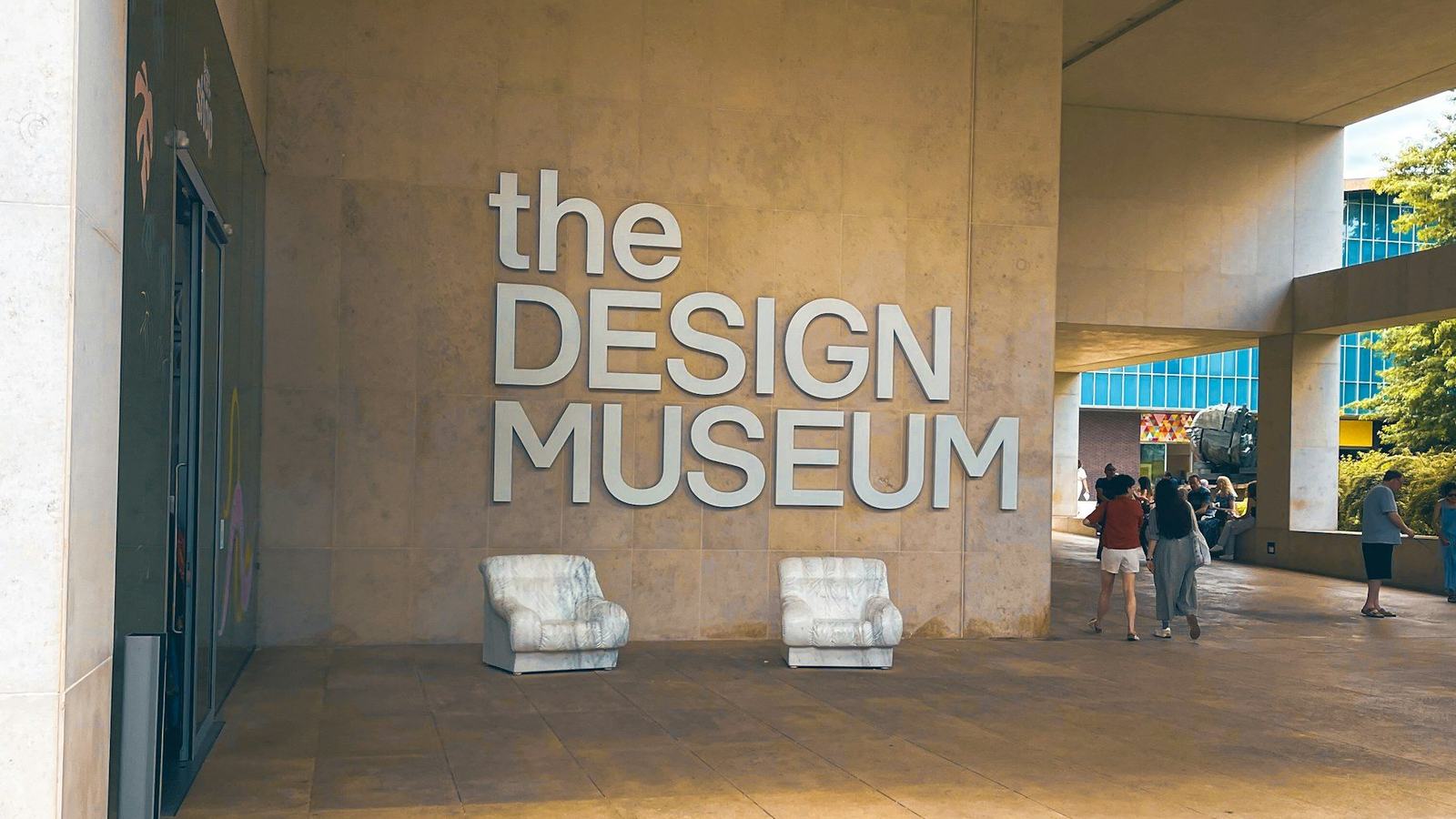
Editorial photograph: photographer and original image — Jack Niles / Unsplash License; entrance to the Design Museum in London, photographed February 2025; not the 2026 exhibition. Cropped and resized under the Unsplash License. Illustrative photograph only; it does not show the 2026 event or named product.
Source
designmuseum.org