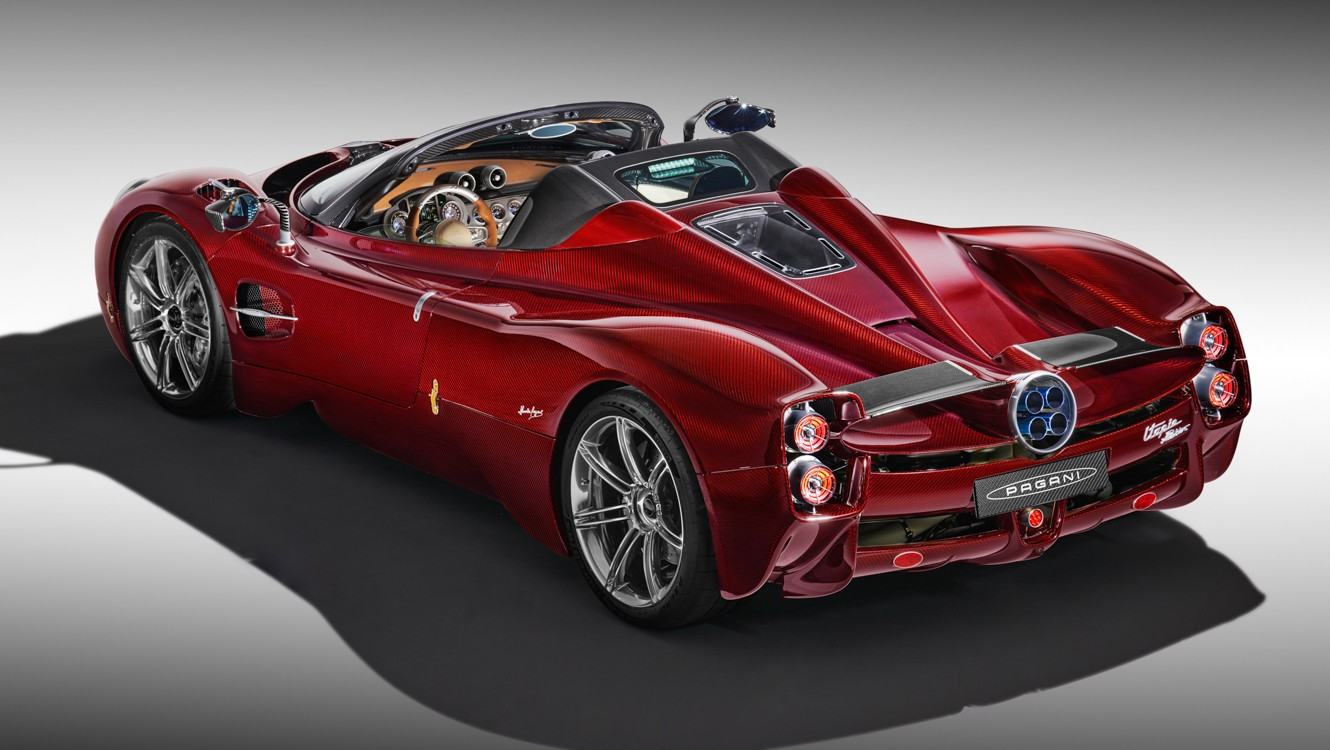
Pagani's Utopia Roadster distils its open-top philosophy into a 1,280kg hypercar, an 864hp V12 and a choice of genuine manual transmission.
A roadster measured in sensation
Pagani's Utopia Roadster has the rare distinction of treating a roofless driving experience as a design problem with an emotional answer. The engineering exercise centres on retaining the Utopia Coupé's dry weight of 1,280 kilograms while introducing the possibilities of open-air motoring. That result matters because mass affects every sensation, from steering response to how willingly a car changes direction. For a collector accustomed to large yachts, where remarkable complexity must remain invisible to the guest, the Italian car expresses a similar philosophy on a far smaller and faster canvas.
An open supercar can sometimes feel like the compromise version of its fixed-roof sibling, asking buyers to trade structural assurance for sunshine. Pagani has instead designed the Roadster with an integrated hard-top and sophisticated composite architecture, creating the flexibility to enjoy either an enclosed cabin or an uninterrupted view. Its sculpted form is unmistakably dramatic, yet the proportions and cockpit continue a long-running emphasis on mechanical honesty. It is best understood as an exercise in how refinement and immersion might coexist, rather than a conventional demonstration of top-speed supremacy.
The appeal is particularly clear when the car is considered within a broader private collection. A yacht provides remarkable reach and comfort, a helicopter can shorten coastal transfers, and a driving car exists for the journey itself. In that context, a roadster with genuine tactile controls adds a deliberately analogue counterpoint to the increasingly automated routines of luxury travel. The experience is about a road's texture, the surrounding air and a direct relationship between driver and machine, not merely another record-setting headline.
V12 character without hybrid insulation
At the centre sits a 5,980cc twin-turbocharged V12 developed for Pagani by Mercedes-AMG. Pagani quotes 864 horsepower and 1,100Nm of torque, formidable figures that might suggest an uncompromisingly aggressive personality. Yet the manufacturer's emphasis is on broad usability and response, with abundant torque available across much of the rev range. The performance is supported by painstaking calibration and engine craftsmanship, offering its owner the opportunity to travel at an unhurried pace without surrendering the possibility of a spectacular acceleration when conditions are appropriate.
Pagani has also chosen to avoid a hybrid powertrain for this model. That decision has consequences for packaging, weight distribution, sound and the character of every change in engine speed. It is not, by itself, an argument against electrified engineering elsewhere, but it does define the distinctiveness of this particular object. Buyers who treasure the orchestration of mechanical components may find the Roadster's priorities more compelling than a vehicle that filters the same journey through additional layers of software and propulsion assistance.
Transmission choice reinforces the point. Pagani offers a seven-speed manual option alongside its automated manual configuration, both developed around the needs of a high-torque mid-engine layout with specialist Xtrac engineering. A physical gear-change action requires attention and rewards judgement, introducing a sense of participation that many owners specifically seek in a weekend automobile. For collectors accustomed to specifying bespoke yacht details, this is a notable luxury in its own right: the freedom to choose engagement over convenience when the drive is meant to be the occasion.
Materials, chassis and purposeful detailing
The Utopia Roadster's core structure combines Pagani's Carbo-Titanium HP62 G2 and Carbo-Triax HP62 composite technologies with tubular alloy subframes. These technical names are relevant because they explain how strength, stiffness and mass are balanced within the vehicle's architecture. A lightweight structure is not useful if occupants lose confidence in the car's composure over an imperfect surface, so the suspension and electronic controls have to work as part of the same package. Pagani specifies independent forged-aluminium double wishbones and electronically managed dampers.
Stopping power comes from large ventilated carbon-ceramic brakes, with 410-millimetre front discs and 390-millimetre rear discs according to the official specification. Forged wheels measure 21 inches at the front and 22 inches at the rear, wearing Pirelli tyres developed for the car. The Pirelli Cyber Tyre system adds sensors that allow tyre data to communicate with vehicle electronics, an interesting juxtaposition against the otherwise emphatically analogue cabin. Here, modern technology operates behind the scenes in pursuit of predictable contact with the road.
Horacio Pagani's styling sensibility also favours the legibility of an object's construction. Exposed linkages, meticulously finished metalwork and carefully considered surfaces make the cockpit feel closer to a contemporary mechanical instrument than a touchscreen-heavy executive car. The point is not that traditional machinery is inherently better; it is that the owner is invited to appreciate and operate the processes that create motion. That sensibility sits comfortably beside bespoke tenders, sailing hardware and fine watches, where visible craftsmanship is often integral to the pleasure of ownership.
The collector's life around an Italian masterpiece
Owning a low-volume performance car calls for different planning from ordering an ordinary road vehicle. Storage conditions, service logistics, suitable tyres and the availability of a knowledgeable specialist can all shape whether the car becomes a regularly enjoyed asset or an isolated museum piece. A car of this calibre may travel between residences and seasonal destinations, but each transfer should be planned with attention to clearances, ground handling and insurance. A private garage's security and environmental control are as important as an inviting driveway.
The best use of a car such as the Utopia Roadster is an itinerary matched to the machine rather than an improvised publicity spectacle. Scenic country roads, carefully selected private circuits and quiet early starts can provide opportunities to experience its control systems without courting unnecessary risk. Local speed limits and road conditions remain paramount regardless of the number shown on the engine's technical sheet. An owner can enjoy the car's appearance and craftsmanship at rest, while reserving its full dynamic potential for appropriately controlled environments.
Collectors may also appreciate the connections between the Utopia's artistry and Italy's longer tradition of coachbuilding, furniture making and specialised mechanical manufacture. The project offers a recognisable design language but rewards close inspection of material transitions, fasteners and the treatment of individual components. It is those quieter details that distinguish an enduring object from an expensive novelty. In a world where many luxury products compete on digital features, Pagani makes a persuasive case that the ability to feel a mechanism at work is itself a rare privilege.