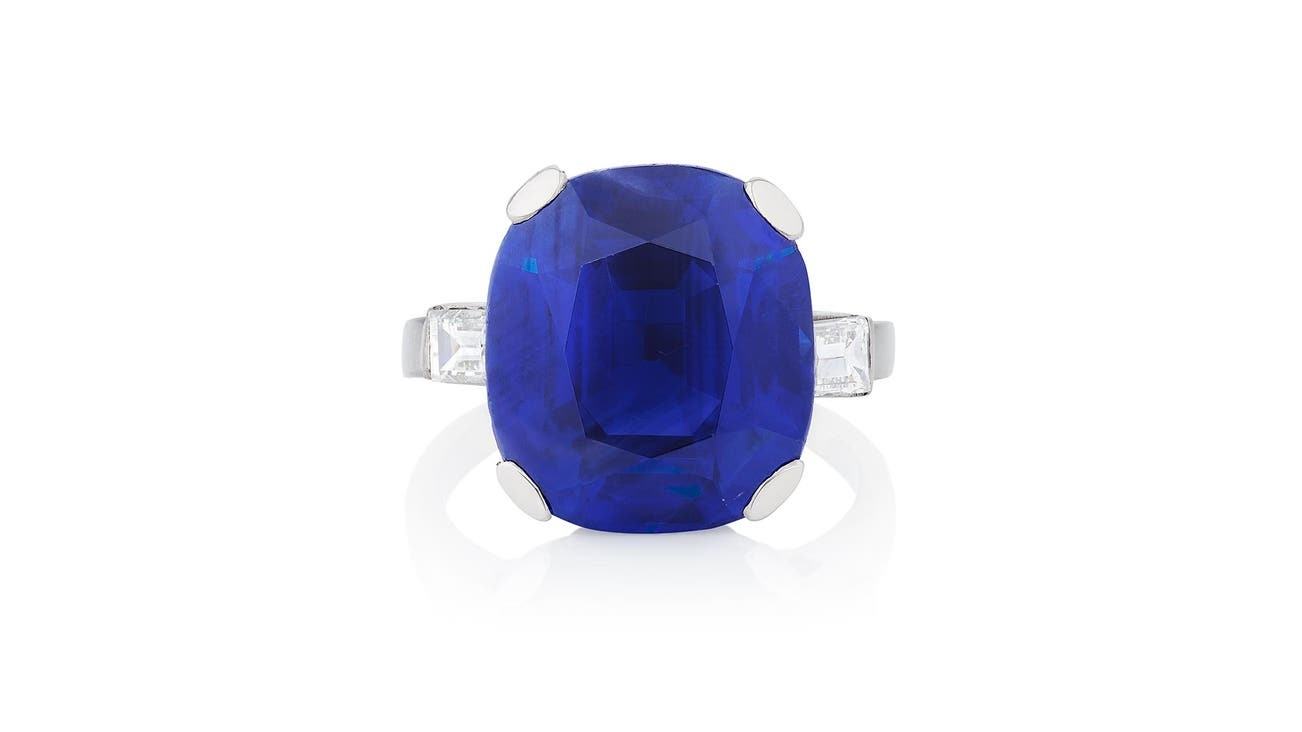
Phillips previews a 1.35ct fancy vivid blue diamond, a 16.40ct Kashmir sapphire and a circa-1928 necklace linked to Queen Mary ahead of its 9 November Geneva sale.
Rare coloured gemstones with a historic royal jewel
Phillips has announced headline lots for The Geneva Jewels Auction VII on 9 November 2026, bringing together coloured diamonds, important sapphires and jewellery distinguished by historic ownership. Among the major highlights is a fancy vivid blue diamond weighing 1.35 carats and an important Kashmir sapphire ring.
The blue diamond carries a published estimate of USD 2.2 million to USD 3.5 million, while the sapphire ring features a reported 16.40-carat stone described as Kashmir origin without heat treatment. Both objects invite buyers to consider colour, rarity and documented gemological findings rather than size alone.
The auction house also points to a circa-1928 Hennell cultured pearl and diamond necklace associated with Mary of Teck, Queen Mary. Its historic provenance opens a different avenue of collecting, where craftsmanship and an established ownership story can matter alongside intrinsic materials.
How gemstone quality is judged
For a diamond classified as fancy vivid blue, colour grading is central to the market conversation. The precise hue, saturation, consistency of colour and clarity should be supported by recognised laboratory reports, and different stones with similar total weights can command very different prices.
Kashmir sapphires have a special place in collecting because historic material from the region is prized for distinctive appearance and comparatively scarce availability. Claims of geographical origin and lack of heating deserve careful evaluation using independent gemological documentation, especially at the upper end of the market.
Even the most impressive catalogue description does not replace a physical viewing. Bidders need to examine the stone’s setting, possible damage, enhancement disclosures and evidence supporting any high-value claim made in the sale literature.
Queen Mary and the appeal of documented provenance
The royal necklace offers a different kind of collecting proposition, connecting the jewellery to a person with a significant place in British royal history. Phillips describes the cultured pearl and diamond necklace as having been made around 1928 by London jeweller Hennell, with a published estimate of USD 150,000 to USD 220,000.
Provenance can add historical interest, but collectors should ask what documentation accompanies the piece and how its ownership chain is recorded. Letters, inventories, period photographs and archival material can all help establish a stronger account of an object’s life.
The use of cultured pearls also illustrates why material distinctions matter. Natural and cultured pearls have different formation histories and valuations, and a historic royal connection should not obscure the need for accurate identification in a catalogue.
A touring preview before the November sale
Phillips has planned international presentations of highlighted lots ahead of the Geneva auction, including stops in Singapore, Paris, London and Taipei. The Geneva exhibition is scheduled for 4 to 9 November at the Hotel President Wilson, with the auction itself on 9 November.
Collectors travelling for a preview should check the availability of individual lots and obtain any relevant condition reports before making arrangements. A display can be an excellent opportunity for personal examination, but a specialist adviser may be essential for assessing stones and historic jewellery.
The November sale is a preview, not a record of realised results, and published estimates should be kept separate from eventual hammer prices and buyer’s premiums. Its appeal lies in the varied collecting motivations represented by important natural gemstones, craftsmanship and royal provenance.
Source
Phillips Jewellery