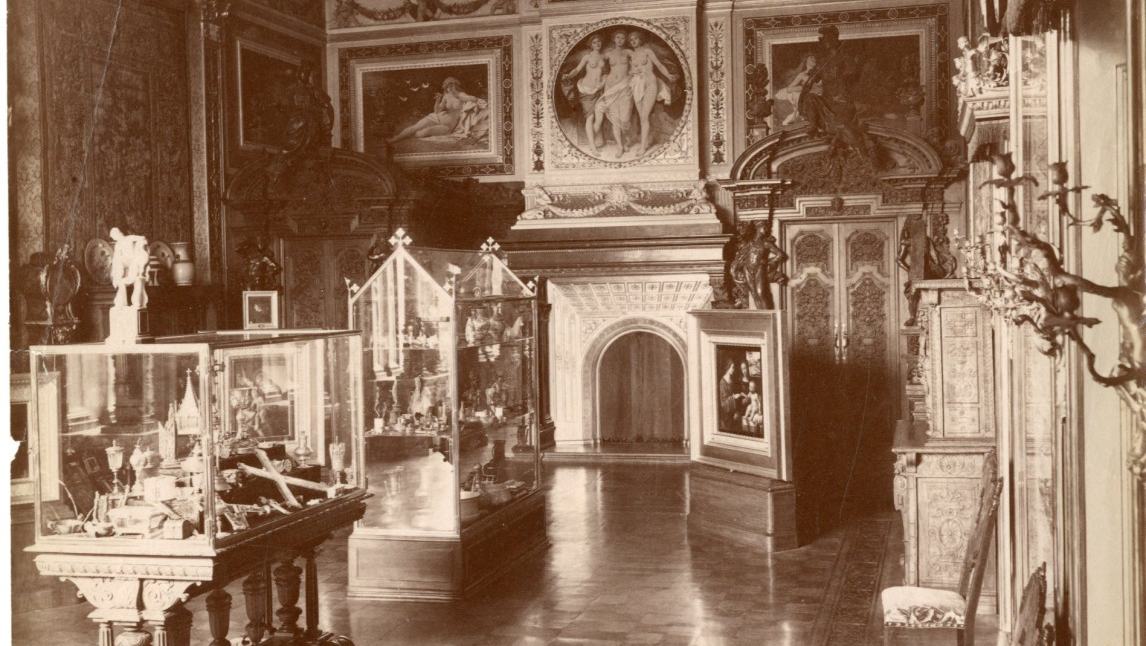
Milan’s Poldi Pezzoli Museum reopens the Golden Room after a conservation project restores its historic proportions and reveals the original marble window.
The restoration of the Golden Room at Milan's Museo Poldi Pezzoli is a particularly rewarding subject for patrons who commission intricate interiors or maintain important collections. Reopened on 15 September 2026, the gallery has recovered the proportions of its nineteenth-century architectural scheme and once again reveals its remarkable marble and bronze window. The museum's account identifies the World Monuments Fund as a partner in the work and connects the undertaking with the establishment of the organisation's Italian chapter. The project offers a case study in working with the accumulated history of a room rather than replacing what survives with an entirely new interior.
For the private collector, the importance of the reopening extends beyond its immediate contribution to Milan's cultural calendar. The room was conceived to provide an appropriately considered setting for exceptional paintings. Its furnishings, structure and decoration were part of that ambition. Such a commission brings to mind the questions faced today by families creating a residence around an important collection, or by owners asking designers to give the principal salon of a large yacht a distinctive identity. This feature looks at what can be learned from that relationship between architecture and objects without treating a museum restoration as a specification for marine construction.
The room conceived around a collection
Gian Giacomo Poldi Pezzoli developed his family home into a series of interiors inspired by different historical periods. The Golden Room was intended as a principal gallery for Renaissance paintings, and the museum identifies works by artists including Botticelli and Mantegna in its account of the setting. Painter Giuseppe Bertini played an important role in transforming the apartment into a museum. The house opened to the public in 1881 after its founder's death.
Modern owners may find the underlying method more interesting than the particular decorative vocabulary. The choice of what a room should contain can become part of its design from the outset. If an important painting is included in the design brief before architects decide upon the positions of windows, doorways and lighting systems, the designer can consider its viewing distance and the proportions of the wall. Where the objects arrive only when the interior has been completed, opportunities to make such relationships coherent may already have been lost. A patron can therefore begin a commission by discussing significant possessions with the architect, even if the intended atmosphere is contemporary.
What the hidden window revealed
The museum recounts that a video inspection in 2005 established the survival of substantial nineteenth-century elements behind a lowered ceiling. Among them was the great marble and bronze window. Its recovery during the latest restoration illustrates the difference between knowing that an architectural feature once existed and establishing how much original material remains available for conservation.
This is a useful distinction for clients undertaking substantial works to acquired historic houses. Before accepting drawings that depict a previous room, the owner should commission the investigations required to understand the present building. Archive photographs may describe the appearance of a lost surface, while opening-up works undertaken with appropriate consent can help establish its underlying condition. The decision about preserving or exposing older elements should follow evidence rather than enthusiasm for a particular period. The result may be more interesting than a simple recreation, because the surviving feature connects a contemporary intervention with the people who originally made it.
The value of the architectural volume
The restored room has recovered a higher internal volume. Ceiling height is often treated in residential marketing as a measure of grandeur, but in a gallery its actual contribution depends on how the room is organised. The distance between the top of the displayed works and the architectural elements above them influences the experience of the paintings, as do the proportions of the walls and the openings into adjacent rooms.
An important contemporary residence might employ a tall salon to create a natural hierarchy between reception rooms and private accommodation. On a large yacht, the relationship between deck height, structural design and services makes the equivalent question more complex. A naval architect and interior designer must consider the envelope that can realistically be made available while preserving the vessel's technical and operational requirements. A client might prioritise additional height in a particular space rather than requesting an unnecessarily complicated extension to every deck. A well-judged proportion can contribute more to the experience of an interior than an extensive schedule of lavish finishes.
Daylight, surfaces and the needs of art
The recovered window makes the history of daylight in the room an important part of the story. A window can be a decorative work in its own right, an element of a larger composition and an opening that changes the way surrounding surfaces are seen. Museums must reconcile the aesthetic qualities of light with the conservation needs of the objects in their care. The most beautiful natural light is not necessarily the safest exposure for every historic painting or textile.
When important artwork is being considered for a private interior, the patron should involve conservation and lighting specialists before installation. They can help the architectural team understand how temporary changes in the room's illumination might affect the proposed collection. A painting on the wall opposite glazed doors may encounter very different conditions from the same work shown in a sheltered alcove. Similar questions arise aboard a yacht, where sunlight reflected from the sea can be intense and where operating conditions change as the vessel moves. The best solution is not a universal lighting formula but a design responsive to the objects and environment actually involved.
Learning from earlier alterations
The museum documents substantial damage during the Second World War and successive attempts to adapt the room. Those stages are part of its architectural history. The 2026 reopening is consequently not the first occasion upon which decisions have been made about how the collection should be arranged. Some interventions responded to the needs of an institution at a time when conserving or interpreting surviving materials posed very different challenges.
Private stewards of important properties can learn from the cumulative effect of changing requirements. A residence created for one generation may be inherited by another with greatly different needs. Carefully documented modifications allow subsequent architects to understand what was replaced, why a decision was made, and which parts of the previous building were preserved. For private yachts, documentation of refits is similarly important, although the technical and legal context is different. Owners should ask their teams to maintain accurate records of major changes instead of relying on the knowledge of contractors or personnel who may no longer be involved when the next programme begins.
The role of specialist craftspeople
The nineteenth-century project drew on several specialist disciplines, including decorative painting, sculpture and bronze work. That collaboration is a reminder that a room is not simply the product of one designer's imagination. Its final character can depend on the skill with which separate trades resolve the points where their work comes together.
For a collector or owner contemplating a bespoke commission, an early discussion about the contribution of individual makers can be particularly productive. One supplier may have extensive experience with particular metals, while another is better placed to advise on timber construction or fabrics. A coordinated full-size sample can help a patron and the design team assess a proposed combination before it becomes expensive to change. The same approach helps prevent the accumulation of details chosen independently that do not work together when seen at the intended scale. It also allows questions regarding future restoration, cleaning and replacement to be addressed while the specialists who understand the construction are still involved.
Philanthropy as part of collecting
The historic founder's decision to establish a public museum illustrates the possibility of a private collection becoming a lasting cultural institution. The current partnership with the World Monuments Fund also demonstrates that its subsequent preservation involves institutions and skills beyond the original owner's lifetime. Cultural stewardship becomes an ongoing responsibility rather than a single generous transaction.
Wealthy families considering philanthropic commitments can approach the subject through a realistic assessment of what the proposed undertaking requires. Establishing a collection, restoring a building or lending individual works to an existing institution involve different obligations and operating costs. Appropriate advisers should clarify the structure and legal context of any proposal, including how resources will be made available over a long period. Sometimes support for a specific conservation project or an existing institution can produce a more useful outcome than establishing an entirely new museum. The most persuasive investment is one based on a clear cultural purpose rather than the assumption that every substantial collection must eventually have its own building.
A considered visit in Milan
Poldi Pezzoli is located near La Scala, making it a natural cultural destination for visitors who are spending time in central Milan. A party particularly interested in the restored Golden Room should consult the museum's current opening information and arrange any specialist visit directly through its published contacts. Access to conservation workshops, individual staff or restricted collections must not be assumed to form part of ordinary admission.
The museum's account of the restoration can usefully be read before arrival. The visitor can then consider what has been recovered, what has been reconstructed and how the paintings inhabit the new arrangement. Some guests will be interested principally in the works of art, while others may find the relationship between decorative techniques and the architectural setting equally memorable. Both are legitimate ways of approaching the room.
For discerning clients planning future interiors, the attraction of the Golden Room is the depth of thought behind its conservation. A visit does not provide a list of finishes to reproduce at home. It offers something more durable: the opportunity to consider a remarkable commission that has been studied, altered, damaged and renewed over generations. The architectural setting and the collection together can stimulate a more informed conversation with the people responsible for creating and caring for exceptional spaces today.
Primary source: Museo Poldi Pezzoli — The Golden Room restored to light.
Historic Golden Room before wartime damage, photographed by Luigi Montabone; source: Wikimedia Commons, Public domain. Image resized and JPEG encoded. Photograph and attribution · Licence.
