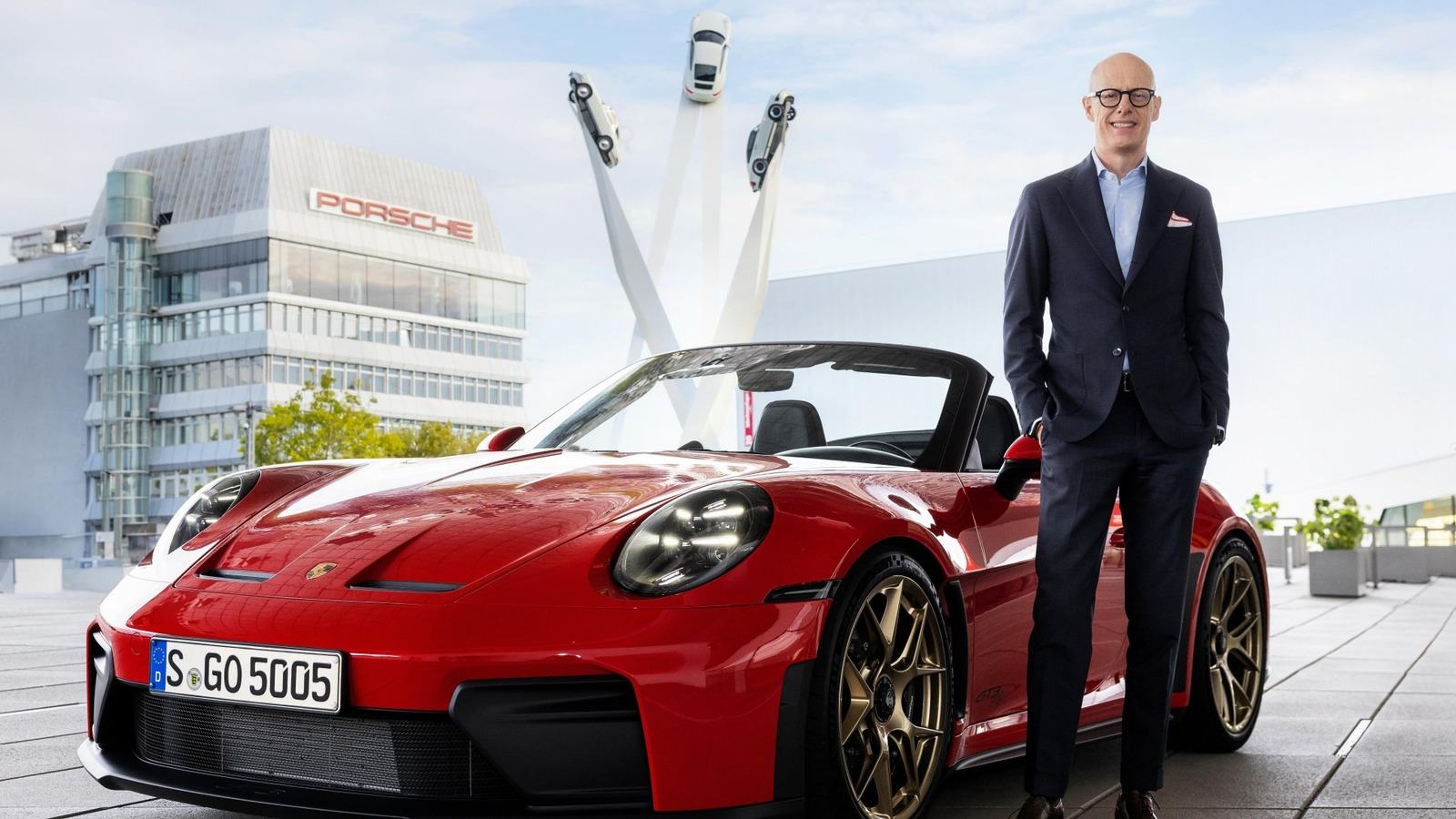
Porsche is expanding its bespoke car ambitions and developing more exclusive halo models under the newly announced Sportwagenschmiede '35 strategy.
Porsche makes exclusivity a strategic priority
Porsche has unveiled Sportwagenschmiede '35, a programme intended to strengthen the brand's sports-car identity and improve its business through 2035. Presented on 7 October 2026 at its Weissach development centre, the strategy places bespoke commissions and higher-value models closer to the centre of the company's future. It also sets demanding goals for production efficiency and profitability.
The announcement describes a programme of intended changes, not a catalogue of finished cars available to order. For collectors interested in rare specifications, the proposals are especially significant because Porsche plans to expand the opportunities to create distinctive factory-built vehicles. The appeal lies in the relationship between individual design and engineering authenticity.
Sonderwunsch enters a new phase
Under the strategy, Porsche aims to increase sales from its Sonderwunsch activities sixfold over the medium term. The programme already enables owners to commission special colours, materials and other factory-approved details, sometimes through highly individual projects. The company now wants that capability to serve a wider range of customers seeking unusually personal cars.
A bespoke commission still requires careful technical and design agreement. Owners must distinguish permitted factory customisation from aftermarket modification and should retain the relevant approvals and build records. The cost of unusual finishes and one-off components also deserves consideration when planning maintenance and eventual repairs.
Performance, exclusivity and heritage meet
Porsche plans to organise specialist activities under the Home of Sports Cars umbrella, with Performance, Exclusiveness and Heritage as its principal pillars. The Performance business includes Manthey, in which Porsche recently increased its ownership stake to 67 percent. The Heritage area reflects the continuing importance of classic cars, restoration and specialist care.
These services appeal to overlapping but distinct groups of owners. A track-focused driver may prioritise circuit performance and training, while a collector may value provenance and originality. Expanding both within one strategy could strengthen the ownership experience, provided each activity is supported by appropriate expertise.
A potential new supercar could sit above the 911
One of the most intriguing proposals is a new mid-engined super-sports-car platform capable of supporting a model line positioned above the 911. Porsche has indicated that a preview could follow on 15 October, although the information supplied so far does not establish a final production specification or delivery date. Further emotive 911 derivatives are also anticipated.
Collectors should treat any preview as an indication of future design direction until the manufacturer confirms the finished technical package. Chassis engineering, thermal management, aerodynamics and usability will determine whether a halo vehicle delivers more than a dramatic launch appearance.
Multiple powertrains remain part of the plan
Porsche says it will continue developing combustion, plug-in hybrid and battery-electric vehicles rather than committing every model to one type of propulsion. The strategy envisages the electric 718 Boxster and Cayman supporting sales in 2028, together with additional high-end SUVs and future products in profitable categories.
That flexibility reflects the differing needs of sports-car owners. Some value the quiet response of electric propulsion, while others choose long-distance touring convenience or the character of a high-performance combustion engine. Actual environmental impact depends on use, energy supply and lifecycle considerations, not simply the propulsion label.
The value-over-volume idea is explicit
Porsche aims to raise the average selling price of its top models by approximately twenty percent in the medium term and to reduce the complexity of the range. Its plan includes a reduction of roughly twenty percent in model variants, while adding greater individual choice within selected products. The intention is to strengthen value per car rather than chase volume at any cost.
These targets are commercially ambitious and depend on execution and customer response. Higher prices do not automatically make cars more collectible, and scarcity must be assessed alongside production numbers, specifications and long-term desirability. Owners should separate factory intentions from verified market outcomes.
Craftsmanship also needs long-term support
An elaborately personalised car may contain special paints, leather treatments or tailored fittings that require more attention than a conventional specification. Porsche's strategy also includes improvements in perceived quality and aims to reduce warranty costs, signalling that exclusivity needs robust ownership support if it is to remain compelling.
Proper documentation and planned care are particularly important to owners whose collections are spread across several properties. Original factory invoices, technical records, service histories and correct storage conditions contribute to preserving a vehicle's condition and usability over time.
The next steps are not yet confirmed products
With a potential mid-engined platform preview planned for 15 October, the coming months should provide a clearer picture of Porsche's highest-performance ambitions. For now the verified news is the strategic direction, its personalisation targets and its intended investment in future vehicles.
Sportwagenschmiede '35 could expand the opportunities for collectors seeking factory-recognised individualisation. Its success will depend on the substance of the cars and services Porsche ultimately delivers, not just the exclusivity promised by an ambitious business presentation.