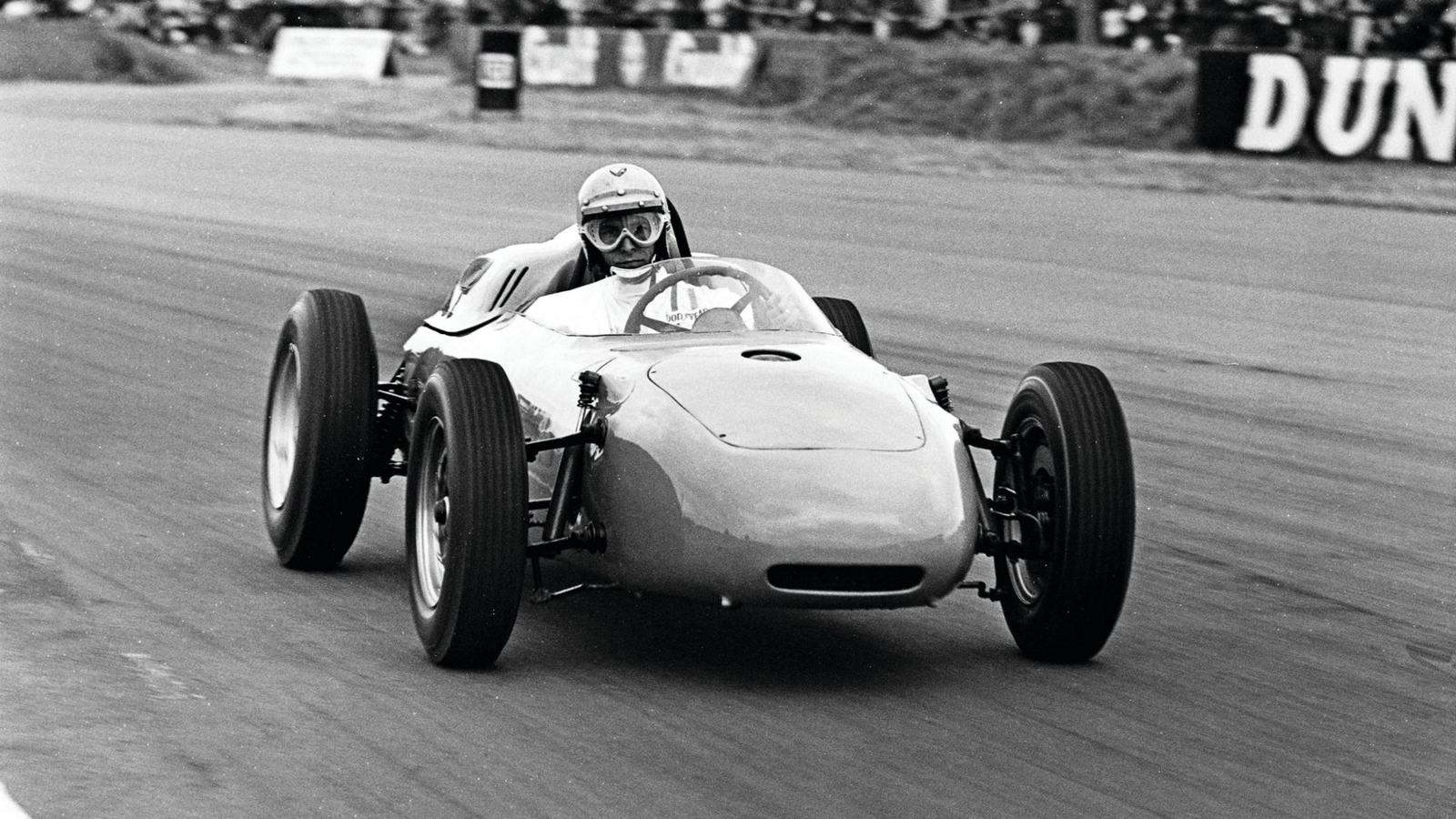
Porsche revisits the 718/2, its unlikely 1961 Formula One contender, revealing how competition history and engineering evidence can inform serious car collections.
A competition car whose history defies its original purpose
Porsche's heritage feature of 13 November 2026 revisits the 718/2, a racing car that grew out of the company's 1957 RSK sports-car programme before becoming an unexpectedly effective Formula One contender. Its 1961 results included three second-place finishes, and Porsche ended the season third in the constructors' championship. The story has renewed relevance for collectors who value historic competition machinery because it shows how an important racing identity can develop through successive adaptations rather than emerge fully formed from a single design brief.
There is a distinction between a historic vehicle that is interesting as an industrial object and one whose particular identity is established by its participation in a historic event. The 718/2 is worth understanding on both levels. Its engineering origins explain why the car looked and behaved as it did. Contemporary competition records help explain why it occupies a distinctive position in Porsche's history. For collectors, those two strands should complement one another instead of relying on the prestige of the marque or an attractive racing photograph alone.
The evolution from sports car to single-seater
The 718 programme originated in a different form of racing from the one in which it later became a Formula One contender. Porsche traces the development of its single-seater to the RSK, whose engine capacity and aerodynamic characteristics made adaptation for Formula Two possible. One early conversion repositioned the driver centrally and eliminated elements of the sports-car layout that were no longer needed. Jean Behra's performance at Reims in 1958 gave the programme an encouraging competitive result.
The development illustrates why the history of a specific competition chassis can be more complicated than a model designation suggests. Racing cars were working instruments whose purpose was to compete as effectively as possible under the regulations of the day. Changes to bodywork, mechanical components or equipment could be part of their normal working lives. A collector should therefore consider a car in relation to the period or configuration it is claimed to represent. A configuration that differs from its first appearance is not necessarily historically inappropriate. The relevant question is whether that configuration can be supported by evidence of the vehicle's own development and use.
A regulation change altered the competitive opportunity
The introduction of the 1.5-litre Formula One rules in 1961 opened the possibility of using engineering already developed for Formula Two. Porsche initially intended its newer 787 to carry the programme forward. When that car proved less satisfactory than anticipated, the earlier 718/2 returned to the centre of its efforts. This sequence is significant because it demonstrates that a theoretically newer design does not invariably produce a more effective competition car. Familiarity, accumulated setup knowledge and development maturity can be valuable advantages.
An understanding of the rules governing competition is therefore central to interpreting historic machinery. Engine capacity, permitted weight and other technical requirements can create conditions in which engineering choices that were previously uncompetitive become advantageous. A collector reviewing a race car should establish which series it was developed for and which technical regulations applied when particular components were fitted. Otherwise a later change may be interpreted as an improvement or deterioration without recognising the different requirements that originally motivated it. The car's history is part of the history of the sporting rules.
Gurney's results give the car its competitive context
Dan Gurney scored points equal to Stirling Moss in the 1961 drivers' championship according to Porsche's feature. The marque's three runner-up finishes that season included a particularly narrow loss in France. Those results are the basis of the car's enduring significance as a serious competitor rather than merely an unusual experiment from a manufacturer better known for its sports cars. They also put Porsche's subsequent Formula One programme into perspective without diminishing the importance of its later 804.
For a buyer considering any historic racing car, it is essential to distinguish achievements attributed to the model from results that a given chassis actually recorded. A description of a car as being of the type driven by a famous competitor is not equivalent to a documented history of that competitor driving the particular example. The same distinction applies to a historic photograph in which a racing number can be seen but the chassis identity cannot be established from the photograph alone. Results sheets, original entry documentation, team records and ownership histories can all contribute to establishing a connection. Where gaps remain, they should be represented as gaps rather than filled with assumptions.
Understanding the engineering behind its low mass
Porsche's published specification identifies a steel spaceframe, a 1.5-litre air-cooled flat-four engine developing 165 PS, a six-speed manual transmission and a weight of 456 kilograms. The independent suspension employed a transverse torsion bar arrangement at the front and coil springs over telescopic shock absorbers at the rear, with a Watt linkage. These details help frame the car as a carefully integrated lightweight machine rather than an object defined only by its available engine output.
For a collector accustomed to modern high-performance vehicles, it can be instructive to consider the different character of a historic competition car. A very low mass changes how steering, acceleration and braking are experienced. The simplicity of the visible cockpit need not imply that the engineering underneath it is unsophisticated. Conversely, appreciating the original design does not require ignoring the limitations of its period. The vehicle's operation, maintenance and intended use ought to be understood in its historical context. An owner should consult specialists familiar with that particular design rather than assume that experience with modern versions of the marque is sufficient.
Restoration requires a distinction between originality and condition
Historic racing vehicles often present complex preservation decisions. Components can have been replaced during competition, and repairs may have been performed for the practical purpose of returning a car to service. Much later, a restoration may aim to show the car in the configuration it used during a particular period. Establishing which elements survive from that period and which have been subsequently manufactured or sourced is important to an accurate understanding of the object.
There is no universal restoration strategy that applies equally to every surviving competition car. A vehicle preserved as an important static artefact may require a different programme from one regularly operated at historic events. Decisions about replacing consumable materials and safety-critical components should be recorded clearly rather than disguised as untouched originality. Preserving evidence about changes can be as important as preserving the physical parts themselves. Where possible, owners should maintain records of work, retain documentation from specialists and distinguish between confirmed specifications and informed reconstruction. This provides a more reliable basis for future conservation than an undocumented effort to make a car appear as new.
A collection needs a considered approach to operation
A collector intending to drive historic racing machinery must make arrangements beyond those necessary for presenting it in a private gallery. Age and rarity do not remove the need for appropriate mechanical inspection, competent support and safe operating procedures. If a vehicle is to appear at an event, its participation may depend on both organiser requirements and an assessment of the condition of the particular vehicle. These are separate matters from the car's historical importance.
The intended programme can determine what support infrastructure is appropriate for a private collection. Some owners maintain facilities with access to experienced technicians, while others entrust the vehicles to a specialist able to provide storage, transport and maintenance. In either case, starting and moving the car on an occasional basis is not necessarily adequate evidence of its mechanical condition. The technical specialists responsible for its care should establish a maintenance plan suited to that machinery and the manner in which it is used. Travel between residences, exhibitions and the events attended by an owner's party can be arranged around the requirements of the vehicle rather than assuming it is always available on short notice.
Collecting the history rather than merely the reputation
The 718/2's unusual route from a sports-car design into top-level single-seater racing offers a useful example of a machine whose appeal is not adequately conveyed by a manufacturer badge alone. The contemporary engineering and the competitive circumstances explain why its results deserve attention. Porsche's latest feature is accompanied by archival material that gives readers a point of entry into that history.
The publication is not a sale announcement, a valuation or a statement that a named car is available for acquisition. No price or investment return is established by the historical record discussed here. What the feature does offer is an opportunity to refine the way a serious automotive collection is considered: a model's engineering, the evidence of its competition history, the provenance of the individual example and the conservation plan should each receive attention. That perspective is particularly valuable in collections assembled over many years, where an understanding of the relationships between different machines can create a more coherent account of the evolution of motor sport than a succession of celebrated names.
Primary source: Porsche Newsroom, 13 November 2026.
Porsche AG — archive photograph accompanying the 13 November 2026 Porsche Newsroom feature. Official source.