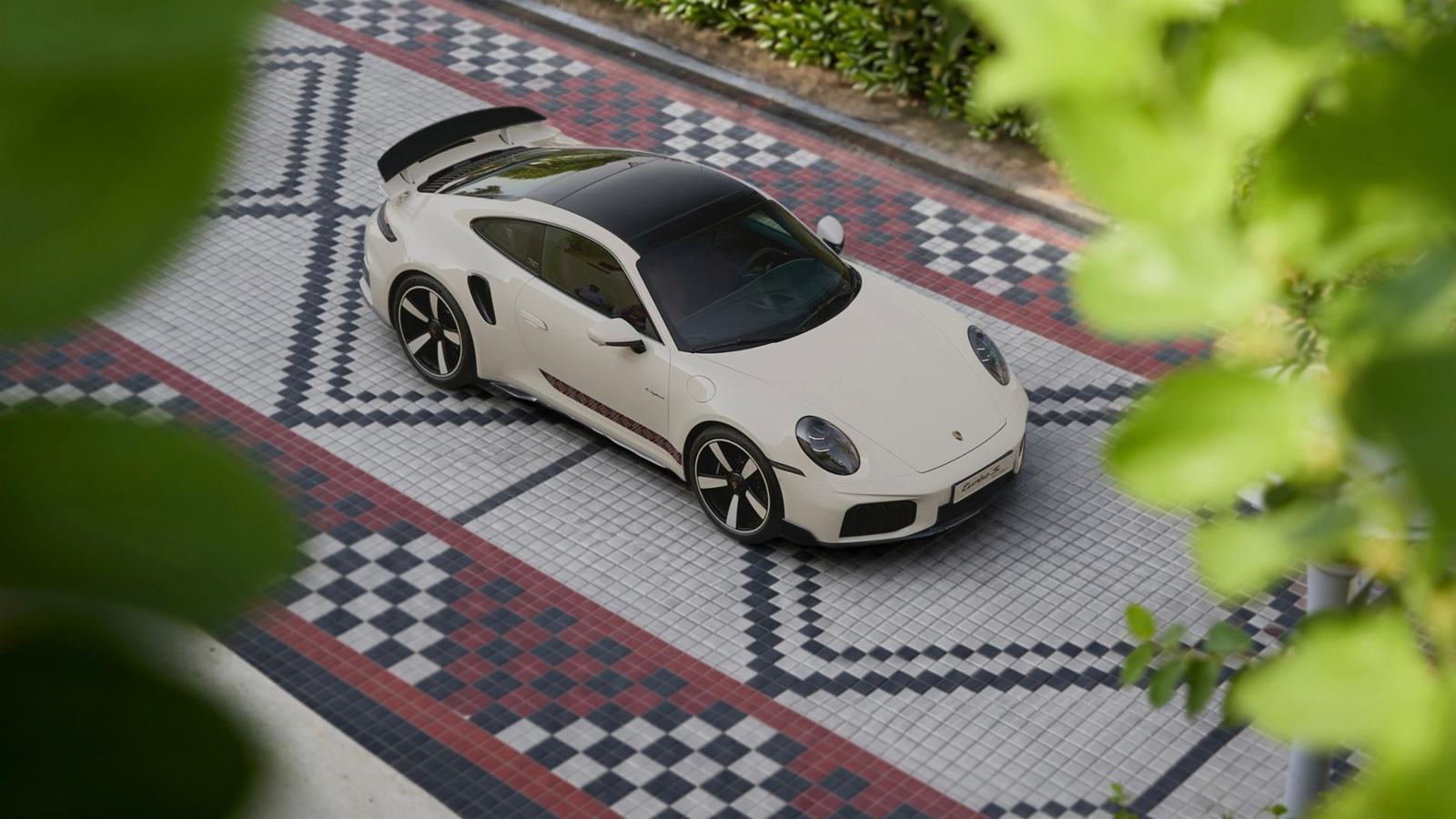
Porsche's Kuwait-exclusive 20-car Sadu Edition makes its scheduled international public debut in Dubai, celebrating seven decades and traditional textile craft.
A Porsche created to mark seventy years of the marque's presence in Kuwait will make its first public appearance outside the country at Icons of Porsche in Dubai on 21 and 22 November 2026. The 911 Turbo S Sadu Edition is limited to twenty vehicles, offered exclusively in the Kuwaiti market. Porsche confirmed the Dubai appearance on 3 November through its official newsroom, following the car's earlier unveiling in Kuwait.
The collector interest in this particular vehicle is not confined to its production figure. It grew out of a partnership between Porsche's regional and local teams and AlSadu Society, the organisation working to preserve and promote Kuwait's traditional weaving culture. Rather than introducing another internationally available special edition, the manufacturer has developed a geographically specific commission reflecting a local relationship with the brand and the country's textile heritage.
A sports car with a specific cultural identity
Limited editions in the luxury car market take several forms. Some commemorate a racing success, others mark an anniversary, while still others explore new treatments of colour, materials or interior design. The Sadu Edition draws its references from outside the conventional vocabulary of automotive design.
Al Sadu weaving is associated with desert life and knowledge transferred across generations. Its geometric motifs and repeating arrangements have a practical relationship with the production of woven bands, in addition to their visual appeal. Porsche describes the special edition as a translation of this design language into the treatment of a modern sports car.
The car is not itself a traditional textile object. Its significance lies in the collaboration that led to the interpretation of the motifs, the relationship with Kuwait and the resulting design choices.
An anniversary rooted in Kuwait
Porsche's account traces the concept to the Behbehani family's association with the historical Al Sadu House and the arrival of an early Porsche 356. The anniversary marks seven decades of the company's presence in its oldest market in the region. That local historical connection helps explain why the edition has been reserved for Kuwait.
The brand's Middle East and Africa office began discussions on the project in January 2022. In March 2023, the proposal was shared with Porsche Centre Kuwait and members of the local team visited AlSadu Society. The collaboration was confirmed the following month. A separate Taycan-related project in 2024 preceded the anniversary car.
Those stages demonstrate that the special edition was developed over several years. It is not simply a vehicle that received a commemorative emblem shortly before its introduction. For collectors interested in the origin of bespoke cars, knowledge of that process contributes to an understanding of the final object.
The contribution of the weaving specialists
Porsche says AlSadu Society provided cultural background, visual references and other material during the design programme. That participation is relevant when a manufacturer bases a product on the heritage of a community distinct from its own established design tradition.
An interpretation of an ornamental motif can lose much of its meaning when it is treated purely as a visual resource. Knowledge of the techniques used to produce motifs, their placement and their relationship with the underlying craft can help designers understand which elements can be adapted. Collaboration with people familiar with the original practice gives the resulting work a more substantial connection to its inspiration.
Porsche also notes the UNESCO intangible cultural heritage recognition of the weaving tradition in 2020. That recognition concerns the practice and its transmission, not particular luxury goods that make reference to it. The special edition should be considered a contemporary interpretation, rather than a product certified by UNESCO.
From loom to automotive design
Transferring the visual character of woven bands to an automobile presents different constraints from making a textile in its original form. Surfaces within a sports car must follow complex shapes, accommodate functional requirements and remain suitable for repeated contact over a long service life. Designers must consider how individual elements interact with adjacent materials.
The process is comparable in some respects to a bespoke interior commission for a superyacht. An owner might commission specialists to adapt traditional techniques or materials to an environment in which weight, maintenance and exposure to different conditions matter. Successful design requires the original inspiration to coexist with the technical demands of the finished object.
Porsche's announcement presents the car as an example of how these requirements can be brought together. It does not set out a separate performance specification for the edition or announce engineering modifications for the Dubai appearance. Interested collectors should consult vehicle-specific documentation for those details.
Twenty examples and the question of provenance
The announced production of twenty cars places the Sadu Edition in a small group of vehicles, but quantity alone does not determine future collector value. Potential buyers may consider the originality of individual cars, the condition of their bespoke finish, completeness of documentation and the particular character of this edition.
For someone acquiring such a commission, documentation establishing the original specification can be especially valuable. In later years, alterations could make it difficult to distinguish a factory detail from an aftermarket interpretation. Maintaining a record of dealer work and repairs can support the preservation of the car's intended appearance.
The allocation's exclusivity to Kuwait also means international collectors should not assume they can order one through another dealer. A subsequent private sale would involve separate questions of availability, registration and applicable import and export requirements. The November announcement does not establish an international selling price or guarantee that any examples remain available.
Dubai provides an international audience
The sixth Icons of Porsche festival is scheduled to take place at The Square, Nad Al Sheba, on 21 and 22 November. According to the manufacturer, this will be the first public presentation of the Sadu Edition outside Kuwait. It allows visitors to see the result of the project without travelling to the market for which it was originally commissioned.
Exhibition and allocation remain different matters. Porsche has not announced that the market restriction has been removed or that additional vehicles will be manufactured. Festival visitors should treat the appearance as a presentation of an existing limited edition.
The occasion also provides a setting in which collectors can compare different approaches to individualisation. Historic vehicles and contemporary commissions may appeal to different audiences. This project demonstrates how a manufacturer can engage with a local design tradition without changing the geographical origins of the marque.
A journey through the places behind the design
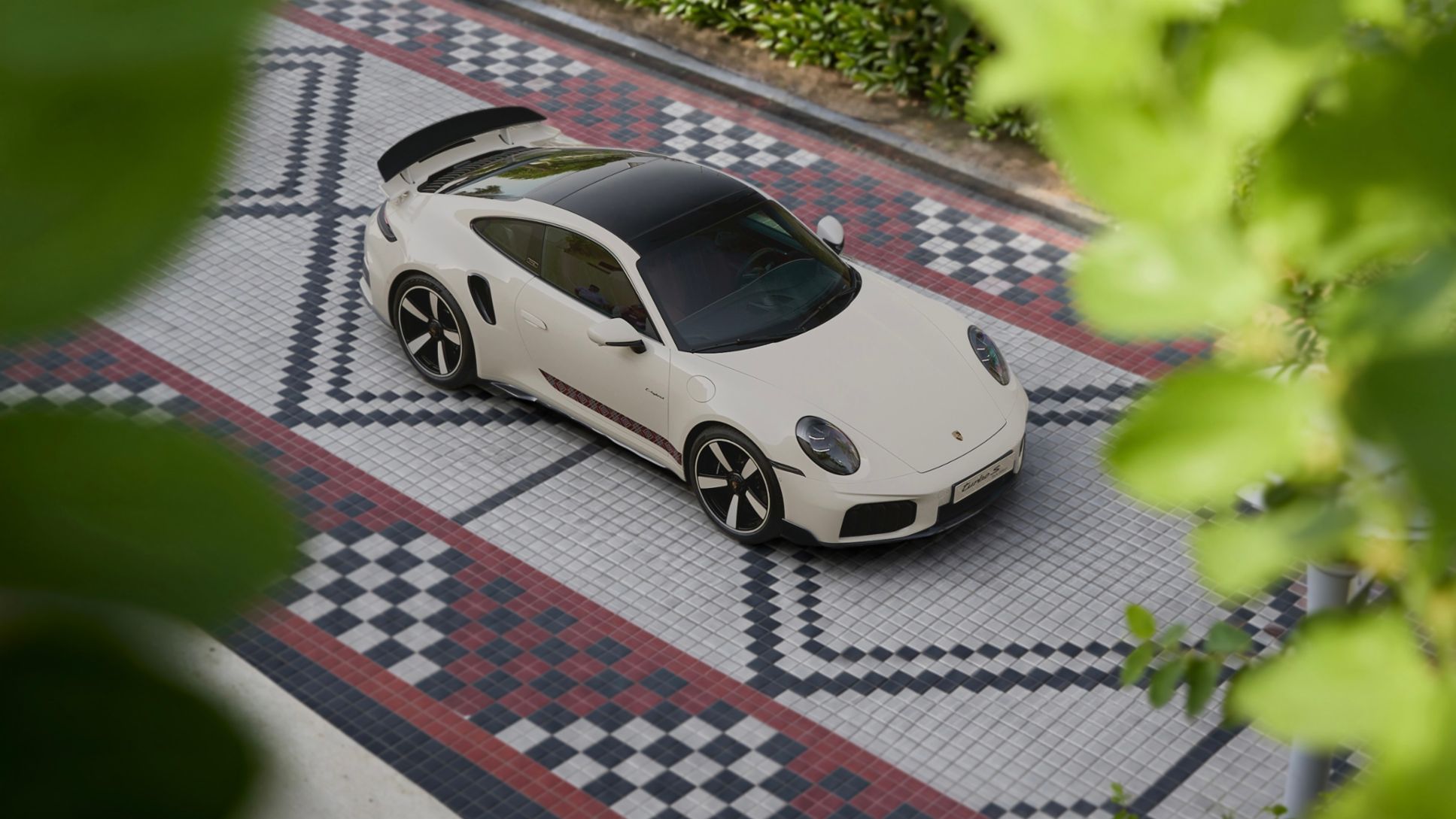
Porsche's account of the edition describes a tour of Kuwait following its unveiling. The locations included the Sheikh Jaber Al Ahmad Cultural Centre, the Behbehani House Complex, Souq Mubarakiyah and AlSadu Street. The company also photographed the vehicle at Kuwait's Arabian horse centre and in the modern urban setting of Kuwait City.
The accompanying official imagery places automotive design alongside the architecture and visual culture that informed the project. For someone interested in collecting, this provides an unusually direct connection between a manufactured object and the places its designers intended to reference.
That documentation will remain important after the Dubai festival ends. A vehicle's presentation photographs are part of its historical record, particularly when a manufacturer has commissioned images for a specific anniversary. Such photographs cannot replace maintenance and ownership documentation, but they can help explain how the car was originally presented.
Beyond the vehicle itself
Porsche Centre Kuwait and AlSadu Society are developing cultural activities intended to make the weaving tradition more accessible. The company describes plans for experiences associated with Al Sadu House and introductory weaving workshops at the dealership. People can encounter the processes behind the design without owning one of the cars.
For collectors interested in other bespoke objects, that educational dimension is worth considering. A collaborative project can help participants understand those who continue to practise a craft, rather than focusing solely on the exclusivity of the finished product. The continued involvement of a cultural organisation helps distinguish commercial interpretation from the underlying tradition.
A different approach to rarity
The Sadu Edition is a commission whose significance comes partly from the relationship between limited manufacture and a specific cultural context. Its first public display outside Kuwait is scheduled for later this month; at the time of this report it has not yet occurred.
The more enduring point for luxury collecting is that these commissions can be understood through the histories of the people, places and design practices involved, rather than exclusively through production statistics or assumptions about resale value. The car may be a modern performance machine, but the references that differentiate it belong to a much longer history.
Primary source: Porsche Newsroom Middle East.
Photo: Porsche AG / Porsche Middle East and Africa, official Sadu Edition Dubai appearance press gallery; photographed in Kuwait. Official source.
Source
Porsche Newsroom Middle East