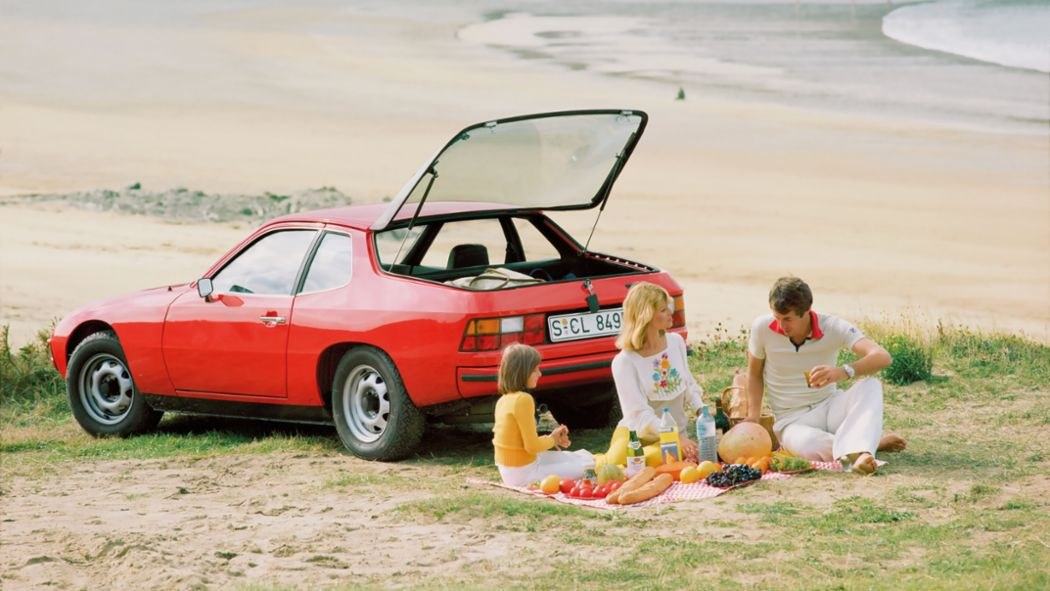
Porsche is marking 50 years since the 924 introduced a front-engine, rear-transaxle formula alongside the 911.
The 924 challenged the established Porsche formula
Fifty years ago, the Porsche 924 introduced a front-mounted engine and rear transaxle to a brand then strongly associated with rear-engined sports cars. The architecture created a new product family alongside the 911 rather than replacing it.
The car also offered genuine 2+2 seating, a large rear hatch and more everyday practicality. Advertising eventually described the idea as a family sports wagon, underlining how deliberately different the concept was.
A blank-sheet design created new proportions
The programme began as an engineering project for Volkswagen before becoming part of Porsche’s own range. Designers therefore worked without relying heavily on existing Porsche forms, creating an elongated nose, sharp surfaces and a broad glass hatch.
Moving the transmission to the rear helped distribute weight more evenly between the axles. The technical layout influenced the visual proportions and later provided the foundation for other Porsche transaxle models.
Bold decisions can strengthen a brand
The 924 was controversial precisely because it questioned assumptions about what a Porsche had to be. Over time, the model helped broaden the company’s customer base and supported the business through an important period of change.
For collectors, that history gives early transaxle cars a deeper significance. They represent a moment when Porsche proved that brand identity could survive a radically different mechanical layout.
Source
Porsche