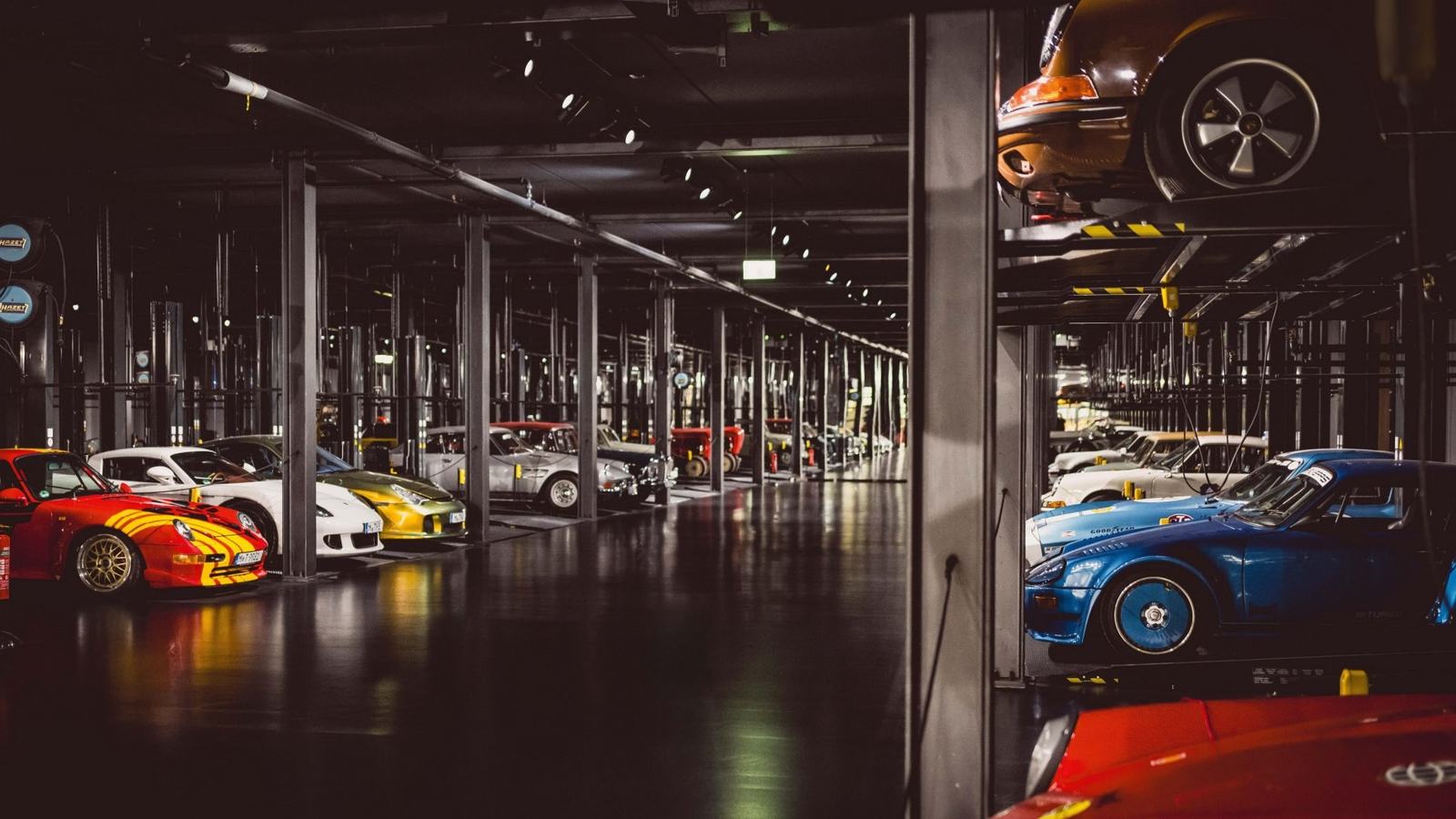
Porsche profiles Thomas Schlereth's Banzai Legacy Lab near Lake Starnberg, where racing cars, contemporary art and skateboards express a personal collecting philosophy.
A collection designed as a place to experience Porsche's newsroom has profiled the Banzai Legacy Lab near Lake Starnberg in Bavaria, a private collection created by architect and enthusiast Thomas Schlereth. Published on 12 November 2026, the story explores a distinctive approach to high-end car collecting in which remarkable vehicles are intended to inspire activity and conversation rather than simply stand behind ropes. Historic racing machinery, road-going Porsches, skateboard culture and contemporary design share the space. The premise is timely for collectors who already know what it takes to acquire a rare car but are asking what should happen after it arrives. Schlereth's answer is not a conventional garage with more polished concrete: he treats the cars as part of a living cultural environment.
The architect's theatrical solution Schlereth approached the space as an architect. Porsche describes a windowless interior in which precisely arranged lighting gives the cars the presence of performers on a stage. A mirrored wall removes the obvious visual end point and amplifies the sense of depth. This is more than a dramatic photograph: exhibition architecture changes how a collector and their guests read an object. The shape of the room, height of the ceiling and direction of light can determine whether a car is perceived as an engineering machine, a sculpture or a reminder of an era. There is also a practical tension. Strong display lighting, heat and accessibility must be balanced against the preservation requirements of paint, leather, rubber and sensitive historic components.
Cars with an identifiable story The collection includes significant competition and performance cars, with Porsche identifying examples such as a 911 GT2 of the 993 generation, a 962 C and a 911 Carrera RSR 3.0. The 962 C has a particular racing history: Porsche says the example was used by the Schuppan Takefuji team in the 1989 24 Hours of Le Mans. That documented connection is different from a general claim that a model once raced at Le Mans. For serious collectors, the chassis history and the provenance of individual parts can matter more than the headline rarity of a model. Owners should distinguish verified vehicle histories from attractive anecdotes and keep technical, ownership and restoration documentation together in a secure archive.
Preservation does not require permanent inactivity Porsche portrays Schlereth's cars as cultural objects that remain capable of generating fresh experiences. That principle is familiar among collectors who believe machinery should sometimes operate rather than be immobilised for decades. It also calls for discipline. Running an older racing engine may require specialist fuel, suitable parts and people who understand its maintenance intervals. Tyres, brake systems, belts and safety equipment can age while a car sits motionless. There is no universal right answer about how frequently a rare car should be driven. The important decision is to document the intended use, maintenance philosophy, insurance conditions and preservation risks, then choose experienced specialists who can support that approach.
The significance of the Banzai name Schlereth revived the historic Banzai skateboard identity in 2020, according to Porsche's account, recalling a brand he admired when young. The company had disappeared in the late 1970s, but its memory remained connected to a culture of movement and experimentation. Bringing skateboards alongside sports cars may seem unexpected only if collecting is treated as a contest of prices. Both can be objects of functional design and markers of particular communities. Porsche emphasises the idea of finding one's own rhythm, a useful way to understand why the Lab does not seek to separate automotive heritage from visual art, music or other creative interests. The mix reflects its founder's values, not a standard museum classification.
Art cars ask a different collecting question The official gallery includes a Porsche 928 art car associated with graphic designer Paula Scher. An art car occupies a category between design collaboration and vehicle history, and its valuation or conservation cannot be reduced to mechanical condition alone. Collectors should establish which artist created the treatment, whether it was commissioned, how it was documented and whether the vehicle's appearance is original to that intervention. Those questions are different from examining the factory specification of a production car. The presence of artistic collaborations at Banzai underscores the Lab's ambition to connect disciplines without claiming that a decorated car is equivalent to a unique canvas or that every automotive graphic is a fine-art work.
What a private collection can contribute to culture Not every significant collection is a public museum. A private owner can nonetheless foster learning by sharing stories and objects with selected groups, researchers, technicians or other enthusiasts. The Porsche report describes Schlereth's interest in connecting people, which gives his collection a social dimension beyond display. The article should not be taken as announcing public opening hours, ticket sales or unrestricted access: Porsche provides no such invitation. That distinction matters to readers considering a visit. For a collector commissioning a similar space, the first questions may involve who the building is for, what kind of encounters it should support and how the privacy and security of important objects will be protected.
Collection architecture is also engineering The design of a specialist automotive building involves many invisible requirements. Floor loading, ventilation, fire protection, humidity, power supply and safe movement of vehicles can all affect the longevity of a collection. Older racing cars may need lifting equipment and workshops quite different from those used for contemporary sports cars. Museum-quality lighting and climate systems are only helpful when they are maintained and monitored. Porsche's feature offers a glimpse of the visual concept but does not publish all the Lab's technical specifications. Readers should therefore avoid assuming that a beautiful room meets any particular conservation standard without independent verification. For collectors planning a facility, professional engineering should precede final styling decisions.
The emotional logic of collecting A valuable collection is not always organised around completing every generation of a model. Some owners select cars that mark personal milestones or a lifelong fascination with racing, form or design. That emotional logic can appear inconsistent to outsiders while making perfect sense to the owner. Schlereth's combination of historic Porsche racers and skateboard references is an example of a collection with a deeply personal narrative. It also reveals why a collector may choose to commission a distinctive building rather than rely on anonymous storage. The surrounding space becomes part of the ownership experience and a way to explain the relationship among objects that would otherwise seem unrelated.
Risk management behind the atmosphere A theatrical display environment must still be managed like a valuable asset collection. Fire and security procedures, specialist insurance, controlled access and records of restoration are essential. A guest touching an old paint finish or stepping too close to a delicate vehicle can cause harm even when intentions are good. There is a useful parallel with the private yacht world, where owners curate spaces containing art and specialised equipment that must survive movement and changing climates. Neither a yacht nor a gallery is just a photograph. Each requires procedures to maintain the condition of what is displayed, clear responsibility among staff and appropriate professional advice about transporting or using important objects.
Why this matters to yacht owners Superyacht ownership and rare-car collecting intersect in the desire to commission objects that represent individual taste and technical ambition. Both involve a relationship with craftsmen and specialists, sometimes lasting for many years after delivery. The Banzai story offers a useful challenge to owners thinking about private collections at home: instead of asking only which object to buy next, ask what experiences the collection should make possible. This does not imply that Porsche's Lab is a yacht showroom or a facility operated by a yachting business. It belongs in the ultra-luxury lifestyle desk because it illustrates a wider collector philosophy relevant to affluent owners and design-minded guests.
A story about cultural continuity, not an auction There is no asking price, auction estimate or collector-car investment return in Porsche's 12 November feature. The company profiles a person, his vehicles and the architectural setting in which they are brought together. It does not establish the collection's monetary value, public accessibility or future acquisition plans. That makes it unusually refreshing among luxury-collecting stories: the emphasis is not on what a record-breaking sale might achieve, but on the relationship between historical objects and present-day activity. Schlereth's Banzai Legacy Lab is a reminder that significant collections can derive meaning from use, conversation and memory as well as from rarity.
The enduring question of ownership For collectors with substantial resources, the challenge is rarely limited to acquiring an object. Stewardship asks how it should be maintained, documented, enjoyed and eventually transferred. An architecture-led environment such as the Banzai Legacy Lab can make those considerations visible. The cars remain recognisable as machines and cultural artefacts, while the building gives them room to tell their stories. Whether an owner chooses a public institution, a private workshop or a carefully curated personal building, the strongest collections tend to have a coherent purpose that survives beyond the excitement of a new purchase. Porsche's profile provides one thoughtful contemporary example of that idea.
**Primary source:** Porsche Newsroom, 12 November 2026. Subject-specific images are official Porsche AG media photographs. No independent visit or interview is claimed.
Primary source: Porsche Newsroom.
Photo: Porsche AG, official Banzai Legacy Lab media photographs, 12 November 2026. Official press photograph.
Source
Porsche Newsroom