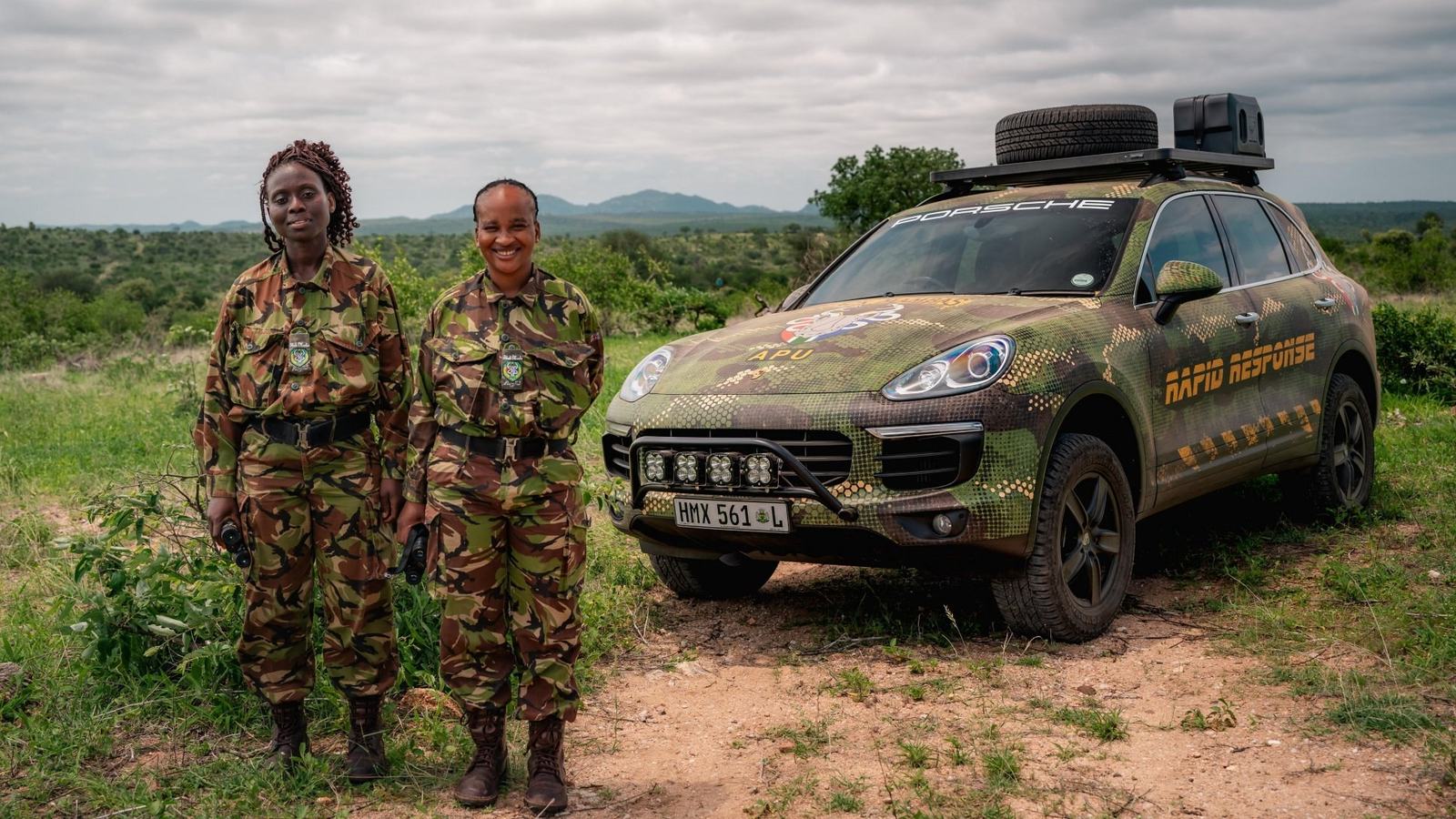
Porsche profiles the Black Mambas wildlife-protection unit in South Africa and its modified Cayenne supporting patrols across Olifants West Nature Reserve.
A different kind of journey in the Greater Kruger region Porsche Newsroom's latest Sunday Drives feature follows Black Mambas ranger Vongani Masingi through South Africa's Olifants West Nature Reserve, where her team helps protect wildlife across an area of approximately 200 square kilometres. The story, published on 6 November 2026, centres on the daily work of the all-female anti-poaching unit and a specially modified Porsche Cayenne donated to support its operations. It is not a road-test review of a new performance car, nor an invitation for tourists to undertake the patrol route. The vehicle operates on gravel, rock-strewn tracks and connecting roads within protected areas. Its role is practical: transporting people and equipment and helping the unit respond when another team needs assistance.
The Black Mambas are not a safari attraction The Black Mambas are a conservation and anti-poaching unit whose work requires observation, discipline and an understanding of local wildlife and human activity. Porsche describes patrols along fence lines, watering holes and other vulnerable locations. Their mission should not be confused with a conventional safari experience in which visitors seek photographs of the Big Five. The team watches for snares, suspicious signs and unauthorised activity, sometimes in conditions where dangerous animals are nearby. The work is demanding and requires coordination with trained response personnel. Treating it as merely a picturesque setting for an expensive car would diminish the people whose safety and skill make the programme possible.
Vongani Masingi describes a constantly changing route Masingi, identified as 33 in Porsche's report, explains that a patrol has no fixed distance or destination. A journey may run five or ten kilometres before a request for help changes the plan. This uncertainty distinguishes the working route from an adventure-driving itinerary. The terrain includes rocky stretches, gravel and areas where vegetation restricts sightlines. The driver must pay attention not only to traction and vehicle condition but also to wildlife movement and radio communications. The article's focus on Masingi is important because it gives the project a recognisable human perspective without implying that she is the only person involved. The team's effectiveness depends on colleagues, field reports and an organised operational structure.
A Cayenne adapted for the work Porsche says its South African operation donated a second-generation Cayenne, which Porsche Centre Johannesburg then prepared for the anti-poaching unit. The modifications include suspension upgrades, underbody protection, off-road tyres, spotlights and a roof rack carrying equipment and a full-sized spare wheel. These details explain how a road-oriented luxury SUV can be adapted for harsh working conditions without pretending it becomes a purpose-built military vehicle. Its use also raises ordinary questions about maintenance and reliability in remote areas. Tyres, suspension parts and the availability of trained technicians can matter more to a conservation team than the manufacturer's performance image. The donation is useful only when the vehicle can remain operational.
Visible patrols are part of the deterrence strategy According to Porsche, the Black Mambas want their presence to be noticed. The vehicle's livery and regular patrols are part of a visible deterrent approach, intended to discourage poachers from entering protected areas. The unit is described as operating without firearms, relying on handcuffs and pepper spray while calling specialist response teams when necessary. The distinction matters: a visible patrol, information gathering and an armed intervention are different functions requiring different legal authorities and training. It would be incorrect to present the Cayenne as an armed response vehicle or suggest that the team independently carries out every enforcement action. Effective conservation often depends on a coordinated network rather than a single dramatic confrontation.
Small clues can be operationally significant The patrol teams look for wire snares, cable traps and indications of human presence such as discarded objects. Such signs may be easy for an untrained visitor to overlook but meaningful to an experienced ranger who knows the environment. Porsche reports that the unit maps the places where snares have been found so they can be checked again. This is a reminder that protecting wildlife involves systematic data and repeated effort, not simply encounters with animals. A snare removed from the landscape represents one immediate threat prevented, while a useful record may help identify patterns over time. Neither action is visually spectacular, but both can contribute to long-term protection when backed by consistent follow-up.
Night work introduces different demands Thermal night-vision equipment is among the tools Porsche describes. Darkness changes what patrol teams can see and how they communicate, while wildlife movement and unfamiliar terrain can make decisions more complex. Vehicle spotlights may be useful in certain circumstances but do not replace experienced personnel and safe operating procedures. The release does not give a detailed operational manual, and an editorial report should not attempt to describe tactical routes or timings that could make conservation patrols more vulnerable. The public information is sufficient to understand that the team performs both daytime and nighttime work with equipment suited to its responsibilities. A responsible feature celebrates that commitment without compromising the safety of people in the field.
The landscape is rich and potentially dangerous Olifants West lies within the Greater Kruger landscape, known for elephants, rhinoceroses, buffalo, lions and leopards, among many other species. Porsche describes the seasonal presence of marula fruit and the way elephants may gather to feed, including females with calves. The detail is useful because it shows why a ranger must consider animal behaviour while carrying out a patrol. Wildlife is not scenery that remains safely arranged for the convenience of a vehicle. Approaching a herd or navigating a narrow track requires knowledge and restraint. The report does not authorise private visitors to imitate patrol routes, drive into restricted areas or approach animals. Those activities require appropriate local guidance and permissions.
Conservation work needs durable support A vehicle donation may attract attention at the moment it is announced, but its long-term value depends on maintenance, fuel, equipment and the team's ability to use it effectively. Conservation organisations also need qualified staff, communications systems and institutional partnerships. The Porsche report focuses on one example of practical support and does not provide a total annual budget for the Black Mambas. It therefore cannot establish how much of the project is funded by Porsche or how its contribution compares with all other supporters. A responsible philanthropist looking to assist a conservation initiative should ask about governance, financial transparency, local leadership and the operational needs that a donation is intended to address.
What affluent travellers can learn from this project Private wealth and high-end travel often intersect with conservation, especially where protected landscapes are destinations for wealthy visitors. The Black Mambas' work illustrates a form of support that addresses the day-to-day needs of the people protecting those environments. For owners who enjoy African travel or spend time in conservation-minded resorts, the lesson is to distinguish a meaningful operational partnership from a purely decorative sustainability claim. The Porsche feature does not advertise a donation package or private ranger encounter, and it would be inappropriate to invent one. Interested readers should engage with legitimate conservation organisations through their official channels and understand what support they actually require.
Protecting staff privacy and local expertise International coverage can draw attention to conservation programmes, but the safety and dignity of staff must remain central. Rangers should not be reduced to background figures for corporate publicity, nor should their work be romanticised as risk-free. The Porsche feature names Masingi and documents her observations, giving readers an account of the real responsibilities involved. Local knowledge of the bush, patterns of human activity and animal behaviour is an asset that cannot simply be replaced by equipment. A gifted SUV can support experienced rangers, but it is the team that decides how to use it. That distinction is essential when writing about conservation partnerships involving internationally recognisable brands.
A connection with yachting philanthropy Superyacht owners frequently encounter environmental and conservation initiatives during travel, whether through marine protected areas, research institutions or land-based reserves. The technical and operating contexts differ, but the principle of practical support is similar. Reliable equipment and sustained funding can matter more to a field team than a brief high-profile event. The Black Mambas story is a land-conservation feature, not a claim that Porsche has launched a superyacht environmental programme. Its value for SYG lifestyle is the example it provides of how a prominent luxury manufacturer can contribute a tangible asset while allowing experienced conservation professionals to carry out the mission.
What has actually been documented The verified Porsche account covers the Black Mambas' patrol work, Masingi's role, the approximate area protected and the donated, modified second-generation Cayenne. It does not independently demonstrate a quantified reduction in poaching incidents attributable solely to the vehicle, nor does it establish that the unit can operate without other response support. Masingi's observation that fewer snares are being found is useful local testimony but should not be converted into a scientific causal claim. Conservation outcomes arise from many influences, including enforcement, community relationships and broader ecological conditions. An accurate article can recognise the promise of practical support without inventing metrics.
A more grounded definition of luxury responsibility The most memorable element of Porsche's Sunday Drives feature is not the badge on the vehicle but the daily routine of people who repeatedly inspect the landscape for threats. Their work is patient, often unglamorous and potentially dangerous. The Cayenne helps when teams and supplies must be moved over difficult ground, while the rangers provide the judgment and persistence that make the equipment meaningful. For readers who can choose how to spend money on travel and philanthropy, it offers a useful question: which contributions genuinely improve the ability of skilled people to do necessary work? The answer may be less visible than a high-profile sponsorship but more enduring.
**Primary source:** Porsche Newsroom / Porsche South Africa, 6 November 2026. Official Black Mambas project photograph credited Porsche South Africa. No private safari access, medical benefit or proven causal conservation outcomes are implied.
Primary source: Porsche Newsroom / Porsche South Africa.
Photo: Porsche South Africa, official November 2026 Black Mambas feature photograph. Official press photograph.