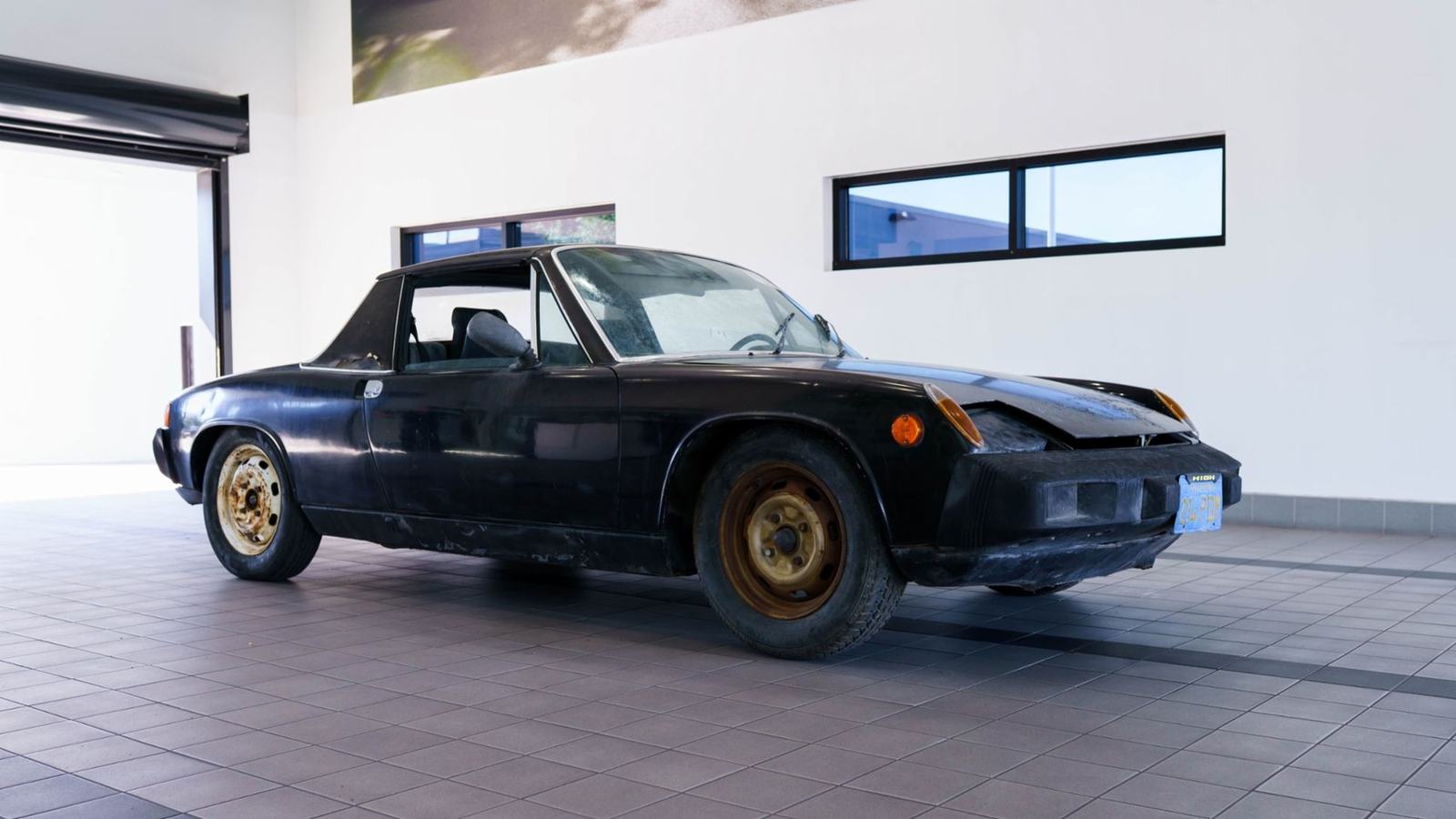
Finalists in Porsche's 2026 Classic Restoration Challenge arrive in Georgia for judging on 9–10 October, highlighting preservation, restoration and individualisation.
Classic craftsmanship reaches the national final
Porsche Cars North America has named the finalists in its 2026 Porsche Classic Restoration Challenge, bringing a range of meticulously preserved, rebuilt and individually reimagined sports cars to Georgia on 9–10 October. Porsche-trained technicians at authorised centres around the United States have spent months on projects that vary from careful preservation to extensive technical restoration. The national judging will take place at Trilith Studios in Fayetteville, with vehicles also appearing at Luftgekühlt at Town at Trilith.
The challenge is useful to high-end collectors because it shows the different reasons owners commission major work. One car may benefit from retaining an exceptionally original interior and mechanical identity, while another requires bare-metal restoration before it can be enjoyed safely. A third might become a deliberate individual creation, with the owner's aesthetic vision guiding substantial changes. None of these approaches can be judged responsibly by a glossy exterior photograph alone.
Three approaches to an irreplaceable car
Porsche divides the competition into Preservation, Restoration and Individualization. Preservation emphasises retaining what is original wherever possible; restoration tackles condition and functionality while respecting a vehicle's history; individualisation permits a more bespoke interpretation. A national champion and separate category winners are to be announced at the awards banquet, together with a public People's Choice selection linked to the accompanying car gathering.
For collectors evaluating a potential acquisition, understanding which philosophy informed an earlier project is essential. A car that has been mechanically modernised for regular driving should not be advertised as untouched factory condition, even if its workmanship is superb. Conversely, a historically significant vehicle can lose part of its interest when original finishes or rare components are replaced for cosmetic perfection. Clear records of every intervention make these distinctions visible.
An air-cooled 911 becomes a personalised expression
Porsche Englewood's 1980 911 SC, nicknamed The Gentleman's Outlaw, began as a standard example and has been transformed through detailed restoration and engineering. Its Oak Green Metallic finish and extensively reworked mechanical components form part of a deliberate interpretation of a classic 911. Porsche Orlando has also prepared a bespoke 993-based project, using a Pastel Yellow car as the starting point for a personalised RS-inspired specification and a carefully crafted interior.
Both examples illustrate the amount of design and technical coordination demanded by an ambitious commission. The owner, technician, trimmer and mechanical specialists must agree whether the goal is preservation of original parts, improved usability or a unique driving experience. Changes to engines, brakes and chassis components require properly documented testing, and any car intended for public roads must meet the applicable regulations and insurance conditions.
Preservation tells a different story
Harper Porsche's 1978 930 Turbo, in unusual Buick Medium Green Poly metallic with a pale interior, underwent extensive restoration after years of deterioration. Gaudin Porsche of Las Vegas took another approach with a 1996 911 Turbo: the team reversed a history of aftermarket modifications to return the vehicle closer to its original factory specification. These projects demonstrate that careful conservation can be as technically demanding as an entirely new bespoke concept.
Porsche Beachwood's 1969 912 Soft Window Targa and Porsche Mechanicsburg's 2003 Carrera 4S provide further contrasts in age and use. An older car coming out of storage requires a different treatment from a daily driver carrying two decades of family memories. In both cases, an independent buyer should inspect photographs taken during disassembly, itemised invoices, component provenance and records of any work subcontracted to outside specialists.
What the competition means for serious owners
The Porsche Classic Restoration Challenge also reveals the depth of expertise retained by manufacturer-linked workshops, where experienced technicians and younger colleagues can learn from the same complicated projects. Knowledge of older paint systems, air-cooled machinery and period-correct materials is valuable because replacement parts alone cannot recreate the judgment needed to restore a historic car properly.
The competition has not yet announced its national winners at the time of writing, so no particular finalist should be described as champion. For a private collector, the more lasting lesson is the value of a precise restoration brief and a complete record of work. Whether the intention is to preserve originality, restore roadworthiness or commission a personal interpretation, craftsmanship should support the object's history and the owner's realistic plans for driving, storage and long-term maintenance.
Source
Porsche Cars North America