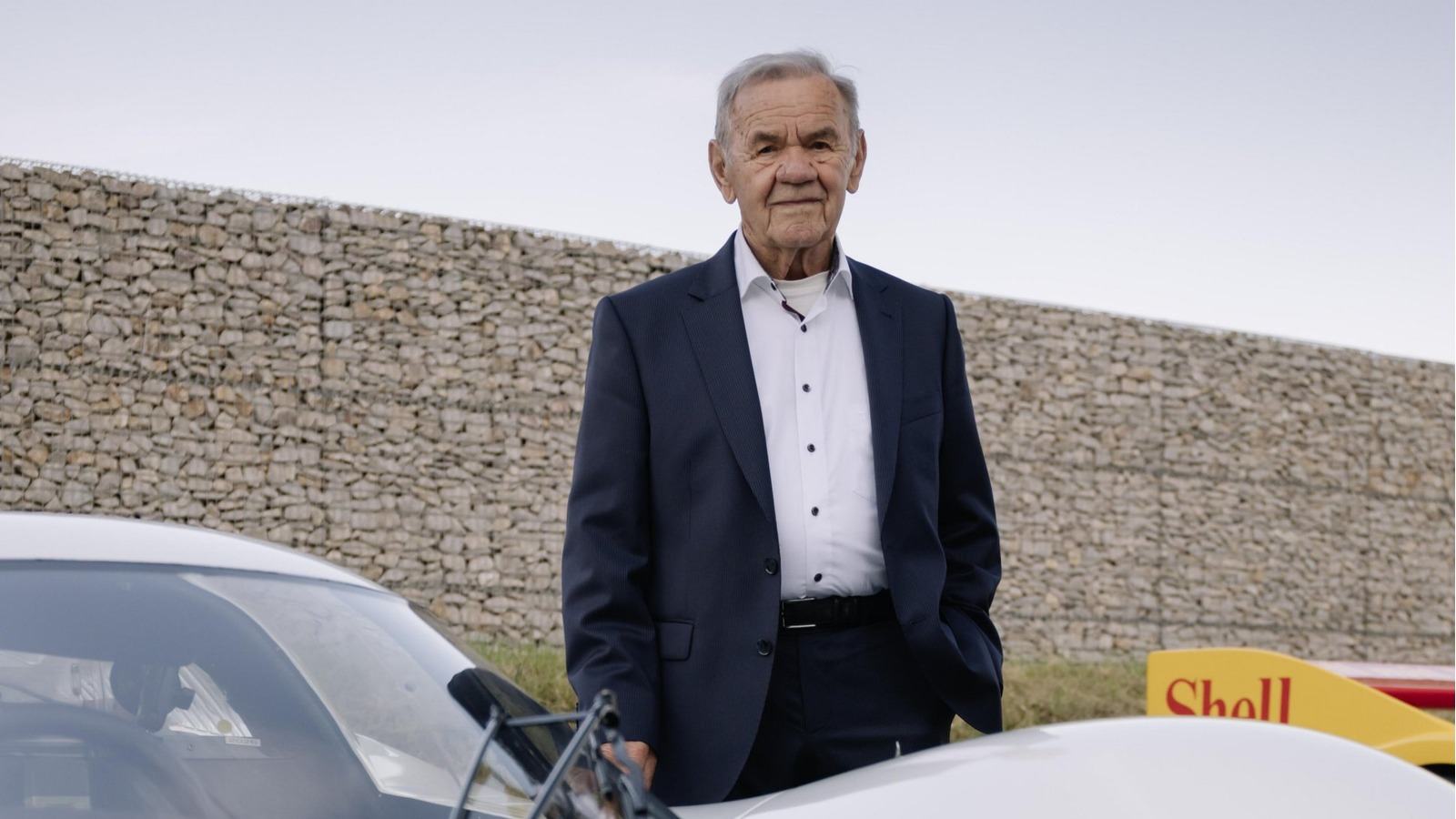
Porsche marks the 95th birthday of its Hungarian-born former engine engineer Valentin Schäffer, recognising his contribution to racing development.
A Porsche engineer marks his ninety-fifth birthday
Porsche has honoured former engine engineer Valentin Schäffer as he reaches his 95th birthday on 8 October 2026. Born in Hungary in 1931, Schäffer joined Porsche as an engine mechanic in 1955 and became associated with some of the manufacturer's most demanding motorsport powertrain projects. The company describes his career as a demonstration of how detailed practical knowledge can shape the performance of a complex machine.
The anniversary is a heritage occasion, not a new vehicle launch. For collectors, understanding the engineers behind a celebrated sports or racing car can be just as rewarding as knowing its racing results. The official Porsche photograph accompanying this report shows Schäffer himself, rather than a generic representation of a historic Porsche.
The workshop provided an unusual foundation
Schäffer entered Porsche at a time when calculations, physical measurements and direct inspection were closely connected in engine development. Technicians frequently disassembled and reassembled components as part of learning how they behaved under load. That experience could reveal practical constraints overlooked by a purely theoretical approach.
Such hands-on understanding remains valuable even as digital engineering tools have transformed the industry. High-performance engines still need to function under heat, vibration and prolonged strain. The relationship between design intent and mechanical reality is especially important in racing, where reliability can decide whether an ambitious concept reaches the finish.
Racing development is an exercise in systems thinking
Porsche Motorsport head Thomas Laudenbach credited Schäffer's approach to treating engines as carefully tuned systems rather than collections of parts. Cylinder design, air flow, lubrication, cooling and vibration behaviour all interact, and altering one component can change the demands on others. A successful racing programme requires specialists to understand those links.
That principle extends to the preservation of historic competition cars. Installing a component that appears similar is not necessarily adequate if the engineering specification differs, and the authenticity of a period powertrain may depend on details invisible to a casual observer. Conservation-minded owners benefit from accurate records and engineers familiar with the machine's original design.
Early Porsche motorsport depended on iteration
In the second half of the twentieth century Porsche's racing projects advanced through tightly linked factory and competition programmes. Engineers worked with drivers and mechanics whose observations could influence modifications between events. Testing under real conditions exposed weaknesses that were difficult to reproduce in ordinary workshop use.
The historic significance of this period comes partly from its methods: careful observation, repeated improvement and a willingness to revisit apparently settled designs. Modern data acquisition has increased the quantity of information available, but it has not removed the need for people who can decide which measurements matter.
What collectors can learn from the people
Historic cars are often described through production numbers, race victories and market values, yet those figures reveal only part of the engineering history. The roles of technicians, mechanics and test teams explain how a vehicle reached its final specification. Recognition of Schäffer is therefore part of a broader attempt to preserve knowledge that might otherwise remain only in personal memory.
A collector seeking authenticity should look for period photographs, factory correspondence and technical documents where possible. Oral testimony can contribute valuable context, but recollections should be considered alongside available records. Correct interpretation helps prevent historically inaccurate restoration choices.
Engineering heritage has a practical value
Owners operating a historic high-performance car face challenges involving replacement parts, operating fluids and safe use. Older engines may require specialist inspection intervals and careful warm-up procedures, and original materials may behave differently from current equivalents. Preserving a car is not identical to preparing it for unrestricted modern road use.
Independent specialist advice is important before track driving or substantial modification. Conservation and safety must be balanced, with alterations recorded transparently. The goal is to retain the machine's character while understanding its operating limitations.
Porsche's anniversary recognises a long career
Porsche's message places Schäffer among the people who shaped the company's engine-development culture over many decades. It is a reminder that the identity of a sports-car marque depends on accumulated craft knowledge as well as dramatic silhouettes and celebrated racing teams.
At 95, Schäffer represents a direct connection with an era in which mechanical experimentation was extraordinarily close to the people carrying it out. For enthusiasts and owners, the anniversary provides an opportunity to consider the human stories behind the cars that later became coveted collector objects.